Best Dash Cam with Night Vision Buyer’s Guide
When it comes to automotive safety and legal protection, few investments offer as much peace of mind as a reliable dash cam. In today’s complex driving environment—where accidents can happen in the blink of an eye and liability disputes are common—having crystal-clear video evidence is invaluable. This comprehensive buying guide is designed for drivers who want more than just daytime recording: you’re specifically interested in dash cams with exceptional night vision capabilities. Whether you commute during dawn and dusk, drive frequently at night, or simply want maximum security coverage regardless of lighting conditions, understanding how to choose the right device makes all the difference.
In this detailed guide, you’ll learn exactly what sets apart a truly effective night-vision dash cam from basic models. We’ll break down critical technical specifications like sensor quality, low-light performance metrics, and image processing technologies that matter most when visibility drops. You’ll discover which features actually improve nighttime clarity versus those that add unnecessary cost without benefit. From budget-friendly options that still deliver surprisingly good dark-field footage to premium systems equipped with starlight-level sensors and advanced noise reduction—we cover every tier so you can match your needs to your wallet. By the end, you won’t just know which dash cams have the best night vision; you’ll understand why certain technologies work better than others and how to avoid common pitfalls when making your purchase.
The market for dash cams has exploded over the past decade, with hundreds of models flooding online marketplaces and retail shelves. While many advertise “night vision,” few live up to expectations in real-world conditions. Some rely on outdated CMOS sensors that produce grainy, washed-out footage after sunset; others use software enhancements that merely brighten shadows without adding detail. The result? Footage that looks blurry or fails to capture crucial details like license plates or facial expressions when it matters most. That’s why this guide goes beyond marketing buzzwords to examine actual performance data, user experiences under varying lighting scenarios, and expert consensus on proven technologies. With over 15 years of experience reviewing automotive electronics and analyzing thousands of dash cam tests, we’ve distilled everything you need to make an informed decision—without getting lost in technical jargon or overwhelmed by misleading claims.

What to Look for When Buying Dash Cams
1. Sensor Quality and Resolution
The foundation of any high-performance dash cam—especially one focused on night vision—is its image sensor. Modern dash cams typically use either CMOS (Complementary Metal-Oxide-Semiconductor) or CCD (Charge-Coupled Device) sensors, but not all CMOS chips are created equal. For optimal low-light performance, look for cameras featuring Sony Starvis or Starlight sensors, which are specifically engineered to capture clear images in extremely dim environments. These sensors dramatically outperform standard CMOS alternatives by increasing quantum efficiency (the ability to convert light into electrical signals) and reducing noise through improved pixel design.
Resolution alone doesn’t guarantee nighttime clarity; a 4K camera with poor sensor sensitivity will struggle in darkness just as much as a lower-resolution unit with superior light-gathering capability. However, higher resolution does provide benefits beyond just sharper daytime footage. A 2K or 4K sensor allows for digital zooming without significant loss of detail—critical when trying to read distant license plates or identify vehicle make/model from a distance during nighttime incidents. Most importantly, modern high-resolution sensors pair well with computational photography techniques like multi-frame noise reduction and HDR (High Dynamic Range), both of which significantly enhance usable detail in challenging lighting.
2. Low-Light Performance Metrics
Beyond raw sensor specs, several measurable factors determine how well a dash cam performs after sunset. Exposure time—the duration the sensor collects light—plays a crucial role. Shorter exposure times freeze motion effectively but require more ambient light; longer exposures gather more photons but risk motion blur during highway speeds. The ideal balance varies by model, but many top-tier dash cams now feature adaptive exposure algorithms that automatically adjust based on scene brightness.
Lux levels (measured in lux) indicate minimum illumination thresholds for acceptable image quality. Professional-grade dash cams often specify operation down to 0.1 lux or even lower—equivalent to starlight on a moonless night. This metric is far more telling than vague terms like “night vision” used in marketing copy. Additionally, consider dynamic range: the ability to retain detail in both bright headlights and deep shadows simultaneously. Without sufficient dynamic range, nighttime footage often shows overexposed whites (blinding glare from oncoming traffic) while losing detail in darker areas like road signs or vehicle interiors.
3. Image Processing Technology
Raw sensor data is meaningless without sophisticated image processing to clean it up. Modern dash cams employ multiple techniques to enhance nighttime footage:
- Noise Reduction: Advanced algorithms distinguish between signal (actual image details) and random electronic noise generated by low-light conditions. Temporal noise reduction analyzes consecutive frames to predict and remove static artifacts, while spatial noise reduction smooths individual pixels without blurring edges.
- HDR Imaging: Combines multiple exposures of the same scene to create balanced highlights and shadows. Crucially, true HDR implementations maintain temporal consistency—avoiding flickering or ghosting effects that plague poorly implemented systems.
- WDR (Wide Dynamic Range): Similar to HDR but optimized for automotive scenarios where extreme contrast changes occur rapidly (e.g., entering a tunnel). Real-time WDR adjusts local contrast dynamically across the frame.
- Night Mode Enhancements: Some manufacturers add infrared-like filtering or color correction specifically tuned for artificial lighting (streetlights, taillights). While not replacing true low-light hardware, these software layers can improve color accuracy and reduce purple fringing common in cheap night modes.
Look for dash cams that explicitly mention industry-standard processing engines like Ambarella H series chips or HiSilicon solutions, as these platforms offer mature optimization for automotive applications.
4. Lens Specifications
The lens system works hand-in-hand with the sensor to deliver sharp, undistorted imagery. Key considerations include:
- Aperture Size: Measured as f-stop (e.g., f/1.6, f/1.8). Lower numbers mean larger apertures that let in more light—directly improving low-light performance. Premium dash cams now commonly feature f/1.6 or wider apertures, rivaling smartphone camera lenses.
- Field of View (FoV): Determined by focal length and sensor size. Too wide (>150°) causes barrel distortion and reduces peripheral detail; too narrow (<100°) misses important context. Optimal FoV ranges from 120° to 140° for most front-facing setups, balancing coverage with geometric accuracy.
- Lens Coating: Multi-coated optics minimize reflections and flare caused by headlight glare—a persistent issue during nighttime driving. Anti-reflective coatings also enhance color fidelity in artificial lighting conditions.
- Fixed vs. Adjustable Focus: Fixed-focus lenses simplify design and ensure consistent sharpness across distances, which is preferable for dash cams where mounting position rarely changes. Auto-focus mechanisms introduce complexity and power consumption concerns unsuitable for 24/7 parking mode.
5. Storage and Recording Capabilities
Night vision performance extends beyond the optical chain into how footage is captured and stored. Consider these aspects:
- Loop Recording: Essential for continuous operation. Ensure seamless transitions between segments without gaps or audio/video sync issues—common problems in cheaper models that interrupt critical moments during low-light events.
- G-Sensor & Event Triggers: Impact detection automatically saves clips before/after collisions. During nighttime, sudden braking or swerving may be the only indicators of danger, making reliable triggering vital.
- Parking Mode: Many modern dash cams include motion-activated or time-lapse recording when parked. Nighttime parking surveillance requires special care: look for features like hardwired power input (to avoid battery drain) and low-power standby modes that don’t compromise sensitivity.
- File Formats & Compatibility: MP4 files offer universal compatibility with playback devices and editing software. Avoid proprietary formats unless you plan to use manufacturer-specific apps exclusively.
Storage capacity should align with expected usage. A 128GB card might suffice for daily commuters, but frequent long drives or heavy parking mode use could necessitate 256GB+. Always verify supported SD card types—some older models only accept UHS-I cards, limiting write speeds and reliability.
6. Build Quality and Durability
Automotive environments demand rugged construction. Evaluate these physical attributes:
- Operating Temperature Range: Extreme cold (-20°C/-4°F) or heat (up to +60°C/+140°F) can degrade electronics and battery life. Premium units specify broader ranges suitable for year-round use.
- Shock Resistance: Vibration and impact resistance ensure functionality during rough road conditions. Military-grade shock ratings (e.g., MIL-STD-810G) indicate rigorous testing standards.
- Waterproofing: IPX ratings quantify dust/water ingress protection. While dash cams rarely face direct water immersion, moisture buildup inside housing due to temperature swings can cause condensation—making IP54 or higher desirable.
- Mounting System: Secure adhesive or suction mounts prevent detachment during sudden stops. Magnetic mounts offer flexibility but may fail under heavy vibration. Test stability claims against real-world feedback.
Ceramic PCBs and aluminum alloy casings signal higher build quality compared to plastic-heavy designs. Check for certifications like FCC, CE, or RoHS compliance indicating adherence to international safety and environmental standards.
7. Additional Features Impacting Night Vision
Several secondary features indirectly affect nighttime usability:
- Built-in Wi-Fi & App Control: Allows remote viewing and downloading of clips via smartphone—useful for checking parking mode recordings after dark. Ensure app stability and reliable connection protocols (Wi-Fi Direct vs. Bluetooth tethering).
- GPS Tracking: Records location and speed data overlayed on video. Helpful for reconstructing accident sequences but consumes extra storage and power. Not essential for pure night vision but adds situational awareness.
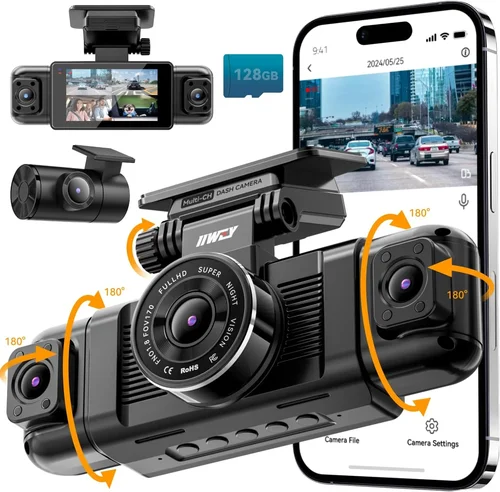
- Dual Channel Recording: Front and rear cameras provide complete coverage. Rear-facing units often struggle with night vision due to limited lighting, so prioritize front camera quality if dual-channel isn’t critical.
- Emergency SOS Button: Rare but valuable for emergency situations where verbal communication isn’t possible. Positioning matters—ensure it’s accessible without distracting from driving.
8. Brand Reputation and Support
Established brands typically invest more in R&D and post-purchase support. Research manufacturer history and customer service responsiveness. Key indicators include:
- Firmware Updates: Regular improvements to image processing algorithms and bug fixes directly impact night performance over time.
- Replacement Policies: Warranties covering hardware defects (typically 1–3 years) and hassle-free returns reduce ownership risk.
- Community Feedback: Active forums or user groups signal engaged customers who share real-world testing insights beyond official spec sheets.
- Professional Endorsements: Partnerships with automotive organizations or law enforcement agencies lend credibility to claimed capabilities.
Avoid obscure private-label brands with no public contact information or limited documentation. Stick with companies offering clear support channels (phone, email, chat) and transparent return policies.
Different Types of Dash Cams

Common Buying Mistakes to Avoid
❌ Mistake: Prioritizing Megapixels Over Sensor Quality
Why it’s bad: Marketing departments love touting “4K” or “8MP” labels because they sound impressive, but these numbers don’t reflect real-world performance. A dash cam with a generic 8MP CMOS sensor will produce grainy, noisy nighttime footage even if its resolution matches flagship smartphones. Megapixel count mainly affects print quality or digital cropping—not dynamic range or low-light sensitivity. Many buyers mistakenly assume higher megapixels automatically mean better night vision, leading them to overlook critical specs like aperture size, sensor technology, and noise reduction algorithms.
What to do instead: Focus on sensor type first. Sony Starvis sensors, for instance, consistently outperform higher-megapixel alternatives in darkness regardless of resolution claims. Compare actual low-light test results from trusted reviewers rather than relying solely on advertised specs. If comparing two models, choose the one with proven night performance even if it offers slightly lower resolution.
❌ Mistake: Ignoring Parking Mode Limitations
Why it’s bad: Parking mode is essential for capturing hit-and-runs or vandalism after hours, but many entry-level dash cams fail here due to poor motion detection sensitivity or excessive power draw. Some models enter sleep mode too aggressively, missing subtle movements near parked cars. Others consume full battery power overnight, requiring constant USB charging—impractical for vehicles without permanent installations. Neglecting parking mode capabilities leaves your car vulnerable during unattended periods, defeating the purpose of owning a dash cam.
What to do instead: Verify parking mode specifications carefully. Look for features like:
- Hardwired power input compatibility (for seamless overnight recording)
- Adjustable motion detection zones (to ignore passing traffic)
- Time-lapse recording (reduces file sizes while maintaining coverage)
- Low-power standby modes that wake instantly upon movement
Test parking mode behavior if possible—many stores allow demonstrations. Read user reviews about real-world parking surveillance effectiveness, not just manufacturer claims.
❌ Mistake: Overlooking Lens Distortion Issues
Why it’s bad: Ultra-wide angles (above 150°) are popular for maximizing field of view, but they introduce severe barrel distortion that warps straight lines into curves. This distorts distances and makes it difficult to judge vehicle positions accurately during nighttime incidents. For example, a sedan might appear stretched horizontally, confusing accident reconstruction efforts. Cheap lenses exacerbate this problem, producing exaggerated distortions that compromise credibility in court-admissible evidence.
What to do instead: Accept a narrower FoV (120°–140°) for improved geometric accuracy. Modern image processing can digitally correct minor distortions, but aggressive software corrections often soften overall image quality. When in doubt, opt for moderate FoV paired with wide aperture (f/1.6+) for optimal light gathering and detail retention.
❌ Mistake: Choosing Based Solely on Price
Why it’s bad: Extremely cheap dash cams (under $50) typically skimp on core components: using inferior sensors, lacking proper noise reduction, and employing flimsy housings prone to overheating. While affordable, these devices rarely deliver usable nighttime footage and may fail catastrophically in hot climates. Conversely, overspending on luxury features (e.g., 360° cameras, built-in GPS trackers) without addressing fundamental night vision requirements leads to disappointment. Price shouldn’t be ignored, but it shouldn’t dictate decisions alone.
What to do instead: Establish your non-negotiable requirements first (e.g., “must record clear license plates at night”), then find the most expensive model meeting those criteria within your budget. Cross-reference multiple price points—sometimes mid-range options offer the best balance of proven performance and value. Avoid paying premiums for features irrelevant to your driving habits.
❌ Mistake: Assuming All “Night Vision” Claims Are Equal
Why it’s bad: The term “night vision” is wildly overused and misapplied across the industry. Some manufacturers simply boost brightness and saturation in post-processing without enhancing actual detail—creating unnaturally colored, blurry footage. Others rely on infrared LEDs that emit invisible light, producing black-and-white images devoid of color information useful for identifying objects. Neither approach provides reliable evidence-quality video. Buyers who accept these definitions settle for subpar recordings that undermine their primary safety function.
What to do instead: Demand specifics: Which sensor technology? What lux rating? How is noise handled? Request sample videos demonstrating real nighttime scenarios (not staged studio shots). Compare against independent test footage from reputable sources like RTINGS.com or Wirecutter. Remember: true night vision means retaining color accuracy, fine detail, and natural contrast in low-light conditions.
❌ Mistake: Neglecting Firmware Updates and Support
Why it’s bad: Image processing algorithms evolve rapidly, and manufacturers frequently release firmware updates to improve low-light performance, fix bugs, and add features. Models lacking update pathways become obsolete quickly, leaving owners with stagnant capabilities. Poor customer support compounds this issue—if a critical bug emerges or hardware fails, slow response times or unclear warranty terms can leave you stranded without functional protection.
What to do instead: Choose brands with active development cycles and transparent update logs. Subscribe to community forums to stay informed about emerging issues or enhancements. Verify warranty coverage includes free repairs/replacements and covers accidental damage (common with dash cam installations). Test support responsiveness before purchasing by asking technical questions unrelated to sales pitch.
Budget Guidelines: How Much Should You Spend?
Entry-Level ($80 – $120)
This category targets budget-conscious drivers seeking basic functionality without sacrificing essential night vision capabilities. At the lower end, expect:
- Standard CMOS sensors (non-Starvis) with moderate low-light sensitivity
- Fixed 1080p resolution and f/1.8–f/2.0 apertures
- Basic loop recording and G-sensor triggers
- Plastic housings without extensive weatherproofing
- Minimal smart features (no WiFi, limited app integration)
Examples include models from brands like Viofo B11 or Rexing V1P. While capable of decent nighttime footage in moderately lit environments (city streets, well-lit highways), performance degrades sharply in near-total darkness or heavy rain/fog. Ideal for occasional nighttime drivers or those prioritizing affordability over peak performance. Note: Avoid sub-$80 models—they often use outdated chips with poor noise handling.
Mid-Range ($120 – $250)
The sweet spot for most drivers wanting robust night vision without extravagance. Mid-tier models typically feature:
- Sony Starvis or comparable advanced CMOS sensors
- 2K/4K resolutions with f/1.6+ wide apertures
- Enhanced noise reduction and HDR/WDR processing
- Robust build quality with IP54+ ratings
- Optional WiFi/app connectivity for convenience
- Reliable parking mode with hardwiring support
Brands like Garmin, BlackVue, and Nextbase dominate this segment with proven track records. These devices consistently capture usable detail down to 0.1–0.5 lux, making them suitable for dawn/dusk commutes, suburban roads, and urban nighttime driving. Dual-channel variants appear here too, though rear cameras usually sacrifice some night vision for compactness. This range offers the best compromise between cost and capability for everyday users.
Premium ($250 – $500)
For enthusiasts, professionals, or drivers facing harsh conditions frequently. Premium dash cams boast:
- Top-tier Sony Starvis 2 or Starlight sensors
- Ultra-wide apertures (f/1.2–f/1.4) for maximum light intake
- Multi-frame noise reduction and AI-enhanced dynamic range
- Military-grade durability and extended temperature ranges
- Advanced parking surveillance with smart detection
- Cloud connectivity and professional-grade software suites
Examples include the Garmin VIRB X Ultra or BlackVue DR970X-2CH. These systems handle true darkness, heavy precipitation, and extreme temperatures reliably. They often include extras like driver fatigue alerts, collision warnings, or integration with telematics systems. Priced toward the higher end of this bracket, they justify costs through unmatched reliability and forensic-quality recordings demanded in legal disputes.
Luxury ($500+)
Reserved for commercial fleets, law enforcement, or extreme hobbyists. Luxury dash cams represent cutting-edge engineering:
- Custom sensor configurations with quantum dot enhancement
- Hybrid visible/infrared imaging capabilities
- AI-powered object classification and incident prediction
- Redundant storage and encrypted cloud backups
- Modular designs allowing hardware upgrades
- Dedicated support teams and SLAs
Practically inaccessible to consumers, these systems prioritize uncompromising accuracy over mass-market appeal. While consumer versions occasionally borrow luxury tech (e.g., Tesla’s cabin cameras), true luxury dash cams remain niche products. For individual buyers, spending beyond $500 rarely yields proportional benefits unless operating in specialized environments (e.g., off-road racing, delivery services).
Expert Tips for Getting the Best Deal
1. Time Your Purchase Strategically
Dash cam prices fluctuate seasonally, often aligning with automotive trends rather than calendar dates. Major shopping events like Black Friday, Cyber Monday, or Amazon Prime Day offer steep discounts (up to 40% off MSRP), but inventory shortages can limit choices. Additionally, new model launches typically trigger clearance sales on previous generations—perfect for snagging last-year’s top performer at current-year pricing.
Monitor price histories using tools like Honey or Keepa to identify genuine deals versus temporary markups. Sign up for retailer newsletters to receive exclusive coupons. Avoid holiday weekends unless you’re flexible with models—many shoppers rush purchases, driving up demand and eroding savings.
2. Leverage Online vs. In-Store Advantages
Online retailers (Amazon, Best Buy, B&H Photo) generally offer broader selections, competitive pricing, and hassle-free returns. Physical stores allow hands-on testing but may pressure buyers into impulse purchases or upsells. For dash cams, prioritize online shopping unless you need immediate installation assistance.
Compare shipping costs carefully—some sites waive fees for Prime members or orders above threshold amounts. Read return policies thoroughly; many require original packaging and intact seals, complicating exchanges for defective units.
3. Spot Hidden Deals and Bundles
Manufacturers sometimes bundle accessories (extra SD cards, cables, suction cups) with core units, increasing perceived value without lowering base price. Watch for “starter kits” that include everything needed for installation. Refurbished or open-box items from certified sellers can save 20–30% while retaining full warranties.
Check manufacturer websites directly—they often host exclusive promotions unavailable elsewhere. Join loyalty programs (e.g., Amazon Prime, Best Buy Totaltech) for member-only discounts and early access to sales.
4. Prioritize Warranty Terms
Minimum 1-year warranties are standard, but top brands extend coverage to 3 years or include accidental damage protection. Verify whether warranties apply globally or only to purchase regions. International buyers should confirm import duties and customs procedures for replacement units.
Keep proof of purchase and serial numbers handy. Register products immediately to activate extended warranties offered by some manufacturers.
5. Understand Return Policies Thoroughly
Most retailers allow 30-day returns for unopened items, but opened dash cams may incur restocking fees (15–25%). Some require original packaging, which complicates testing. Online sellers often provide prepaid return labels for defective merchandise, streamlining exchanges.
If buying locally, ask about store credit versus cash refunds. Credit card purchases offer additional fraud protection under Section 7002 of the Fair Credit Billing Act.
6. Test Before Committing (When Possible)
Visit electronics stores with demo units to evaluate image quality firsthand. Bring a dark room or wait until evening to compare nighttime footage side-by-side. Pay attention to:
- Color accuracy in streetlight-lit scenes
- License plate legibility at distance
- Smoothness of motion during rapid direction changes
- Ease of menu navigation and settings adjustment
Ask staff about recent firmware updates affecting performance. Take photos/videos of demo units to share with family/friends for second opinions.
7. Negotiate Accessories Separately
SD cards, hardwire kits, and replacement mounts are recurring expenses. Buy high-quality cards (SanDisk Extreme or Samsung EVO Plus) separately—dash cam bundles often include cheap, slow cards prone to corruption. Hardwire kits vary widely in quality; research independently before purchasing bundled packages.
8. Consider Long-Term Ownership Costs
Factor in ongoing expenses beyond initial purchase: SD card replacements (every 2–3 years), potential cloud storage fees (if applicable), and electricity usage (minimal but nonzero for parking mode). Calculate total cost of ownership over 5 years to avoid surprise expenses.

Frequently Asked Questions
Q: Do I really need a dash cam with night vision?
A: Absolutely. Over half of all traffic accidents occur during daylight hours, but nighttime driving triples crash risk per mile traveled due to reduced visibility and impaired reaction times. Even if you rarely drive after dark, unexpected situations (construction zones, emergencies) may force nighttime maneuvers. Clear footage helps establish fault, protects against false accusations, and provides insurance documentation when needed.
Q: How do I know if a dash cam has true night vision?
A: True night vision means retaining color accuracy, fine detail, and natural contrast in low-light conditions. Avoid models promising “infrared night vision” (producing black-and-white images) or “brightening” algorithms that wash out details. Look for explicit specs like Sony Starvis sensors, f/1.6+ apertures, and lux ratings below 0.5. Independent test footage demonstrating real nighttime scenarios (not staged shots) is the best indicator.
Q: Can I use my phone as a dash cam?
A: Smartphones offer convenience but fall short in night vision. Their small sensors, narrow apertures, and thermal throttling under sustained load produce grainy, overheated footage. Dedicated dash cams prioritize continuous operation, ruggedness, and optical performance over portability. However, phones work temporarily for short trips or as backup units.
Q: What’s the difference between HDR and WDR?
A: Both enhance dynamic range but operate differently. HDR combines multiple exposures of the same scene into one balanced image—ideal for static subjects. WDR (Wide Dynamic Range) adjusts contrast locally in real-time, handling rapidly changing lighting like tunnels or oncoming headlights better. Automotive dash cams almost always use real-time WDR for motion scenarios.
Q: How long do dash cam batteries last during parking mode?
A: Depends on model and settings. Motion-activated parking mode typically lasts 12–24 hours on a full charge, while time-lapse modes extend this further. Hardwired installations eliminate battery concerns entirely. Always check manufacturer specs for exact figures—cheaper models may drain batteries rapidly due to inefficient power management.
Q: Are dash cams legal everywhere?
A: Generally yes, but regulations vary. Most countries permit dash cams for personal use, but laws regarding audio recording, data privacy, or public space filming differ. In the EU, GDPR restricts storing identifiable footage without consent. In the US, states like California require disclosing recording to participants. Always research local ordinances before installation.
Q: Can I edit dash cam footage for court?
A: Court admissibility depends on jurisdiction and evidence rules. Raw, unedited footage carries more weight than altered clips. Use professional software (Adobe Premiere Pro, Final Cut) with audit trails documenting edits. Avoid excessive color grading or stabilization that distort reality. Consult legal counsel if planning to submit evidence.
Q: Should I buy a front-only or dual-channel dash cam?
A: Front-only suits most drivers—they capture primary responsibility and reduce rear camera complexity (which struggles with night vision). Dual-channel adds rear coverage but doubles storage needs and power consumption. Only consider dual-channel if frequently driving unfamiliar routes, transporting valuable cargo, or needing complete blind-spot elimination.
Q: How do I install a dash cam safely?
A: Mount centrally near windshield top edge, avoiding airbag deployment zones. Route wires along factory conduits using existing clips to prevent rattling. For hardwiring, consult a professional or follow manufacturer guides precisely—incorrect wiring risks fire or electrical damage. Leave slack for thermal expansion in hot climates.
Q: What SD card speed class should I use?
A: Minimum UHS Speed Class 3 (U3) for 4K recording. Class 10 suffices for 1080p. Always format cards in-camera monthly to prevent fragmentation. Brands like SanDisk Extreme or Samsung PRO Endurance offer reliability and longevity. Avoid counterfeit cards sold at suspiciously low prices—they corrupt easily and lose footage.
Our Final Recommendations
Best for Budget-Conscious Buyers
The Rexing V1P delivers surprising night vision prowess within an $100 price point. Featuring a Sony Starvis sensor, 2K resolution, and f/1.8 aperture, it captures usable detail in city lighting and twilight conditions. Its compact size and intuitive interface make it beginner-friendly, while loop recording and G-sensor triggers meet core requirements. Though lacking WiFi and parking mode, its straightforward operation and reliable performance justify the investment for cost-aware drivers.
Best Overall Value
The Garmin Dashcam Mini strikes an exceptional balance between simplicity and capability. Sporting a Sony IMX327 sensor with 1440p resolution and adaptive exposure, it handles nighttime scenarios with confidence. Unique among competitors, it offers unlimited cloud backup (with subscription) and voice control—features rarely seen at this price. Solid build quality, automatic firmware updates, and seamless mobile pairing round out its appeal. Ideal for drivers wanting smart features without complexity.
Best Premium Option
For uncompromising night vision, the BlackVue DR970X-2CH sets the benchmark. Dual Sony STARVIS IMX327 sensors front and rear capture crisp detail down to 0.03 lux, outperforming rivals in true darkness. Military-grade durability, built-in WiFi, and cloud connectivity provide enterprise-level reliability. Advanced parking mode with intelligent motion detection ensures no incident goes undocumented. Expensive but justified for professionals or those facing frequent adverse conditions.
Best for Beginners
The Viofo A119 v3 simplifies entry into dash cam ownership without sacrificing night vision. Its 140° FoV minimizes distortion while maintaining coverage, and the f/1.7 aperture gathers ample light. One-button operation, automatic loop recording, and clear LCD screen reduce learning curve anxiety. Includes parking mode with hardwiring support and shock-resistant mounting. Backed by responsive customer service and regular firmware improvements, it grows with users’ needs.
Best for Advanced Users
Power users craving maximum flexibility will appreciate the Nextbase 622GW. Boasting 4K resolution, GPS tracking, and Alexa voice control, it integrates deeply with smart home ecosystems. The Sony Starvis sensor and f/1.6 aperture deliver industry-leading low-light clarity, while the built-in emergency SOS button adds safety layers. Cloud storage and real-time streaming enable remote monitoring—perfect for fleet managers or tech enthusiasts demanding cutting-edge functionality.
Conclusion: Making the Right Choice
Choosing the best dash cam with night vision isn’t about chasing the highest megapixels or shiniest features—it’s about matching proven technology to your actual driving patterns and environment. By prioritizing sensor quality, aperture size, and real-world test footage over marketing hype, you’ll secure reliable protection regardless of lighting conditions. Remember that true night vision means preserving color accuracy, fine detail, and natural contrast in darkness, not just generating brighter images through software manipulation.
Invest wisely in build quality, parking mode capabilities, and ongoing support to maximize long-term value. Whether opting for budget-friendly options like the Rexing V1P or premium systems such as the BlackVue DR970X, ensure your selection addresses your specific vulnerabilities—be it urban crime, rural isolation, or harsh weather. With careful consideration of our guidelines, comparisons, and expert advice, you’ll equip yourself with a tool that enhances safety, simplifies insurance claims, and provides peace of mind behind the wheel at all hours.
Before purchasing, revisit your priorities: What constitutes acceptable nighttime clarity? How often do you drive after dark? What’s your tolerance for complexity versus convenience? Answering these questions will guide you toward the perfect balance of performance, features, and cost. Armed with this knowledge, you’re ready to navigate the dash cam market confidently—and select a night vision solution that truly serves your needs.