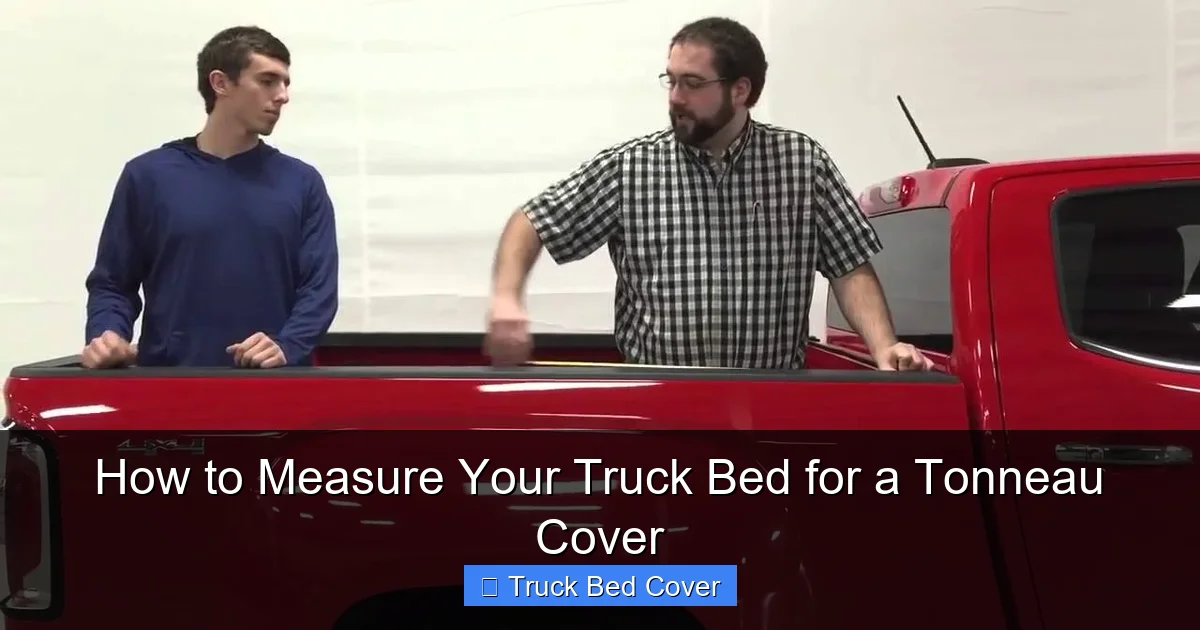
How to Measure Your Truck Bed for a Tonneau Cover
Measuring your truck bed for a tonneau cover is essential for a secure, weatherproof fit. A proper measurement prevents water leaks, ensures smooth operation, and protects your cargo from the elements. Follow this simple guide to get accurate dimensions every time—no guesswork needed.
Key Takeaways
- Measure length, width, and height accurately: Use a tape measure from inside the bed rails to determine the exact space for your tonneau cover.
- Account for bed liner or accessories: Measure over any spray-in liners, bed mats, or toolboxes to ensure compatibility.
- Check for side rails and bed extensions: Some covers require specific rail types; measuring helps match the right model.
- Double-check manufacturer specs: Always compare your measurements with the brand’s sizing chart before ordering.
- Take photos during measurement: Visual references help confirm accuracy and assist customer support if issues arise.
- Know common truck bed sizes: Familiarity with standard dimensions (e.g., 5’6″, 6′, 8′) can speed up the process.
- Re-measure if you modify your bed: Adding racks, lights, or changing the tailgate affects fitment.
Quick Answers to Common Questions
How wide should my tonneau cover be?
Your cover should fit the narrowest point of your bed rails plus 0.25–0.5 inches for mounting hardware. Measure at front, middle, and back, then use the smallest dimension.
Can I measure without side rails?
Yes, but most hard covers require rails. Soft roll-ups often work without them. Still, measure the inside width and consult the product description.
Do I need to remove the bed liner?
No—most covers sit on top of spray-in liners. Just measure over the liner surface, not bare metal.
What if my bed isn’t a standard size?
Aftermarket covers rarely fit non-standard beds. Check manufacturer compatibility charts or call customer support with your VIN.
Should I include the tailgate in measurements?
No—the tailgate swings open and isn’t part of the cover’s footprint. Focus only on the bed rails and interior space.
📑 Table of Contents
- How to Measure Your Truck Bed for a Tonneau Cover
- Why Accurate Measurements Matter
- Step 1: Know Your Truck Model and Bed Configuration
- Step 2: Gather the Right Tools
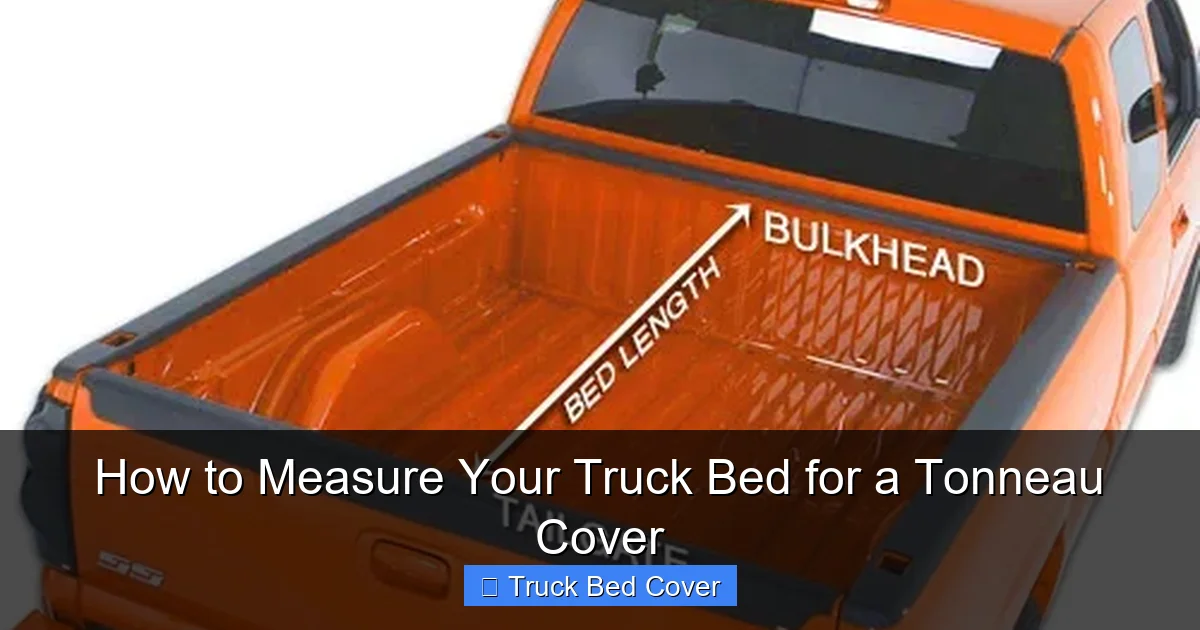
- Step 3: Measure the Length of Your Truck Bed
- Step 4: Measure the Width of Your Truck Bed
- Step 5: Check the Height Clearance Above the Bed
- Step 6: Account for Bed Liners and Accessories
- Step 7: Verify Tailgate Compatibility
- Step 8: Match Your Measurements to Manufacturer Charts
- Bonus Tips for Perfect Fitment
- Conclusion: Confidence Comes from Preparation
How to Measure Your Truck Bed for a Tonneau Cover
If you’re considering adding a tonneau cover to your truck, one of the most important steps is getting the measurements right. A poorly fitted cover won’t just look bad—it could leak, warp in extreme weather, or even damage your truck bed over time. That’s why knowing how to measure your truck bed for a tonneau cover isn’t just helpful; it’s essential.
A tonneau cover sits flush over the open bed of your pickup truck, providing security, weather protection, and improved aerodynamics. But not all covers are created equal, and each brand has slightly different requirements based on bed length, width, rail type, and whether you have a standard tailgate or roll-up style. Getting your measurements wrong might mean returning a $400 investment—or worse, installing something that doesn’t seal properly.
In this comprehensive guide, we’ll walk you through exactly how to measure your truck bed for a tonneau cover, explain why precision matters, and share pro tips to avoid common pitfalls. Whether you drive a short-bed Ford, a long-bed Toyota, or anything in between, these steps will help you choose the perfect cover without the hassle.
Why Accurate Measurements Matter
Imagine buying a new pair of shoes online because they look great on the website. But when they arrive, they don’t fit—maybe too tight, maybe too loose, but definitely not what you expected. Now imagine that shoe costs $150 and you can’t return them because the box is opened. Frustrating, right?
Visual guide about How to Measure Your Truck Bed for a Tonneau Cover
Image source: autoaccessoriesgarage.com
The same applies to tonneau covers. While they’re not as expensive as custom boots, a mismatched cover can lead to:
- Water leakage: Gaps at the edges let rain seep into your bed, damaging gear or rusting tools.
- Poor fuel economy: An ill-fitting cover disrupts airflow, reducing aerodynamics and increasing drag.
- Safety risks: Loose covers may shift while driving, especially at high speeds, creating noise or even becoming airborne debris.
- Voided warranties: Some manufacturers void coverage if the cover wasn’t installed according to specs.
On the flip side, precise measurements ensure a snug, professional-looking installation. You’ll enjoy better security for valuables, reduced wind noise, and peace of mind knowing your gear stays dry—even during a surprise downpour.
Common Mistakes People Make When Measuring
Even experienced truck owners sometimes skip steps or make assumptions. Here are the top three mistakes to avoid:
- Measuring outside the rails: Many people measure from the outer edge of the bed, but tonneau covers sit inside the side rails. Measuring externally gives false dimensions.
- Ignoring bed liners: If your truck has a spray-in bedliner or rubber mat, the cover must clear it. Otherwise, it won’t lay flat.
- Forgetting about the tailgate: The position and type of your tailgate affect how the cover closes and seals.
Let’s dive into the step-by-step process to get it right every time.
Step 1: Know Your Truck Model and Bed Configuration
Before grabbing a tape measure, identify your exact truck specifications. Most modern pickups fall into one of three bed lengths:
- Short bed (5.5–6 feet): Common on compact trucks like the Nissan Frontier or Ford Ranger.
- Standard bed (6–7 feet): Found on mid-size trucks such as the Chevy Colorado or Toyota Tacoma.
- Long bed (8+ feet): Typical of full-size trucks like the Ford F-150 or Ram 1500.
But length isn’t the only factor. Also note:
- Bed style: Are there side rails? Are they raised or flush?
- Tailgate type: Is it solid, fold-down, or a split gate?
- Accessories: Do you have a bed extender, gooseneck hitch, or rearview camera?
You can usually find this info in your owner’s manual or by checking the VIN decoder on sites like FleetCarma.com. Knowing your setup helps narrow down compatible tonneau covers before you start measuring.
Example: Measuring a 2020 Ford F-150 with 6.5-Foot Bed
Let’s say you own a 2020 Ford F-150 with a 6.5-foot bed and factory-installed side rails. Before measuring, confirm:
- Bed length: From bumper to tailgate when closed = 78 inches.
- Rails: Raised aluminum rails along both sides.
- Tailgate: Solid, non-folding.
- No bedliner installed.
- Measuring tape (at least 10 feet long): Standard retractable tapes work fine.
- Notepad and pen or smartphone: To record numbers as you go.
- Ladder or step stool (optional): For reaching high points near the cab.
- Helper (highly recommended): One person can hold one end of the tape steady while the other reads the measurement.
- Close the tailgate completely.
- Start at the inside front corner of the bed rail (near the cab). Don’t measure from the actual bumper; the bed begins where the rails start.
- Run the tape straight back along the inside of the rail to the inside rear corner. Keep the tape level and taut.
- Record the total length.** Round to the nearest half-inch (e.g., 78.25 inches becomes 78.5).
- Measure at the front, middle, and back of the bed.** Some beds taper slightly.
- Use the inside edge of the side rails as your guide.** Again, don’t measure from the outer body panel.
- Take the smallest measurement—this determines the maximum cover width.**
- Add 0.25–0.5 inches to account for mounting hardware.**
- From the top of the rail to the highest point inside the bed.** This includes any bed caps or trim.
- Minimum clearance needed: 1.5–2 inches.** Hard covers require more space than soft ones.
- Spray-in liners:** Measure over the liner surface, not the bare metal. Most hard covers sit on top of liners.
- Drop-in bed mats:** These create a slight bump. Ensure the cover has enough room to close without binding.
- Toolboxes:** If mounted in the bed, note their location and height. Some covers accommodate them; others don’t.
- LED light bars or cameras:** May protrude into the cover’s path.
- Solid tailgates:** Work with almost all covers.
- Fold-down or split tailgates:** May require special brackets or limit closure angles.
- Aluminum vs. steel:** Aluminum gates are lighter but may flex differently under load.
- Truck make/model/year
- Bed length
- Rail type (if applicable)
- Tailgate style
- Measure twice, order once: Accuracy saves money.
- Order slightly larger if in doubt: Many covers allow trimming.
- Ask about return policies: Some brands offer exchanges if the cover doesn’t fit.
- Watch installation videos: Seeing how others measure can clarify tricky spots.
Now grab your tools and begin measuring.
Step 2: Gather the Right Tools
You don’t need a laser scanner or digital caliper—just a few basic items:
Pro tip: Use masking tape to mark reference points on the bed rails so you don’t lose track.
Step 3: Measure the Length of Your Truck Bed
This is the easiest part—but still easy to mess up. Follow these steps carefully:
Example: If your tape reads 78.75 inches, round up to 79 inches for ordering purposes.
What About Extended Cab vs. Crew Cab?
Cab size doesn’t change the bed length—only the number of doors. Both extended and crew cabs can have the same bed size. Just focus on the physical bed area, not the cabin.
Step 4: Measure the Width of Your Truck Bed
Width is trickier because it’s not always consistent across the bed. Here’s how to do it right:
Example: Front = 59.5″, Middle = 60″, Back = 59″. The limiting dimension is 59.5″. Add 0.25″ → 59.75″ total width needed.
Special Case: No Side Rails
If your truck has no side rails (common on older models or base trims), many soft roll-up or tri-fold covers still work—but hard covers often require rails. In this case, measure the same way, but check compatibility with rail-free designs.
Step 5: Check the Height Clearance Above the Bed
Most tonneau covers sit within the bed rails, but some tall items (like roof racks or antennas) might interfere. Measure:
If clearance is less than 1.5″, consider a low-profile cover or remove obstacles temporarily during installation.
Step 6: Account for Bed Liners and Accessories
This is where most DIYers fail. Even small details matter:
Tip: Take photos of your bed setup before measuring. Share them with customer service if unsure.
Step 7: Verify Tailgate Compatibility
The tailgate plays a huge role in how the cover operates:
Confirm with the manufacturer whether your gate type is supported. Some brands explicitly list compatible gates on their websites.
Step 8: Match Your Measurements to Manufacturer Charts
Once you have your numbers, head to the tonneau cover retailer’s website. They’ll have an interactive size selector or downloadable PDF chart.
Input your:
If multiple options appear, compare features (e.g., lockable vs. non-locked, vinyl vs. aluminum) and read reviews.
What If Your Truck Isn’t Listed?
Some aftermarket covers are universal. Look for “fits most 5.5–6 ft beds” or similar language. But be cautious—universal fits rarely provide optimal sealing or aesthetics.
Bonus Tips for Perfect Fitment
Conclusion: Confidence Comes from Preparation
Measuring your truck bed for a tonneau cover doesn’t have to be intimidating. With the right tools, patience, and attention to detail, you’ll get it right the first time. Remember: precision beats guesswork every day.
Whether you’re hauling kayaks, protecting laptops, or just want a cleaner look, the perfect tonneau cover starts with accurate measurements. Take your time, double-check everything, and don’t hesitate to contact the seller if something seems off.
Now go out there—measure smart, install strong, and enjoy the benefits of a covered truck bed all year long.
Frequently Asked Questions
Can I install a tonneau cover without side rails?
It depends on the type. Soft roll-up covers often work without rails, but hard covers typically require them for structural support and sealing. Always check the product specifications before purchasing.
How often should I re-measure my truck bed?
Only if you’ve modified the bed—such as adding a bed extender, toolbox, or replacing the tailgate. Otherwise, your original measurements remain valid for the same vehicle configuration.
Are universal tonneau covers a good option?
They can work in a pinch, but they rarely provide a perfect fit or optimal weather sealing. For best results, choose a cover designed specifically for your truck model and bed length.
What happens if my tonneau cover is too small?
An undersized cover won’t close properly, creating gaps that allow water and debris in. It may also damage the bed rails or cause stress fractures in the cover material over time.
Can I trim a tonneau cover to fit?
Some soft covers allow limited trimming of the bulkhead strap, but never cut into the main fabric or frame. Always consult the manufacturer before making any modifications.
Is it better to buy online or visit a dealer?
Online retailers usually offer more selection and competitive pricing. Dealers may offer local installation, but they often carry fewer models. Compare prices, read reviews, and verify return policies either way.