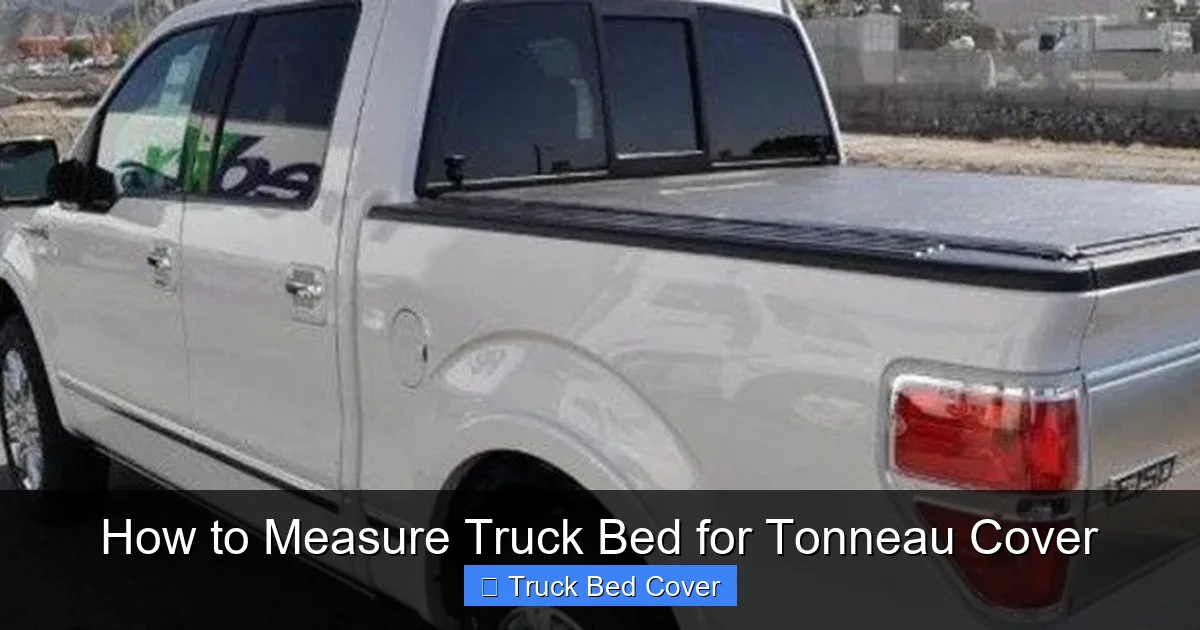
How to Measure Truck Bed for Tonneau Cover
Measuring your truck bed for a tonneau cover is easier than you think. With the right tools and a little attention to detail, you can avoid common mistakes and install a secure, weather-resistant cover. Follow this step-by-step guide to get accurate measurements and choose the best fit for your truck.
Key Takeaways
- Measure from inside the bed rails: Always measure inside the bed rails—not the outside—to ensure a proper fit. This accounts for rail height and prevents interference.
- Take multiple measurements: Measure the length, width, and height at different points to catch any irregularities in your truck bed.
- Note rail type and configuration: Different tonneau covers work with different rail setups (no rails, flush rails, raised rails), so identify yours before ordering.
- Use a flexible measuring tape: A tape measure is more accurate for curved or uneven surfaces than a rigid ruler.
- Double-check before purchasing: Confirm your measurements with the manufacturer’s chart or customer service to avoid returns.
- Account for tailgate features: If you have a toolbox or bed extender, note their dimensions—they affect cover compatibility.
- Consider future accessories: Think about adding racks or lights later; some covers don’t work well with aftermarket gear.
Quick Answers to Common Questions
Can I install a tonneau cover on a truck without bed rails?
Yes, many tonneau covers are designed for trucks with no rails. These typically use adhesive strips or clamps that attach directly to the bed surface or side walls. Just make sure to clean the area thoroughly before installation and follow the manufacturer’s instructions carefully.
What happens if my cover is too tight?
If the tonneau cover is too tight, it can warp the bed rails, crack the panel joints, or prevent the tailgate from closing fully. Over time, stress on the frame may lead to premature wear. Always allow a small margin of error—better to have slight looseness than excessive pressure.
Do I need to remove the tailgate to install a tonneau cover?
Most tonneau covers are installed while the tailgate remains attached. However, some low-profile or custom-fit models require partial removal for easier access. Check the product manual beforehand. If unsure, practice with the tailgate open first.
Will a tonneau cover work with a spray-in bedliner?
Yes, but you must account for the liner’s added depth—usually ¼ to ½ inch. Some covers are listed specifically for “with liner” installations. Always verify compatibility with your exact liner type and thickness.
How long does it take to measure and install a tonneau cover?
Measuring takes about 15–20 minutes if done carefully. Installation varies by type: soft roll-ups can take 30 minutes, while hard folding or retractable covers may take 1–2 hours due to drilling and alignment. Factor in extra time if it’s your first DIY project.
📑 Table of Contents
- How to Measure Truck Bed for Tonneau Cover: A Complete Guide
- Why Accurate Measurements Matter
- Tools You’ll Need
- Step 1: Identify Your Truck’s Bed Type
- Step 2: Measure the Length of Your Truck Bed
- Step 3: Measure the Width of Your Truck Bed
- Step 4: Measure the Height Inside the Bed Rails
- Step 5: Document Any Special Features
- Step 6: Verify and Compare with Manufacturer Charts
- Common Mistakes to Avoid
- Final Tips for Success
- Conclusion
How to Measure Truck Bed for Tonneau Cover: A Complete Guide
If you’re considering upgrading your truck with a tonneau cover, one of the most important steps is getting the measurements right. A poorly fitted cover won’t seal properly, leaving your cargo exposed to rain, dust, and theft. On the other hand, a custom-fit cover enhances fuel efficiency, improves aerodynamics, and adds style to your ride.
But measuring your truck bed isn’t as simple as just eyeballing it or grabbing a tape measure once. There are specific spots to measure, common pitfalls to avoid, and details that can make or break your purchase. In this guide, we’ll walk you through everything you need to know—from preparing your truck to verifying your final numbers—so you can confidently order the right tonneau cover the first time.
Why Accurate Measurements Matter
A tonneau cover sits directly over the bed of your truck, sealing it off like a lid on a box. But unlike kitchen appliances, truck beds come in all shapes and sizes—even within the same model year. Two trucks might look identical, but slight variations in bed length, rail design, or tailgate type can mean the difference between a perfect seal and constant leaks.
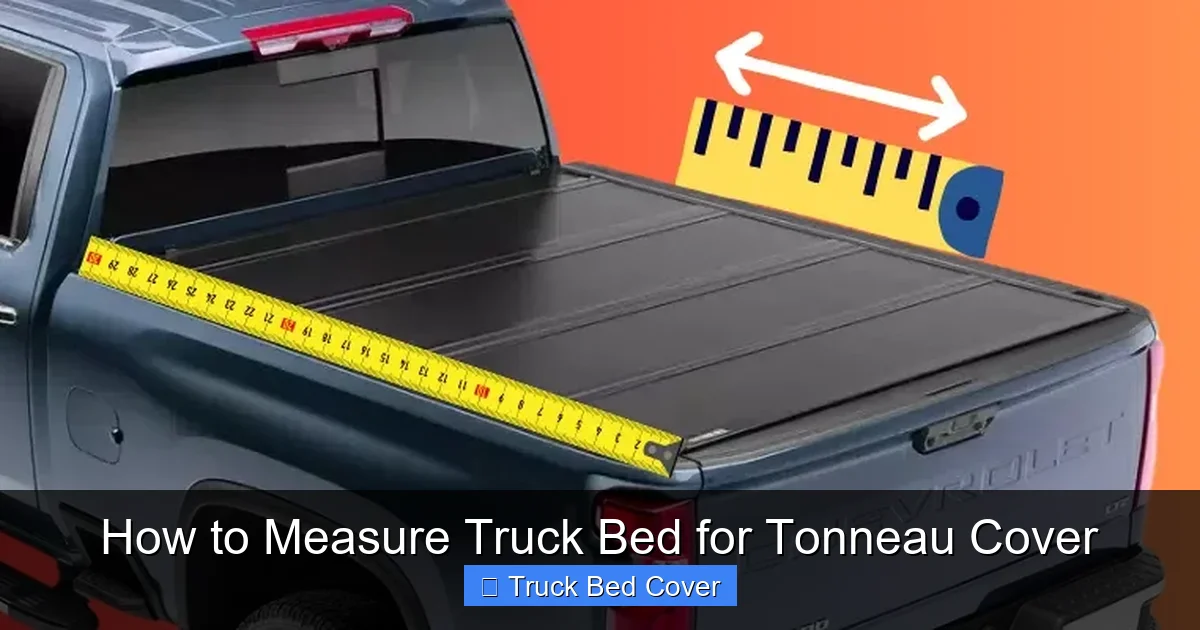
Visual guide about How to Measure Truck Bed for Tonneau Cover
Image source: tonneauguide.com
Manufacturers design covers to fit precise specifications. If your measurements are off by even an inch, the cover may sit too tight (causing damage) or too loose (letting water in). That’s why taking careful, consistent measurements is essential. Plus, many covers ship flat-packed and require assembly—getting it wrong means returning it, waiting weeks for a replacement, and paying return shipping costs.
Tools You’ll Need
Before you start measuring, gather these simple tools:
- Flexible measuring tape: Essential for following curves along the bed sides and rails.
- Pencil and notebook: To record measurements as you go.
- Level surface: Ensure your truck is parked on flat ground for accuracy.
- Flashlight: Helps spot small obstructions like bolts or seams.
- Camera phone: Snap photos of your rail type and bed setup—great for confirming with customer support.
You don’t need expensive equipment. Just take your time and be methodical. Rushing leads to mistakes that cost money and frustration later.
Step 1: Identify Your Truck’s Bed Type
Know Your Rail Configuration
The first thing to determine is whether your truck has bed rails, and if so, what kind. Most modern trucks have either:
- No rails: Smooth metal sides (common on newer models)
- Flush-mounted rails: Seamlessly integrated into the bed walls
- Raised rails: Bolted on top of the bed sides, often with rubber gaskets
Look closely at the edges of your truck bed. If there’s a gap between the rail and the bed wall, it’s likely raised. Flush rails sit perfectly level with the bed surface. No rails mean you’ll need a clamp-style or adhesive-backed cover.
Check Tailgate Style
Your tailgate matters too. Is it a standard fold-down tailgate, or do you have:
- A soft roll-up tailgate
- A hard tri-fold or retractable tailgate
- A tailgate with a built-in lock or handle recess
Some covers require a specific tailgate clearance. For example, a low-profile cover needs enough space above the tailgate to latch securely. Measure the vertical distance from the top of the tailgate to the edge of the bed when closed.
Look for Obstructions
Common obstacles include:
- Bedliner thickness
- Toolboxes mounted in the bed
- LED light bars or side mirrors
- Spray-in bedliners with raised ribs
- Measure twice, order once. Accuracy saves time and money.
- Write down every number. Numbers blur fast—use a checklist.
- Ask for help if needed. Mechanics or local shops often have experience with tonneaus.
- Read reviews. Others with similar trucks may share insights.
These can interfere with how a cover sits or seals. Note their exact location and dimensions so you can tell the manufacturer.
Step 2: Measure the Length of Your Truck Bed
Length is usually the easiest measurement—but not always straightforward. Start by measuring from the inside front of the bed (where the cab meets the box) to the inside edge of the tailgate when it’s fully closed.
Use your flexible tape to follow the contour of the bed side. Don’t force the tape—let it drape naturally. Record this number in inches or centimeters. Repeat three times at different points along the bed to check for warping or unevenness.
Example: If your first measurement is 58 inches, second is 57.5, and third is 58.2, round up to 58 inches. Small variations are normal; consistency matters more than precision.
Step 3: Measure the Width of Your Truck Bed
Width is measured across the inside of the bed, perpendicular to the length. Place the end of your tape at one side wall and stretch it to the opposite side. Again, follow the natural curve of the bed—don’t pull tight.
Take this measurement at both ends of the bed (front and back) and compare. Some older trucks have tapered beds where the rear is narrower than the front. If so, use the smaller number for ordering.
Pro tip: If your bed has raised rails, measure from the inner edge of the rail—not the outer edge. The cover clamps onto the rails, so the internal space is what counts.
Step 4: Measure the Height Inside the Bed Rails
This is critical for certain types of covers, especially hard folding or retractable models. Measure vertically from the bottom of the bed floor up to the inside top edge of the rail.
Do this at multiple points along the bed’s perimeter. If your rails are uneven, take the lowest measurement—the cover must clear all obstacles to close properly.
Note: For no-rail or soft covers, height isn’t always a factor. But for hard covers, even ½-inch difference can prevent latching.
Step 5: Document Any Special Features
Toolbox or Bed Extender?
If you use a toolbox bolted into the bed, measure its length, width, and how far it protrudes from the tailgate side. Many manufacturers offer covers designed to work around toolboxes—but only if they know the exact size and position.
Spray-On vs. Drop-In Bedliner
A spray-in liner adds ¼ to ½ inch to the bed walls and floor. A drop-in liner is removable plastic. Both affect measurements. If you have a spray liner, account for its thickness when measuring width and height.
Side Steps or Running Boards
While not inside the bed, large side steps can limit access during installation. Make sure you have room to maneuver the cover without damaging nearby parts.
Step 6: Verify and Compare with Manufacturer Charts
Once you have all your numbers, visit the tonneau cover brand’s website and find their fitment guide. Enter your truck make, model, year, and trim level. They’ll show compatible products and required measurements.
Cross-check your data. For example, if the site says “58” bed, 55” width, 5” rail height, and you measured 58.2”, 54.8”, and 4.9”, you’re good to go. Round conservatively—it’s better to have a slightly oversized cover than one that’s too tight.
If something doesn’t match, contact customer support. Bring photos! Many reps can confirm fit based on images alone.
Common Mistakes to Avoid
Measuring Outside Instead of Inside
This is the #1 error. The cover sits inside the rails, so external dimensions don’t matter. Always measure the open space between the rails.
Ignoring Rail Type
Assuming all covers work with any rail system leads to returns. Clamp-on covers need raised rails; bolt-on models require specific mounting holes.
Not Accounting for Bedliner
A thick bedliner changes the usable bed size. Some covers list both “with” and “without” liner options—choose wisely.
Rushing the Process
Skipping steps or guessing leads to mismatches. Set aside 15–20 minutes to measure carefully. Better safe than sorry.
Final Tips for Success
With these steps, you’ll be ready to choose a tonneau cover that fits like it was made for your truck. Whether you want security, style, or weather protection, the right cover makes all the difference.
Conclusion
Measuring your truck bed for a tonneau cover doesn’t have to be intimidating. By focusing on the right spots—inside the rails, across the width, and up the height—and accounting for features like toolboxes or bedliners, you set yourself up for success. Use simple tools, take your time, and double-check everything before placing an order.
Remember: a well-fitted tonneau cover does more than look good. It keeps your gear dry, deters thieves, improves gas mileage, and protects your investment. So don’t rush. Do it right. And soon, you’ll be cruising with confidence under a sleek, secure cover that’s perfectly tailored to your truck.
Frequently Asked Questions
Should I measure my truck bed with the tailgate open or closed?
Always measure with the tailgate fully closed. An open tailgate creates an inaccurate length reading and affects how the cover seals. Close it firmly and ensure no gaps exist between the tailgate and bed before measuring.
Can I use a regular tape measure instead of a flexible one?
Regular tape measures are fine for straight lines, but a flexible tape is better for curved bed sides and rails. It conforms to the shape, giving more accurate readings. Flexible tapes also reduce human error from forcing the tape into place.
What if my truck bed is slightly warped or uneven?
Small warps are common and usually don’t affect fit. Take multiple measurements and use the smallest values to ensure clearance. If the warp is severe, consider consulting a professional installer who can assess impact and recommend solutions.
Do I need to know my truck’s exact model year to buy a tonneau cover?
Yes. Even within the same year, trim levels and factory options (like toolboxes or bed extenders) change bed dimensions. Providing your full vehicle info ensures you get a cover designed for your specific configuration.
Can I return a tonneau cover if it doesn’t fit after improper measurement?
Many reputable brands accept returns within 30 days if the cover is unused and in original packaging. However, restocking fees and return shipping may apply. To avoid hassle, always confirm fit with the manufacturer using your measurements before buying.
Is it worth paying extra for a custom-fit tonneau cover?
Absolutely. Custom-fit covers offer superior sealing, easier installation, and better longevity. While universal or “one-size-fits-most” options exist, they often compromise on performance. Investing in a precision-engineered cover pays off in durability and peace of mind.