How Do You Measure a Truck Bed for a Cover
Measuring your truck bed correctly is the most important step when installing a new cover. A poor fit leads to leaks, shifting, or damage over time. Use precise tools like a tape measure and level, and account for rail systems, bed liners, and tailgate gaps to get professional results every time.
If you’ve decided to upgrade your truck with a bed cover—whether it’s a sleek tonneau, a rugged roll-up, or a high-tech retractable model—you’re probably excited to see it installed. But before you even think about opening that box, there’s one critical step: measuring your truck bed accurately. This isn’t just a suggestion—it’s the foundation of a secure, weather-tight, and long-lasting cover. Skip this step, and you risk leaks, rattles, or worse, a cover that doesn’t fit at all.
Truck bed covers come in many shapes and sizes, and each type has specific dimensional needs. From roll-up vinyl to hard folding panels, the way you measure will directly impact how well your cover performs. Whether you drive a short-bed Ford F-150, a long-bed Chevy Silverado, or a compact Toyota Tacoma, getting the right dimensions ensures your cargo stays dry, protected, and out of sight. In this complete guide, we’ll walk you through every step of measuring your truck bed for a cover—no guesswork, no confusion, just clear, actionable steps.
Key Takeaways
- Measure from inside the bed walls, not the outer frame. This ensures the cover fits snugly without overhang.
- Include rail systems in your measurement—most covers require clearance for side rails or caps.
- Account for bed liner depth. Thick liners can raise the bed floor and affect cover height.
- Check tailgate alignment. Misaligned tailgates create gaps that allow water intrusion.
- Verify length, width, and height before ordering. Even small differences matter for a proper seal.
- Take multiple measurements at different points to catch warped or uneven beds.
- Use manufacturer-specific instructions, as brands like BakBox, UnderCover, and TruXedo have unique requirements.
Quick Answers to Common Questions
Can I measure my truck bed with the tailgate on?
It’s best to remove the tailgate for accurate measurement. If that’s not possible, measure from the inside edge where the tailgate meets the bed. However, some covers include a rear flap or seal, so always check the manufacturer’s guidelines.
Do I need to remove the bed liner when measuring?
No—measure from the top surface of the liner. Most covers sit above or mount to the rails, so the liner height affects clearance and sealing. Note whether you have a spray-in or drop-in liner, as this impacts fit.
What if my truck has a bed extender? Should I measure with it attached?
Yes, measure with the bed extender fully deployed. Some covers are designed to work with extenders, while others require removal. Confirm compatibility before ordering.
Are there online tools to help me find the right cover size?
Many manufacturers offer fit guides on their websites. Enter your truck details (year, make, model, bed size), and the site will show compatible covers. These tools often include photos and installation videos.
Can I use a retractable cover if I have a roof rack?
Possibly—but only if the rack is compatible. Retractable covers need consistent clearance above the bed. Some racks must be removed, while others are designed to work together. Always verify with the cover brand before purchasing.
📑 Table of Contents
- Why Accurate Measurement Matters
- Tools You’ll Need
- Step-by-Step: Measuring Your Truck Bed Length
- Measuring Width: Inside vs. Outside Dimensions
- Height Measurement: Clearance Above the Bed
- Accounting for Bed Liners and Rail Systems
- Checking Tailgate Alignment and Gap
- Precision Tips for Warped or Irregular Beds
- Common Mistakes to Avoid
- When to Consult a Professional
- Final Checklist Before Ordering
Why Accurate Measurement Matters
Before diving into the tape measure, let’s talk about why precision matters. A cover that’s slightly too tight may warp under heat or stress. One that’s too loose might flap in the wind, let rain seep through, or slide around during driving. Some manufacturers won’t accept returns if the cover was installed and later found to be incompatible due to incorrect sizing.
Additionally, certain covers—especially retractable models—require specific clearance above the bed. Hard folding covers need space for panel movement, while roll-up styles depend on tailgate operation. If you don’t factor in these variables, installation becomes impossible or compromises safety.
Beyond performance, accurate measurements save time and money. Ordering the wrong size means waiting for returns or replacements, which can take weeks. By taking your time now, you avoid back-and-forth shipping hassles and ensure your investment pays off immediately.
Tools You’ll Need

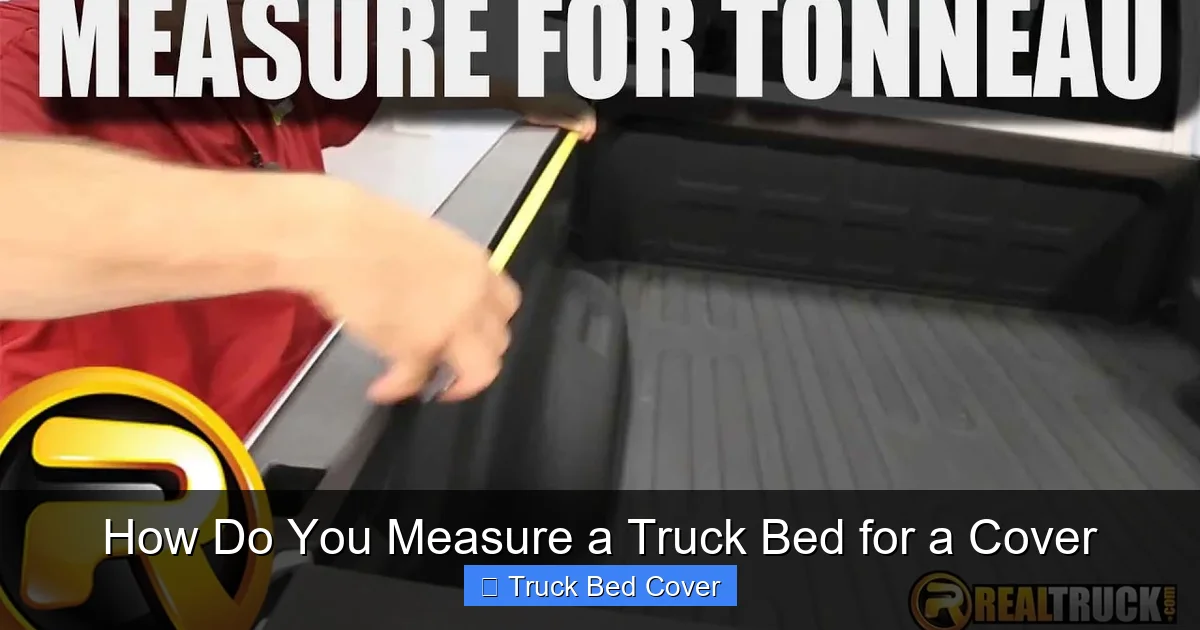
Visual guide about How Do You Measure a Truck Bed for a Cover
Image source: i.ytimg.com
Before you start, gather these simple tools:
- Tape measure (at least 25 feet) – A standard 6-foot tape won’t cut it for full-bed measurements.
- Level or straight edge – Helps check for warping or misalignment.
- Marker or chalk – To mark reference points on the bed walls.
- Notebook or phone – For recording measurements.
- Safety gloves – Especially helpful if working alone or on a taller pickup.
Pro tip: If you have a friend, ask them to hold one end of the tape while you read the measurement. Two people make it easier and more accurate.
Step-by-Step: Measuring Your Truck Bed Length
The length of your truck bed is usually straightforward, but subtle details can trip you up. Start by removing the tailgate if possible—many covers require it for proper sealing.
How to measure:
- Open the tailgate and look at the inner wall where it meets the cab.
- Place the zero end of your tape against the inside rear corner of the bed (near the cab).
- Extend the tape straight across the bed floor toward the tailgate.
- Read the measurement where the tape meets the inner tailgate wall.
Important notes:
- Measure along the centerline of the bed for consistency.
- If your bed has a built-in liner, measure from the top edge of the liner, not the bottom.
- For extended cabs (SuperCrew, Quad Cab), confirm whether the cover includes a front extension. Some do, some don’t.
Example: A standard Ford F-150 SuperCrew measures about 67 inches from cab to tailgate. If you’re buying a cover labeled “Fits 6′ beds,” double-check that your bed matches exactly—even half an inch can mean the difference between a perfect fit and a gap.
Measuring Width: Inside vs. Outside Dimensions
Width is trickier because you must distinguish between inside and outside measurements—and most covers use inside width.
Correct method:
- Start at the inside wall of the driver’s side bed rail.
- Extend the tape diagonally across the bed to the inside wall of the passenger side rail.
- Ensure the tape is level and not sagging.
Don’t measure from outside the rails—this gives you an oversized number. Most manufacturers subtract rail width from their specifications. For example, if your inside width is 54 inches, and the rails add 2.5 inches each, your outside width would be 59 inches.
Also consider:
- If you have side-mounted fuel doors or toolboxes, they can reduce usable width.
- Some covers are designed to work with or without rails. Check compatibility.
- Retractable covers often require extra width for internal mechanisms—confirm with the brand.
Height Measurement: Clearance Above the Bed
This is especially crucial for retractable and low-profile rolling covers. The height measurement refers to the vertical space between the bed floor and the lowest point of the roof rack or crossbar (if present).
How to measure:
- Clear any items from the bed.
- Place the zero end of your tape flat on the bed floor.
- Extend vertically upward until you hit the underside of the crossbar or roof rack.
- Record the distance.
Even a few inches of extra height can determine whether a retractable cover fits. Many retractables need at least 3 inches of clearance. If you’re using a roof rack, some covers require removal. Others are designed to operate with racks—but only if the rack is compatible.
Tip: If you plan to install a roof rack later, measure both with and without it. That way, you can choose a cover that works in either configuration.
Accounting for Bed Liners and Rail Systems
Many truck owners install spray-in bed liners or drop-in plastic liners. These add ½ to ¾ of an inch to the bed floor height. Since most covers sit on top of the bed rails, this extra height affects how the cover sits and seals.
What to do:
- Measure from the top surface of the liner, not the bare metal.
- If you have a spray-in liner, check its thickness—some are thicker than others.
- For drop-in liners, measure from the highest point of the liner.
Rail systems also play a major role. There are three main types:
- No rails – Bare metal sides. Easiest for installation.
- Side rails only – Common on newer trucks. Most covers work with these.
- Caps or raised rails – Add 1–2 inches of height. May require specific mounting brackets.
Always tell the cover supplier what type of rails you have. Some brands offer rail-specific kits. Others provide universal clamps that adjust to various rail heights.
Checking Tailgate Alignment and Gap
A common oversight is ignoring the tailgate. Even if your cover fits perfectly front-to-back, a misaligned tailgate creates a gap that lets water and dirt in.
How to assess:
- Close the tailgate and look for visible gaps between the tailgate and bed walls.
- Run your fingers along the seam—feel for sharp edges or misalignment.
- Use a feeler gauge or business card to measure the largest gap (usually near the hinges).
Most modern tailgates are self-aligning, but after years of use, they can warp. If the gap exceeds ⅛ inch, consider adjusting the hinge bolts or replacing the tailgate seal.
For covers with a rear seal or flap, this gap is critical. Some roll-up covers include a vinyl flap that hangs down to bridge the gap. Others require a custom-fit rear gasket.
Precision Tips for Warped or Irregular Beds
Not all truck beds are perfectly square. Older models or those damaged in accidents may have slight warps. To detect this:
Method:
- Place a straightedge (like a 4-foot level) along the top of the bed rails.
- Look for gaps between the straightedge and the rail.
- Measure these gaps at multiple points—front, middle, and rear.
If you find significant warping (more than ¼ inch over 6 feet), contact the cover manufacturer. Some brands specialize in irregular beds and offer custom solutions. Others may recommend reinforcing the rails before installation.
Another tip: Take measurements at different times of day. Metal expands and contracts with temperature changes. Morning measurements are often most stable.
Common Mistakes to Avoid
Even experienced truck owners make these errors:
- Using outside dimensions – Always go inside.
- Ignoring rail caps – They increase effective width and height.
- Skipping height measurement – Critical for retractables and low-profiles.
- Not checking manufacturer specs – Each brand has unique tolerances.
- Rushing the process – Double-check every measurement twice.
Remember: It’s better to spend 30 minutes measuring carefully than hours trying to fix a poorly fitted cover.
When to Consult a Professional
If you’re unsure about any measurement—or if your truck has unusual features like a camper shell, toolbox, or custom rails—consider contacting a local truck accessory shop. Many offer free measurement services and can help you select the right cover.
Alternatively, reach out to the cover manufacturer directly. Reputable brands like Bakflip, DiamondBack, Tonno Pro, and Extang have customer support teams trained in fitment questions.
They can walk you through tricky cases, suggest compatible models, or even provide custom solutions for rare truck configurations.
Final Checklist Before Ordering
Before hitting “buy,” run through this quick list:
- ✅ Length measured from cab to tailgate (inside)
- ✅ Width measured across inside rails
- ✅ Height measured from bed floor to rack/roof
- ✅ Rail type noted (none, side rails, caps)
- ✅ Bed liner thickness accounted for
- ✅ Tailgate gap checked and documented
- ✅ Manufacturer’s fit guide reviewed
Once confirmed, write down your exact measurements and keep them handy. Include your truck year, make, model, and cab style (e.g., 2020 Ford F-150 SuperCrew 5.5 ft bed). This information helps both you and the seller verify compatibility.
With these steps, you’ll be confident that your new truck bed cover fits like it was made for your rig—not just close enough to work.
Frequently Asked Questions
How do I know if my truck bed is too warped for a cover?
If you can slide a business card or ruler along the top of the bed rails and it doesn’t lie flat, your bed may be warped. Measure at multiple points—front, middle, and rear. If gaps exceed ¼ inch over 6 feet, consult the cover manufacturer or a professional installer.
Should I measure my truck bed in the morning or afternoon?
Morning is ideal because temperatures are cooler and metal is less likely to expand. Avoid measuring in extreme heat or cold, as metal dimensions can shift slightly with temperature changes.
Can I install a cover over a spray-in bed liner?
Yes, most modern covers are designed to work with spray-in liners. Just remember to measure from the top surface of the liner, not the bare truck bed. Also, ensure the liner doesn’t interfere with tailgate alignment or cover sealing.
What’s the difference between inside and outside width measurements?
Inside width is measured from the inner edge of one bed rail to the inner edge of the opposite rail. Outside width includes the rails themselves. Covers typically require inside width, so always use that unless specified otherwise.
Do I need to remove side rails to install a cover?
No—most covers are designed to work with side rails. However, some models require specific rail types or heights. Check the product description or contact the manufacturer to confirm compatibility with your rail system.
How accurate should my measurements be?
Within ¼ inch is acceptable for most covers. Small variations don’t matter much, but anything larger could affect sealing or installation. Always round down slightly when in doubt—better to have a bit of extra room than too little.