Smart Fleet Dash Cam Buying Guide
Fleet dash cameras have become essential tools for modern transportation companies, offering comprehensive vehicle monitoring, driver behavior analysis, and valuable evidence collection. This buying guide provides fleet managers and transportation professionals with the knowledge needed to select the most suitable dash cam solutions for their specific operational needs.
Understanding your company’s unique requirements is the first step toward making an informed decision. Whether you’re managing a small delivery operation or overseeing a large commercial fleet, the right dash cam system can significantly impact safety, efficiency, and cost-effectiveness. This comprehensive guide will walk you through every aspect of fleet dash cam selection, from technical specifications to budget considerations.
The market offers numerous options ranging from basic single-camera systems to sophisticated multi-camera networks with advanced analytics capabilities. With so many choices available, it’s crucial to understand what features matter most for your specific use case. This guide will help you navigate these options and make decisions that align with your operational goals and budget constraints.

What to Look for When Buying Dash Cams
1. Budget & Price Range
Establishing a realistic budget is the foundation of any successful dash cam purchase. Fleet operations vary widely in size and complexity, requiring different investment levels. Entry-level systems typically range from $50-$150 per unit, suitable for small fleets or supplemental safety measures. Mid-range options ($150-$300 per unit) offer better durability and features for growing businesses. Premium systems ($300-$600 per unit) provide enterprise-grade reliability and advanced functionality for larger operations. Luxury systems ($600+ per unit) include cutting-edge technology and specialized features for maximum protection.
When calculating your total investment, consider not just the initial hardware costs but also installation expenses, ongoing maintenance, software subscriptions, and potential savings from reduced insurance premiums and improved safety records. Many reputable manufacturers offer financing options or bulk purchase discounts that can significantly reduce the per-unit cost for larger fleets.
2. Performance Specifications
The technical capabilities of dash cams directly impact their effectiveness in real-world conditions. Resolution quality is paramount – look for at least 1080p Full HD recording, though 4K Ultra HD provides superior detail for license plate recognition and accident reconstruction. Frame rate matters too; 30fps is standard, but 60fps captures faster-moving objects and emergency situations more accurately.
Field of view (FOV) determines how much of the road and surrounding environment is captured. Standard lenses offer 120-130 degrees, while wide-angle lenses provide 170-180 degrees for comprehensive coverage. Night vision capabilities using infrared LEDs or enhanced low-light sensors ensure clear footage during evening hours. Advanced models feature automatic exposure adjustment and noise reduction algorithms for optimal performance in challenging lighting conditions.
Storage capacity and recording duration are equally important considerations. Most systems use loop recording to overwrite old footage when storage fills up, but having sufficient internal memory and expandable SD card slots ensures continuous operation. Cloud-based storage options eliminate local storage limitations while providing remote access to footage from anywhere with internet connectivity.
3. Build Quality & Durability
Fleet vehicles operate in demanding environments where equipment must withstand constant vibration, temperature extremes, and potential impacts. Industrial-grade dash cams feature reinforced housings, shock-resistant mounting brackets, and components rated for extended temperature ranges (-20°C to +70°C). IP67 or higher ingress protection ratings guarantee resistance to dust, water spray, and accidental immersion.
Military-grade materials and construction standards ensure longevity even under harsh operating conditions. Look for anti-glare screens, scratch-resistant glass, and vandal-proof designs that prevent tampering or theft attempts. Some premium models incorporate tamper detection features that immediately alert management if someone tries to remove or damage the camera.
Quality control processes and manufacturing certifications indicate reliability and consistency. ISO 9001 certified manufacturers follow strict quality assurance protocols, while automotive-grade components meet rigorous testing standards for vibration resistance, temperature cycling, and electromagnetic compatibility.
4. Features & Functionality
Modern fleet dash cams offer extensive functionality beyond basic video recording. Driver identification systems use facial recognition or RFID technology to track individual performance metrics and assign accountability. GPS tracking provides precise location data and speed monitoring, enabling route optimization and compliance verification. Accelerometer sensors detect sudden movements like hard braking, rapid acceleration, or cornering that may indicate risky driving behaviors.
Advanced alert systems notify fleet managers of violations such as speeding, harsh braking, or unauthorized vehicle usage through mobile apps or email notifications. Two-way audio communication allows direct interaction with drivers, enabling immediate coaching or emergency assistance without interrupting operations. Automatic incident detection using AI algorithms identifies accidents, collisions, or other critical events and automatically saves relevant footage.
Integration capabilities with existing fleet management software streamline data organization and reporting. APIs and SDKs enable custom development for specific business needs, while standardized protocols ensure compatibility across different systems. Real-time monitoring dashboards provide instant visibility into fleet operations, helping managers respond quickly to emerging situations or performance issues.
5. Brand Reputation
Choosing established brands with proven track records in fleet security solutions reduces risk and ensures long-term support availability. Industry leaders invest heavily in research and development, resulting in more reliable products and innovative features. Customer satisfaction ratings, professional reviews, and independent testing results provide objective benchmarks for comparing manufacturers.
Market presence and financial stability indicate commitment to ongoing product development and customer service. Companies with extensive dealer networks and authorized service centers offer better local support, while those with international operations provide global warranty coverage. Industry certifications and partnerships with major fleet management platforms demonstrate compatibility and reliability within professional environments.
Long-term product availability and upgrade paths ensure that investments remain relevant as technology advances. Manufacturers who regularly release firmware updates and new models show dedication to improving products based on user feedback and technological developments. Transparent communication about product lifecycles and end-of-support dates helps fleet managers plan upgrades and avoid unexpected obsolescence.
6. Warranty & Support
Comprehensive warranty coverage protects against defects and premature failures, typically ranging from one to three years depending on the manufacturer and product tier. Extended warranty options can provide additional peace of mind for critical fleet operations. Service level agreements (SLAs) specify response times for technical support requests and repair turnaround periods, ensuring minimal downtime for mission-critical vehicles.
Technical support channels including phone, email, live chat, and remote diagnostics determine how quickly problems can be resolved. Knowledge bases, video tutorials, and online training resources empower fleet managers to troubleshoot common issues independently. On-site service capabilities reduce vehicle downtime by performing repairs at convenient locations rather than requiring trips to service centers.
Software update policies and backward compatibility ensure that existing investments remain functional as new features are introduced. Open API documentation and developer support facilitate integration with third-party systems, while migration tools simplify transitions between product generations or competing platforms.
7. Size & Portability
Compact designs minimize visual obstruction and aerodynamic drag while fitting discreetly behind rearview mirrors or on dashboard mounts. Slim profiles reduce the risk of interference with airbag deployment or driver visibility. Lightweight construction decreases overall vehicle weight, contributing to fuel efficiency and reducing wear on suspension components.
Modular architectures allow easy installation and removal for maintenance or relocation between vehicles. Quick-release mechanisms enable rapid servicing without specialized tools or extensive disassembly. Universal mounting options accommodate various vehicle types and interior configurations, ensuring compatibility across diverse fleet compositions.
Portable power solutions including built-in batteries or external power banks provide flexibility for temporary installations or emergency backup scenarios. Solar charging capabilities offer sustainable energy options for vehicles with limited electrical capacity, while USB-C fast charging ensures quick power restoration after extended use.
8. User Reviews & Ratings
Real-world experiences from other fleet operators provide invaluable insights beyond manufacturer specifications. Online review platforms, industry forums, and professional rating sites aggregate user feedback across multiple dimensions including reliability, ease of use, feature effectiveness, and customer service quality. Consistent praise or criticism patterns help identify strengths and weaknesses that may not be apparent from product descriptions alone.
Case studies and testimonials from similar-sized operations offer practical examples of how specific solutions perform under comparable conditions. Video demonstrations and unboxing experiences showcase actual product quality, build materials, and initial setup procedures. Comparison charts highlighting key differences between competing models simplify decision-making by organizing complex feature sets into digestible formats.
Independent laboratory testing results and certification reports provide objective validation of performance claims and safety compliance. Third-party audit findings reveal any hidden limitations or unexpected drawbacks that might affect long-term satisfaction. Community engagement metrics including active discussion threads and responsive support teams indicate how well manufacturers address user concerns and foster collaborative problem-solving.
Different Types of Dash Cams

Common Buying Mistakes to Avoid
❌ Mistake: Prioritizing Price Over Performance
Why it’s bad: Choosing the cheapest option often leads to frequent breakdowns, poor image quality, and inadequate protection that ultimately costs more through increased insurance claims and lost productivity. Cheap cameras may lack essential features like G-sensor alerts, night vision capabilities, or robust mounting systems that ensure reliable operation in demanding fleet environments.
What to do instead: Calculate the total cost of ownership including maintenance, replacement parts, and potential liability costs. Investigate independent test results and professional reviews before making price-based decisions. Consider leasing options that provide access to premium equipment without large upfront investments.
❌ Mistake: Ignoring Integration Requirements
Why it’s bad: Assuming all dash cams work seamlessly with existing fleet management systems leads to compatibility issues, duplicate data entry, and inefficient workflows. Incompatible software creates siloed information that prevents comprehensive analysis and undermines safety improvement initiatives.
What to do instead: Verify API compatibility with current telematics platforms before purchasing. Request integration documentation and demonstration videos from manufacturers. Test sample units with your existing infrastructure if possible, and confirm that data export formats match your reporting requirements.
❌ Mistake: Overlooking Installation Logistics
Why it’s bad: Failing to account for installation time, specialized labor costs, and vehicle downtime results in unexpected expenses and operational disruptions. Complex wiring requirements or incompatible mounting points can delay deployments and increase per-unit costs significantly.
What to do instead: Obtain detailed installation guides and schematics before ordering. Schedule installations during regular maintenance windows to minimize disruption. Consider factory-installed options that integrate with OEM systems, reducing aftermarket installation complexity and costs.
❌ Mistake: Neglecting Scalability Planning
Why it’s bad: Selecting systems that cannot accommodate future fleet growth leads to costly replacements and inconsistent monitoring standards across expanding operations. Proprietary software locks and non-standard hardware create vendor dependency and limit flexibility.
What to do instead: Choose open-architecture platforms with modular expansion capabilities. Confirm that new vehicles can be added without replacing entire systems. Verify cloud-based scalability options that grow with your business without requiring hardware upgrades.
❌ Mistake: Underestimating Data Management Needs
Why it’s bad: Focusing solely on recording capabilities while ignoring storage, retrieval, and analysis challenges results in overwhelming data volumes and inefficient review processes. Without proper organization and search functionality, valuable evidence becomes inaccessible during critical incidents.
What to do instead: Plan storage infrastructure including servers, backup systems, and retention policies before deployment. Implement metadata tagging and automated categorization to streamline footage retrieval. Ensure compliance with local data protection regulations regarding personal information capture and retention periods.
❌ Mistake: Skipping Employee Training
Why it’s bad: Installing sophisticated equipment without adequate driver education leads to misuse, privacy concerns, and reduced adoption rates. Drivers unfamiliar with system operation may disable features, misinterpret alerts, or violate recording protocols that undermine safety objectives.
What to do instead: Develop comprehensive training programs covering both technical operation and policy implications. Provide hands-on practice sessions and reference materials for ongoing support. Establish clear communication about monitoring purposes and benefits to gain driver buy-in and cooperation.
Budget Guidelines: How Much Should You Spend?
Determining the appropriate investment for fleet dash cams requires careful consideration of your specific operational requirements, fleet size, and safety objectives. The following budget guidelines help allocate resources effectively while maximizing return on investment through improved safety outcomes and reduced operational costs.
Entry-Level ($50 – $150 per unit)
For small fleets of 5-15 vehicles or supplemental safety measures, entry-level dash cams provide basic recording capabilities at affordable prices. These systems typically offer 1080p resolution, 120-degree field of view, and loop recording functionality. While lacking advanced features like GPS tracking or driver identification, they deliver essential evidence collection for liability protection and basic compliance requirements.
Recommended applications include local delivery services, small rental car fleets, or municipal vehicle operations where primary concerns are cost containment and fundamental documentation needs. When selecting entry-level options, prioritize reliability over advanced features, focusing on reputable brands with proven track records in budget-conscious markets.
Mid-Range ($150 – $300 per unit)
This sweet spot represents the best value proposition for most growing fleet operations between 15-50 vehicles. Mid-range dash cams combine essential safety features with improved build quality and expanded functionality. Typical offerings include dual-lens systems capturing both forward-facing road footage and interior driver cabin views, GPS-enabled location tracking, and motion-activated recording modes.
These systems often feature enhanced night vision capabilities, improved shock resistance, and cloud storage integration that enables remote access to footage. Many mid-range models offer subscription-free operation with expandable local storage options, eliminating recurring service fees while maintaining data accessibility.
Premium ($300 – $600 per unit)
Enterprise-grade dash cams in this price bracket deliver comprehensive solutions for larger fleets exceeding 50 vehicles or operations with complex safety requirements. Premium systems incorporate advanced technologies including AI-powered incident detection, real-time driver coaching through two-way audio, and sophisticated analytics dashboards for performance monitoring.
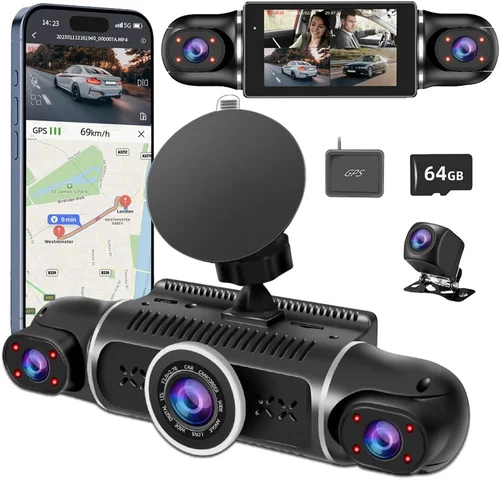
Typical premium features include 4K ultra-high definition recording, panoramic multi-camera arrays providing complete vehicle perimeter coverage, and integration with existing telematics platforms for unified fleet management. These systems often include professional installation services, extended warranties, and priority technical support that justify the higher per-unit investment.
Luxury ($600+ per unit)
Top-tier dash cams target specialized applications requiring maximum protection and cutting-edge technology. Luxury systems exceed standard specifications with military-grade durability ratings, extreme temperature operation capabilities, and proprietary imaging technologies that outperform consumer-grade alternatives.
These solutions typically feature custom-engineered optics, redundant recording systems for critical incident capture, and advanced encryption protecting sensitive data. Specialized industrial models designed for heavy machinery, construction equipment, or hazardous material transport incorporate additional safety features like chemical resistance, explosion-proof enclosures, and fail-safe operation during electrical failures.
Expert Tips for Getting the Best Deal
Securing optimal value from fleet dash cam investments requires strategic planning and awareness of market dynamics. Experienced fleet managers leverage seasonal trends, negotiation tactics, and timing considerations to maximize savings without compromising quality or functionality.
Timing Your Purchase
Seasonal sales cycles significantly impact pricing and availability throughout the year. Major shopping holidays including Black Friday, Cyber Monday, and Memorial Day weekend typically feature substantial discounts on fleet security equipment. Q1 and Q3 represent slower periods when manufacturers offer promotional pricing to meet quarterly sales targets. End-of-quarter clearance events provide additional opportunities for negotiating better terms on remaining inventory.
Consider aligning purchases with vehicle replacement schedules to bundle dash cam installations during routine maintenance, reducing per-unit costs through consolidated service calls and shared labor expenses. Early planning enables comparison shopping across multiple vendors and avoids last-minute purchases that may require expedited shipping or installation scheduling.
Vendor Selection Strategy
Direct manufacturer relationships often yield better pricing than through traditional retailers due to reduced distribution markups. Authorized dealer networks provide local service support and genuine parts availability, while online-only retailers frequently offer competitive pricing with streamlined operations. Evaluate each channel based on your specific needs for installation assistance, warranty fulfillment, and technical support responsiveness.
Request detailed quotes including all applicable taxes, shipping charges, and installation fees before finalizing purchases. Compare bundled packages that include multiple units, extended warranties, and professional installation services against individual component pricing. Negotiate volume discounts for larger orders and inquire about loyalty programs or referral incentives that could further reduce costs.
Spotting Hidden Deals
Manufacturer rebate programs and trade-in incentives represent significant savings opportunities for upgrading existing systems. Educational institutions and nonprofit organizations may qualify for special pricing through corporate social responsibility initiatives. Government procurement contracts sometimes feature discounted rates for qualified applicants, particularly for public safety or municipal vehicle fleets.
Monitor industry publications and professional association newsletters for announcements about special promotions or limited-time offers. Subscribe to manufacturer mailing lists to receive advance notice of upcoming sales events. Join online forums and discussion groups where experienced users share information about current deals and pricing strategies.
Warranty Optimization
Extended warranty coverage typically costs 15-25% of hardware value but provides substantial protection against premature failures and unexpected repair expenses. Evaluate warranty terms carefully, noting coverage limits, deductible amounts, and claim processing requirements. Choose comprehensive plans that cover both hardware defects and accidental damage, especially for high-value systems.
Consider manufacturer-certified refurbishment programs that offer renewed equipment at reduced prices while maintaining warranty protection. These options provide like-new quality at lower costs, often including upgraded components and updated firmware that enhance reliability and functionality.
Return Policy Considerations
Flexible return windows enable thorough testing and evaluation before committing to long-term investments. Look for policies allowing returns within 30-60 days for any reason, providing sufficient time to assess performance under actual operating conditions. Confirm that returned equipment remains in resellable condition with original packaging and accessories intact.
Negotiate favorable terms for damaged or defective returns, including prepaid return shipping and expedited replacement processing. Understanding return logistics upfront prevents complications during the evaluation period and ensures smooth transitions if adjustments prove necessary.
Pre-Purchase Testing
Request loaner units or trial programs that allow hands-on evaluation before making purchasing decisions. Field testing under real-world conditions reveals performance characteristics that specifications alone cannot convey, including actual image quality, mounting stability, and software usability. Document observations and compare results across multiple models to make informed comparisons.
Involve key stakeholders including drivers, maintenance personnel, and safety officers in the evaluation process to gather diverse perspectives and ensure alignment with operational requirements. Collect quantitative data through controlled testing scenarios while gathering qualitative feedback about ease of use and perceived value.
Bulk Purchase Advantages
Volume discounts typically become available at thresholds of 25, 50, or 100 units depending on manufacturer policies. Consolidated orders reduce per-unit costs through shared shipping charges and streamlined administrative overhead. Group purchasing organizations (GPOs) and fleet consortiums enable smaller companies to achieve economies of scale typically reserved for larger enterprises.
Coordinate ordering schedules with vehicle acquisition timelines to maximize installation efficiency and minimize duplicate service visits. Bundle related purchases including mounting hardware, power adapters, and spare parts to further reduce overall project costs and ensure consistent quality across the entire fleet.

Frequently Asked Questions
Q: How many dash cams do I need for my fleet?
A: The number of dash cams required depends on your fleet size, operational complexity, and safety objectives. Single-camera systems suffice for basic monitoring of individual vehicles, while medium to large fleets benefit from dual-lens setups capturing both road and driver cabin views. Multi-camera networks provide comprehensive perimeter coverage for larger vehicles or complex operations. Consider starting with a pilot program testing different configurations before full-scale deployment to determine optimal coverage for your specific needs.
Q: What resolution should I choose for optimal footage quality?
A: At minimum, select 1080p Full HD resolution for clear license plate recognition and accident reconstruction details. For enhanced detail and forensic analysis capabilities, 4K Ultra HD recording delivers superior image clarity, particularly valuable for identifying small details like hand signals or traffic signage. Higher resolutions require more storage space and bandwidth, so balance quality requirements against practical constraints including data management capabilities and subscription costs for cloud storage services.
Q: How much storage space do I actually need?
A: Storage requirements depend on recording duration, resolution quality, and retention policies. A typical 1080p dash cam recording one hour of footage requires approximately 1GB of storage space. For a fleet of 20 vehicles operating 8 hours daily with 7-day retention, expect to need 112GB per vehicle monthly. Cloud storage eliminates local storage limitations but involves recurring subscription fees typically ranging from $5-$15 per vehicle monthly. Local storage options require periodic maintenance to manage capacity and ensure continuous recording functionality.
Q: Can dash cams work in extreme weather conditions?
A: Industrial-grade dash cams designed for fleet operations withstand temperature extremes from -20°C to +70°C and resist moisture, dust, and vibration. Look for IP67 or higher ingress protection ratings confirming waterproof and dustproof capabilities. Specialized models for harsh environments include heated lenses preventing condensation and anti-fog coatings maintaining visibility during temperature fluctuations. Verify manufacturer specifications for your specific climate conditions and operational environments before purchasing equipment.
Q: Will installing dash cams violate employee privacy rights?
A: Legal privacy considerations vary by jurisdiction but generally permit workplace monitoring when conducted for legitimate business purposes including safety, security, and performance management. Clear communication about monitoring policies, visible signage indicating recording devices, and consistent application across all employees help maintain legal compliance. Focus monitoring on professional activities rather than personal conversations, and establish protocols for accessing footage only when justified by business needs or legal requirements.
Q: How do I integrate dash cams with existing fleet management systems?
A: Integration compatibility depends on available APIs, data export formats, and software platform requirements. Request integration documentation and demonstration videos from manufacturers verifying compatibility with your current telematics systems. Many providers offer pre-built connectors or middleware solutions simplifying implementation. Test integration capabilities with sample units before committing to large-scale deployments, and confirm that data synchronization occurs reliably without gaps or duplication issues.
Q: What maintenance requirements do fleet dash cams have?
A: Regular maintenance includes cleaning lenses and sensors, checking mounting hardware security, verifying storage capacity availability, and updating firmware versions. Most systems provide automatic notifications when maintenance tasks require attention. Schedule quarterly inspections for physical components and monthly checks for software updates and storage management. Keep detailed maintenance logs documenting all service activities and any issues encountered during operation.
Q: How accurate are AI-powered incident detection systems?
A: Modern AI algorithms achieve accuracy rates exceeding 90% for identifying accidents, collisions, and other critical events when properly trained on relevant scenarios. Performance varies based on camera placement, environmental conditions, and algorithm sophistication. Always supplement automated detection with human verification to prevent false positives or missed incidents. Continuous learning capabilities improve accuracy over time as systems encounter new situations and receive feedback from actual incidents.
Q: Can I retrofit dash cams on older vehicles?
A: Most modern dash cams install easily on existing vehicles with standard 12V power connections and magnetic or adhesive mounting options. Compatibility depends primarily on power supply availability and mounting surface suitability rather than vehicle age. Professional installation services can adapt wiring harnesses and mounting brackets for older model vehicles requiring specialized adapters or modifications. Confirm that your chosen system includes universal mounting hardware and flexible power options supporting diverse vehicle configurations.
Q: What insurance benefits do dash cams provide?
A: Comprehensive dash cam systems typically reduce insurance premiums by 10-25% through demonstrated safety improvements and evidence-based claim resolution. Insurers recognize reduced accident frequency and severity when equipped with reliable recording systems that prevent fraudulent claims and accelerate settlement processes. Maintain detailed records of safety improvements and claim reductions to support insurance negotiations and demonstrate ongoing risk mitigation efforts.
Our Final Recommendations
Selecting the ideal dash cam solution requires matching specific operational needs with appropriate technology capabilities and budget constraints. The following recommendations prioritize different user categories based on fleet size, technical requirements, and investment priorities to help you make confident purchasing decisions.
Best for Budget-Conscious Buyers
For small fleets seeking essential safety monitoring without extensive feature requirements, the Garmin DriveAssist 51LMT-D offers exceptional value with its reliable performance and competitive pricing. This dual-lens system provides both forward-facing road recording and interior cabin monitoring at an accessible price point while maintaining solid build quality and straightforward operation. Its integrated GPS tracking and lane departure warnings add valuable safety features without premium pricing, making it ideal for local delivery services or small transportation operations prioritizing fundamental protection capabilities.
Best Overall Value
The Viofo A119 V3 strikes an excellent balance between advanced features and reasonable costs, delivering professional-grade performance at consumer-friendly prices. This single-lens dash cam combines impressive 2K resolution with superior low-light sensitivity, ensuring clear footage in challenging conditions. Its robust G-sensor automatically detects and preserves critical incident footage while loop recording maintains continuous operation. The included parking mode and built-in Wi-Fi simplify event review and system management, providing enterprise-level functionality without the enterprise price tag that makes it perfect for growing fleets wanting maximum capability per dollar spent.
Best Premium Option
For enterprise operations requiring comprehensive monitoring and advanced analytics, the Samsara Drive platform represents the gold standard in fleet security solutions. This integrated system combines high-resolution cameras with powerful AI-driven incident detection, real-time driver coaching through two-way audio, and extensive reporting capabilities that transform raw footage into actionable safety insights. Its cloud-based architecture scales effortlessly from dozens to thousands of vehicles while maintaining consistent performance and centralized management. Though requiring significant investment, Samsara’s proven track record and extensive customization options justify the premium pricing for large fleets where safety and compliance outweigh cost considerations.
Best for Beginners
New fleet managers benefit from the simplicity and reliability of the Thinkware U1000 dash cam, which offers professional features with intuitive operation and minimal learning curve. Its dual recording capability captures both exterior road conditions and interior driver behavior, providing comprehensive situational awareness without overwhelming complexity. Automatic backup camera activation and smartphone app integration enable convenient system monitoring and event review from anywhere. Clear LED indicators and simple button controls make it easy to operate even for technically inexperienced staff while delivering reliable performance that builds confidence in dash cam technology adoption.
Best for Advanced Users
Technically sophisticated fleet operators will appreciate the extensive customization and integration capabilities of the Lytx DriveCam system. This advanced platform combines high-definition recording with sophisticated behavioral analytics that score driver performance across multiple metrics including distraction detection, harsh maneuver identification, and route compliance verification. Its robust API enables deep integration with existing fleet management software while providing granular control over recording parameters and data retention policies. Customizable alert thresholds and automated reporting workflows streamline safety program management, making it the ideal choice for organizations already invested in comprehensive fleet optimization strategies.
Best for Heavy Duty Applications
Operations involving construction equipment, utility vehicles, or other heavy machinery require specialized durability and ruggedized performance that the Garmin Tandem Dash Cam delivers. Designed specifically for extreme working conditions, this dual-camera system features reinforced housing, vibration-resistant mounting, and enhanced cooling systems that maintain operation during prolonged engine heat exposure. Its wide dynamic range handles challenging lighting conditions common in outdoor work environments while maintaining clear visibility of both operator actions and surrounding terrain. Built-in GPS and wireless connectivity provide reliable data transmission even in remote locations where cellular coverage may be limited.
Best for Small Business Fleets
Local service businesses with 5-20 vehicles benefit from the comprehensive protection offered by the BlackVue DR970X-2CH dash cam system. This dual-lens setup provides complete situational awareness through simultaneous road and cabin recording while its built-in Wi-Fi enables convenient event review and system updates from smartphones or tablets. Cloud connectivity ensures footage accessibility regardless of local storage limitations while automatic uploads to BlackVue servers provide additional backup protection against data loss. Its compact design minimizes visual obstruction and includes advanced features like parking mode and impact detection that protect parked vehicles when unattended.
Best for Large Corporate Fleets
Multinational corporations managing extensive vehicle fleets require scalable solutions that grow with their operations, making the Netradyne Flywheel platform the optimal choice for enterprise deployment. This cloud-native system leverages artificial intelligence to analyze millions of driving hours, identifying trends and opportunities for safety improvement across geographically dispersed operations. Its unified dashboard provides real-time visibility into fleet-wide performance while automated coaching programs deliver personalized feedback to drivers based on individual performance patterns. Advanced analytics generate actionable insights that drive measurable reductions in accident rates and associated costs, justifying the substantial investment through demonstrable return on safety initiatives.
Conclusion: Making the Right Choice
Selecting the optimal fleet dash cam solution represents a strategic investment that pays dividends through improved safety outcomes, reduced operational costs, and enhanced regulatory compliance. The journey from initial research to final deployment requires careful consideration of numerous factors including technical specifications, budget constraints, integration requirements, and long-term support considerations.
Remember that the ideal dash cam system aligns with your specific operational context rather than simply matching the highest-rated product on the market. Small delivery fleets may thrive with basic recording capabilities, while large trucking operations benefit from comprehensive monitoring and analytics platforms. The key lies in matching technology capabilities with actual use cases rather than pursuing unnecessary features or overlooking critical requirements.
Start by conducting thorough needs assessment interviews with drivers, safety officers, and maintenance personnel to understand real-world challenges and pain points. Evaluate multiple options through hands-on testing whenever possible, and don’t hesitate to request customized demonstrations tailored to your specific vehicle types and operational environments. Remember that successful implementations combine appropriate technology with adequate training, clear policies, and ongoing support structures.
Finally, view dash cam systems as living components of your broader safety ecosystem rather than standalone devices. Their true value emerges when integrated with other safety initiatives including driver training programs, vehicle maintenance protocols, and incident response procedures. By taking a holistic approach to fleet security that embraces both technology and human elements, you’ll maximize the return on your investment while creating safer working conditions for everyone involved.