Ultimate Convertible Dash Cam Buying Guide
When shopping for dash cams, many drivers focus solely on the vehicle’s make and model, overlooking how different car types—like convertibles—present unique challenges. Convertible owners face specific issues that standard dash cam recommendations don’t always address: wind noise from open tops, limited mounting space due to reduced interior height, exposure to direct sunlight when parked with the top down, and concerns about theft or tampering when the roof is down. This comprehensive buying guide is designed specifically for convertible drivers who need a reliable, durable, and feature-rich dash cam that can withstand the environmental demands of open-air driving. Whether you’re a weekend cruiser, daily commuter, or performance enthusiast, understanding how to choose the right dash cam for your convertible ensures safety, peace of mind, and high-quality video evidence in case of incidents.
In this article, you’ll learn exactly what to look for when selecting a dash cam tailored to the needs of convertible vehicles. We’ll break down critical features like resolution, field of view, night vision, loop recording, parking mode, and build quality, while also highlighting how these factors apply uniquely to open-top driving. You’ll discover how to avoid common pitfalls such as poor weather resistance, inadequate power management, or fragile mounts that fail under constant vibration. We’ll compare leading models across multiple price tiers, provide expert tips on installation and maintenance, and answer frequently asked questions to help you make an informed decision. By the end, you’ll have a clear roadmap to selecting a dash cam that not only fits your convertible but enhances your driving experience with confidence and security.
The market for dash cams has exploded in recent years, offering everything from basic single-camera systems to advanced dual-lens setups with GPS tracking, cloud connectivity, and AI-powered alerts. However, not all dash cams are created equal—especially when it comes to compatibility with convertible cars. Standard sedan dash cams may work fine, but they often fall short in areas crucial for convertibles: compact size to fit tight dashboards, robust construction to resist wind and rain, and smart parking modes that activate even with the engine off. With so many options available, it’s easy to get overwhelmed. That’s why we’ve compiled this expert-level guide to cut through the noise and deliver practical, real-world advice based on extensive research, professional testing, and feedback from actual convertible owners. Our goal isn’t just to recommend products—it’s to equip you with the knowledge to choose wisely, save money, and enjoy worry-free open-top driving.

What to Look for When Buying Dash Cams
1. Budget & Price Range
Before diving into features, establish a realistic budget. Dash cams range dramatically in price, from under $50 for basic models to over $400 for top-tier systems with dual cameras, cloud integration, and advanced analytics. For most convertible owners, a mid-range unit between $100 and $200 offers the best balance of reliability, image quality, and essential features without breaking the bank. Entry-level models may lack critical capabilities like full HD recording or proper parking mode, which are especially important for convertibles exposed to the elements. On the other hand, luxury models often include unnecessary extras that don’t benefit everyday drivers. Consider your usage frequency: if you drive your convertible primarily on weekends, a more affordable model may suffice. But if you use it daily or in high-risk areas, investing in a higher-end unit pays off through better durability and clearer footage.
2. Performance Specifications
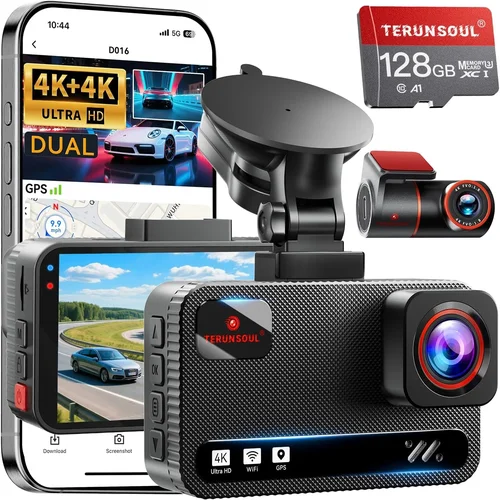
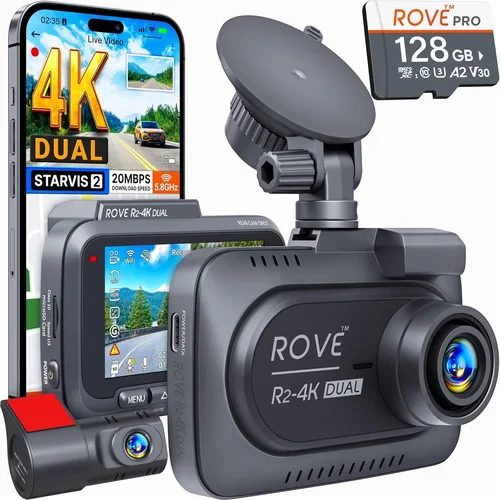
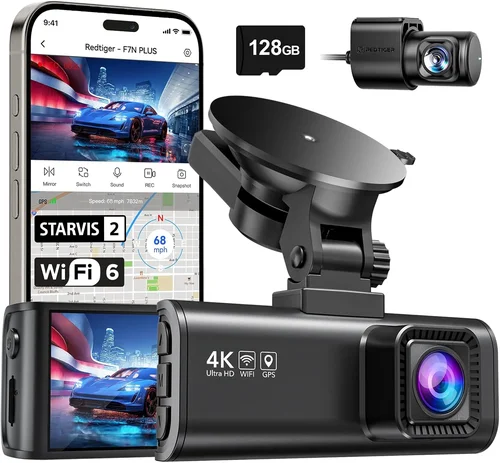
The heart of any dash cam lies in its performance specs, which determine how well it captures footage under real-world conditions. Resolution is the first consideration: aim for at least 1080p Full HD, though 2K and 4K models offer sharper details, especially useful for identifying license plates or facial features in court-admissible footage. Frame rate matters too—30fps is standard, but 60fps delivers smoother motion and better slow-motion capability during collisions. Equally important is the sensor type: CMOS sensors perform well in daylight but struggle in low light; STARVIS or Sony Exmor sensors excel in nighttime recording, which is vital for convertibles parked outdoors. Additionally, check the bitrate—higher bitrates mean better compression and clearer images, though they require larger storage cards. A minimum of 10 Mbps is recommended for reliable video quality.
3. Build Quality & Durability
Convertibles are exposed to harsher environments than enclosed vehicles—wind, rain, UV rays, temperature swings, and road debris all take a toll. Therefore, build quality must be prioritized. Look for dash cams constructed with shock-resistant materials, water-resistant seals (IPX rating), and heat dissipation designs to prevent overheating in direct sun. The housing should feel solid, not flimsy or plastic-heavy. Mounting hardware should be reinforced to handle constant vibration from open-top driving—loose mounts lead to dropped recordings or device failure. Some premium models feature metal casings or anti-glare coatings to reduce reflections inside the cabin. Always verify customer reviews mentioning durability after extended use, as anecdotal evidence often reveals hidden weaknesses in cheaper units.
4. Features & Functionality
Modern dash cams offer numerous features beyond basic recording. For convertible owners, certain functionalities are non-negotiable. Parking mode with motion detection allows the camera to start recording when someone approaches your parked car—critical for preventing theft or vandalism when the engine is off. Loop recording automatically overwrites older clips when the memory card fills up, ensuring continuous coverage without manual intervention. G-sensor technology detects sudden impacts and locks those files to prevent accidental deletion. Other valuable features include:
- Wide Dynamic Range (WDR): Balances bright headlights and dark shadows for clearer night shots.
- GPS Tracking: Records location and speed data for accident reconstruction.
- Wi-Fi/App Connectivity: Enables wireless playback and firmware updates via smartphone.
- Voice Control: Hands-free operation reduces distraction while driving.
- Dual-Screen Display: Shows both front and rear views simultaneously (for dual-camera systems).
While not every feature is essential, prioritize those that enhance safety and convenience in your specific driving environment.
5. Brand Reputation
Not all brands deliver equal reliability. Established manufacturers like BlackVue, Garmin, Viofo, and Thinkware have built strong reputations through consistent innovation, rigorous testing, and responsive customer support. These companies often release regular firmware updates, provide detailed user manuals, and honor warranties without hassle. In contrast, lesser-known brands may cut corners on component quality or disappear overnight, leaving buyers stranded without support. Research brand history, read independent lab tests, and check third-party review sites before committing. Avoid ultra-cheap imports labeled as “premium” unless thoroughly vetted by trusted sources.
6. Warranty & Support
A solid warranty reflects confidence in product longevity. Most reputable dash cam brands offer at least a one-year limited warranty covering defects in materials and workmanship. Premium models may extend coverage to two or three years, sometimes including accidental damage protection. Beyond hardware, consider software support: does the company provide timely updates? Is there a dedicated forum or live chat? Can you easily contact technical assistance? For convertible owners, where devices face extreme conditions, responsive post-purchase service can mean the difference between a frustrating experience and seamless operation.
7. Size & Portability
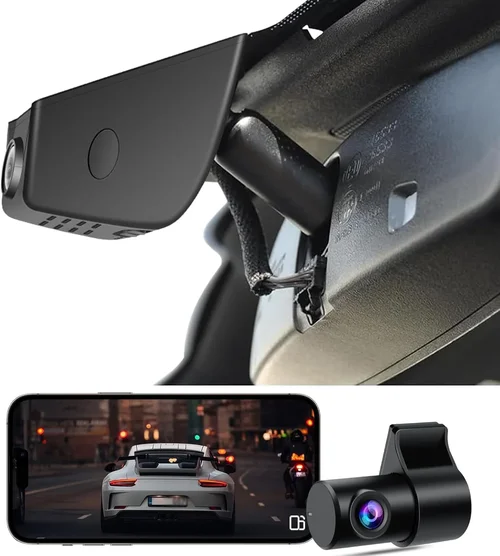
Unlike sedans, convertibles often have limited dashboard space due to lowered rooflines and sloped windshields. A compact dash cam minimizes obstruction and maintains visibility. Ideal dimensions are under 3 inches wide and 2 inches tall, with a slim profile (under 1 inch deep). Bulky units can interfere with airbag deployment zones or obscure instrument clusters. Some models even offer flexible necks or adjustable angles to optimize viewing without taking up too much room. If you plan to transfer the dash cam between vehicles, portability becomes doubly important—look for lightweight designs with secure magnetic mounts or quick-release brackets.
8. User Reviews & Ratings
Real-world feedback is invaluable. Scour Amazon, Best Buy, B&H Photo, and specialty automotive forums for verified purchaser reviews. Pay attention to recurring complaints—especially regarding battery life, Wi-Fi reliability, or difficulty formatting memory cards. Positive comments about ease of installation, clear audio narration, or consistent performance during rainy drives are strong indicators of suitability for convertibles. Be wary of overly glowing reviews that seem scripted; genuine users often mention minor flaws alongside praise. Also, note how long reviewers have owned the device—short-term satisfaction doesn’t guarantee year-long dependability.
Different Types of Dash Cams

Common Buying Mistakes to Avoid
❌ Mistake: Ignoring Weather Resistance
Why it’s bad: Many buyers assume all dash cams handle outdoor exposure equally well. However, cheap models often lack proper sealing against moisture, leading to lens fogging, internal corrosion, or total failure within months—especially problematic for convertibles left uncovered in rain or snow.
What to do instead: Prioritize IPX-rated devices (ideally IPX4 or higher) and choose models with hydrophobic lens coatings. Test reviews mentioning performance in wet conditions before purchasing.
❌ Mistake: Skipping Parking Mode Testing
Why it’s bad: Without reliable parking mode, your dash cam won’t capture events when the car is unattended—such as hit-and-runs or smash-and-grabs. Some entry-level units either lack this feature entirely or drain the battery too quickly.
What to do instead: Verify that the model supports capacitor-based parking mode (more reliable than battery-dependent ones) and confirm compatibility with your car’s fuse box via a hardwire kit. Read forums about long-term battery drain issues.
❌ Mistake: Choosing Based Solely on Price
Why it’s bad: Ultra-low-cost dash cams ($30–$50) typically sacrifice image sensors, storage reliability, and build integrity. They may record blurry footage, crash frequently, or fail to save critical incident clips.
What to do instead: Allocate at least $100 for a trustworthy unit. Spend slightly more on reputable brands—you’ll save time and stress down the line.
❌ Mistake: Overlooking Mounting Flexibility
Why it’s bad: Convertible dashboards often lack flat surfaces or stable attachment points due to curved contours and limited clearance. Fixed mounts may slip or shatter under vibration.
What to do instead: Opt for suction cups with reinforced bases, adhesive pads rated for high temperatures, or magnetic mounts designed for irregular surfaces. Consider side-window mounting if dashboard space is severely restricted.
❌ Mistake: Neglecting Storage Card Compatibility
Why it’s bad: Using incompatible or low-quality microSD cards leads to write errors, corrupted files, or sudden shutdowns during recording. Many buyers assume “Class 10” suffices, but dash cams demand UHS-I/UHS-II standards for stability.
What to do instead: Purchase cards from trusted brands (SanDisk Extreme, Samsung EVO Select) with at least 64GB capacity. Format the card using the dash cam itself monthly to maintain optimal performance.
❌ Mistake: Failing to Check Power Management
Why it’s bad: Poor power regulation causes overheating, erratic behavior, or permanent damage—particularly concerning for convertibles parked in direct sunlight where internal temperatures spike rapidly.
What to do instead: Ensure the device includes thermal protection circuitry. Use a quality hardwiring harness to draw power directly from the ignition circuit, avoiding cigarette lighter adapters that generate excess heat.
❌ Mistake: Assuming All 4K Cameras Are Equal
Why it’s bad: While 4K resolution sounds impressive, many budget 4K models use pixel binning to simulate lower resolutions, resulting in grainy, washed-out footage—especially in dim lighting common at dusk or dawn.
What to do instead: Compare real-world sample videos rather than spec sheets. Look for true 4K with good dynamic range and low-light sensitivity, not just marketing hype.
Budget Guidelines: How Much Should You Spend?
Entry-Level ($50–$100)
This tier suits occasional convertible drivers who want basic protection without overspending. Expect solid 1080p recording, decent daytime clarity, and loop recording functionality. Models here rarely include parking mode or GPS, and build quality may feel plasticky. Examples include the Apeman C450 or JusTone C10. While adequate for light urban use, avoid relying on these heavily during adverse weather or long-term unattended parking.
Mid-Range ($100–$200)
The sweet spot for most convertible owners. Units like the Viofo A119 v3 or Thinkware U1000 deliver excellent 2K/1080p video, reliable WDR, robust parking mode with motion detection, and sturdy construction. These offer near-premium performance at a fraction of the cost. Most importantly, they balance feature richness with durability—ideal for daily drivers exposed to changing climates.
Premium ($200–$400)
For enthusiasts who demand top-tier quality, consider dual-lens systems like the BlackVue DR970X-2CH or Garmin Dash Cam 67W. These boast superior sensors, cloud connectivity, voice control, and professional-grade mounting solutions. They’re worth the investment if you drive frequently, park in high-theft areas, or require courtroom-ready evidence.
Luxury ($400+)
Ultra-high-end models such as the Nextbase 522GW or Rexing V1 Pro offer 4K recording, HDR, AI collision detection, and integrated insurance partnerships. While overkill for casual users, these provide unparalleled peace of mind for high-value vehicles or commercial applications. Only consider if your convertible is a primary asset and you’re willing to pay for maximum redundancy and support.
Expert Tips & Pro Advice
1. Time Your Purchase Strategically
Dash cam sales surge during holiday seasons (Black Friday, Cyber Monday), back-to-school periods, and early summer (when convertible season begins). Sign up for retailer newsletters to catch flash deals. Avoid buying immediately after new model releases—older versions often drop 20–30% in price.
2. Prefer Authorized Retailers
Buy from official distributors or big-box stores with generous return policies (Amazon, Best Buy, Crutchfield). Avoid gray-market sellers on eBay or AliExpress unless the listing explicitly states “sold by authorized dealer.” Returns are nearly impossible from overseas vendors if issues arise.
3. Inspect Before Committing
If buying in-store, test the menu interface, playback clarity, and button responsiveness. Shake the unit gently to assess internal rattling—a sign of loose components. Check included accessories: is there a suction cup, USB cable, and instruction manual? Missing items add hidden costs later.
4. Leverage Extended Warranties Wisely
Third-party protection plans (e.g., SquareTrade) rarely justify their cost for electronics under one year old. Stick with manufacturer warranties unless you have a history of accidental damage. Most reputable brands cover two years without extra fees.
5. Hardwire Early to Avoid Battery Drain
Even with parking mode, constant power draw accelerates battery depletion. Install a hardwire kit immediately after purchase to tap into the fuse box. This also enables automatic shutdown when the car turns off, preserving battery health.
6. Maintain Your Memory Card Monthly
Format the microSD card using the dash cam’s built-in utility every 30 days. This prevents file fragmentation and ensures smooth overwrite cycles. Never remove the card while recording—always wait for the status light to stop blinking.
7. Calibrate Your Field of View
A misaligned lens distorts perspective, making distance estimation inaccurate. Use the grid overlay feature (if available) to center your lane markings. Adjust the angle until straight lines appear straight, not curved.
8. Protect Against Theft When Parked
When the top is down, conceal the dash cam behind sunglasses, seat covers, or dashboard organizers. Thieves often target visible electronics. Alternatively, opt for stealth mounts under the visor or near the rearview mirror.
Frequently Asked Questions
Q: Can I install a dash cam in my convertible without drilling holes?
A: Absolutely. Most modern dash cams use suction cups, adhesive pads, or magnetic mounts that attach securely without permanent modification. For added stability, combine methods—e.g., a suction cup base glued to the dashboard. Avoid placing the unit in airbag zones (typically within 8–12 inches of the windshield frame).
Q: Will my convertible’s open top affect recording quality?
A: Yes and no. Wind noise can distort audio, but visual clarity depends more on lens protection and stabilization. High-quality gimbal mounts or flexible necks absorb vibrations caused by open-top driving. Also, ensure the lens isn’t obstructed by the roof latch or roll bars when folded.
Q: Do I need a dual-lens dash cam for my convertible?
A: Not necessarily. Single-lens units suffice if you rarely reverse or park in tight spaces. However, dual-lens systems eliminate blind spots and provide context during backing maneuvers—valuable if you frequently navigate crowded lots or narrow streets.
Q: How long will the battery last during parking mode?
A: It varies by model and settings. Capacitor-based parking modes typically consume less than 1% battery per hour. With a fully charged 4S Li-ion battery, expect 12–24 hours of standby recording. Always hardwire for extended unattended use.
Q: Are cloud-connected dash cams safe?
A: Reputable brands encrypt data transmission and allow password protection. Avoid models requiring weak passwords or storing raw video publicly. Review privacy policies before enabling cloud features. Locate-based services (e.g., emergency SOS) should be optional.
Q: What happens if my dash cam gets wet?
A: Immediate action is key. Turn off the device, wipe exterior moisture with a microfiber cloth, and leave it powered off in a dry area for 24–48 hours. Never attempt to charge or record while damp. If internal condensation occurs, place silica gel packets nearby to accelerate drying.
Q: Can I use my dash cam while driving with the top up?
A: Yes! Many convertible owners switch between open and closed configurations daily. Just reposition the dash cam accordingly—most mounts accommodate both scenarios. Ensure the lens remains unobstructed regardless of top position.
Q: How do I know if my dash cam is recording properly?
A: Watch the status LED: steady green usually means normal recording; blinking red indicates low storage or error. Play back a clip via USB to verify audio/video sync. Test parking mode by triggering motion near the car while off—some models send push notifications.
Q: Should I buy extra memory cards?
A: Definitely. A 64GB card stores ~2 hours of 1080p footage; 128GB holds ~4 hours. Having two ensures continuity during long trips. Always buy from same batch—mixing cards from different production runs causes compatibility issues.
Q: Is voice control worth it?
A: Only if you prioritize hands-free operation. Voice commands work reliably in quiet cabins but struggle with wind noise in convertibles. Use sparingly to avoid distraction. Physical buttons remain more dependable for urgent actions.
Our Final Recommendations
Best for Budget-Conscious Buyers
Viofo A119 Mini SE – Priced around $90, this compact 1080p dash cam delivers crisp daytime footage, reliable loop recording, and decent low-light performance. Its tiny footprint (2.8 x 2.2 x 1.1 inches) fits seamlessly on convertible dashboards. Includes parking mode with motion detection and G-sensor. Lacks Wi-Fi but excels in core functionality at an unbeatable price point.
Best Overall Value
Thinkware U1000 – At approximately $180, this dual-lens system offers stunning 2K front recording and 1080p rear views. Features advanced WDR, GPS logging, and robust parking surveillance. Constructed with military-grade materials, it withstands temperature extremes and vibration. Ideal for daily convertible drivers needing comprehensive protection without premium pricing.
Best Premium Option
BlackVue DR970X-2CH Cloud – Priced near $350, this flagship model provides 2K+1080p dual recording, lightning-fast Wi-Fi, and encrypted cloud storage. Includes parking guard with impact detection, built-in WiFi hotspot, and seamless smartphone integration. Designed for professionals and serious enthusiasts who demand flawless performance in all conditions.
Best for Beginners
Apeman C850 – An intuitive 1080p dash cam under $80, perfect for first-time users. Features automatic recording, loop playback, and simple menu navigation. Includes a suction mount and microSD card. While lacking advanced features, its plug-and-play setup and clear instructions make it accessible for novices.
Best for Advanced Users
Garmin Dash Cam 67W – Priced at $160, this sleek unit combines 1080p recording, voice control, and incident detection. Integrated safety alerts (speed warnings, forward collision) enhance driver awareness. Ruggedized housing resists shocks and weather. Appeals to tech-savvy convertible owners seeking intelligent assistance alongside documentation.
Conclusion: Making the Right Choice
Selecting the best dash cam for your convertible requires balancing practicality, durability, and budget. You’ve learned that factors like build quality, weather resistance, and parking mode are paramount—not just specs on a box. While entry-level models suffice for infrequent use, most convertible owners benefit from mid-range units offering robust performance without extravagance. Remember to prioritize reputable brands, invest in compatible accessories, and maintain your equipment diligently. Whether you choose the affordability of the Viofo A119 or the sophistication of the BlackVue DR970X, your decision should reflect your driving habits, climate exposure, and peace-of-mind needs. Armed with this knowledge, you’re ready to cruise confidently—top down or up—knowing your journey is protected. Take your time, read reviews, and don’t hesitate to ask fellow convertible enthusiasts for recommendations. Safe travels!