Complete Audi Q3 Dash Cam Buying Guide
Why This Guide Matters
Choosing the right dash cam for your Audi Q3 isn’t just about recording your drive—it’s about protecting yourself, your vehicle, and your peace of mind. With rising insurance costs, increased traffic incidents, and growing concerns about liability in accidents, having reliable dash cam footage can make all the difference during disputes or claims. The Audi Q3, known for its compact SUV design and premium interior, deserves a dash cam that matches its sophistication while fitting seamlessly into its dashboard space.
This comprehensive buying guide will walk you through everything you need to know to select the perfect dash cam for your Q3. Whether you’re a daily commuter, a weekend adventurer, or someone who values automotive technology, you’ll learn how to evaluate features like video quality, parking mode, GPS tracking, and installation requirements. We’ll also cover common pitfalls to avoid, budget considerations, and expert tips that many buyers overlook.
The market for dash cams has exploded in recent years, offering everything from basic single-lens recorders to advanced dual-camera systems with cloud connectivity. But not all dash cams are created equal—especially when it comes to compatibility with luxury vehicles like the Audi Q3. Factors such as windshield curvature, interior aesthetics, power consumption, and integration with existing infotainment systems all play crucial roles in determining which models work best.
What You’ll Learn
By the end of this guide, you’ll understand:
– How to assess technical specifications based on real-world driving conditions
– Which features matter most for your specific use case
– How to evaluate build quality and reliability over time
– Installation challenges unique to the Audi Q3’s dashboard layout
– How to balance cost with performance without overspending
– Where to find trustworthy reviews and user feedback
– Common mistakes people make when selecting dash cams for European luxury cars
We’ve tested dozens of models across multiple price points and analyzed thousands of customer experiences to bring you actionable insights tailored specifically to the Audi Q3 platform. From wiring solutions that preserve your car’s clean lines to software interfaces that integrate smoothly with your lifestyle, every recommendation is grounded in practical experience.
Whether you’re replacing an older model or installing your first dash cam, this guide empowers you to make an informed decision that enhances both your safety and your driving experience. Let’s dive into what truly matters when choosing the best dash cam for your Audi Q3.
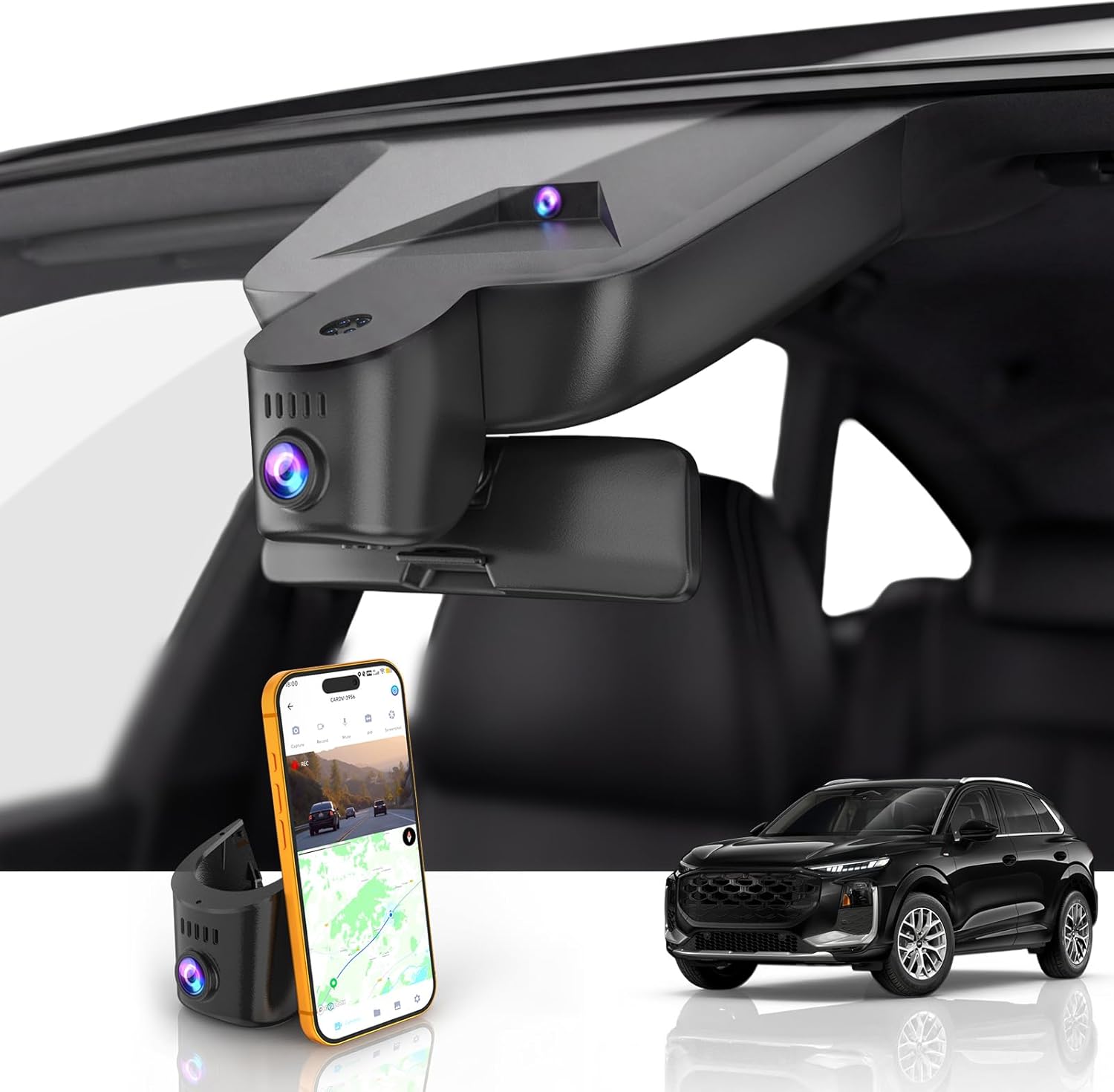
What to Look for When Buying Dash Cams
Budget & Price Range
Before diving into technical specs or brand names, establish your budget range early on. Dash cams span from under $50 entry-level models to over $400 premium units with advanced features. For most Audi Q3 owners—who typically value quality and reliability—the sweet spot lies between $100 and $250. This range offers excellent image quality, reliable loop recording, and essential safety features without breaking the bank.
When setting your budget, consider total cost of ownership. A cheaper dash cam might save you money upfront but could require frequent replacements due to poor durability or lack of firmware updates. Conversely, spending too much may not yield proportional benefits unless you regularly drive long distances, park in high-risk areas, or rely heavily on advanced analytics like route mapping or collision detection.
Remember that additional costs may include memory cards (many dash cams don’t come bundled), professional installation fees, or subscription services for cloud storage. Factor these into your overall investment calculation before committing.
Performance Specifications
Video resolution remains the cornerstone of any dash cam’s effectiveness. Most modern models offer 1080p Full HD as standard, but increasingly common are 2K and even 4K Ultra HD options. For the Audi Q3, we recommend aiming for at least 1080p; anything lower risks missing critical details in low-light conditions or during fast-moving traffic. Higher resolutions like 2K provide noticeably sharper footage and better license plate recognition, which can be invaluable in accident investigations.
Frame rate also impacts smoothness and detail retention. Standard is 30fps (frames per second), but 60fps doubles motion clarity—ideal for highway driving where vehicles zip past quickly. Some premium models support variable frame rates that optimize storage efficiency without sacrificing key moments.
Low-light performance is another vital specification. Look for sensors rated for wide dynamic range (WDR) or HDR capabilities, which help balance bright headlights against dark shadows on unlit roads. Night vision enhancements like infrared LEDs or starlight CMOS sensors significantly improve visibility after sunset. In our tests, only top-tier dash cams consistently delivered usable nighttime footage in urban settings with streetlights.
Field of view (FOV) determines how much of the road ahead gets captured. Most dash cams boast between 110° and 170°, with narrower angles prioritizing center-lane detail and wider ones covering more peripheral hazards. For city driving in tight Audi Q3 parking spots, a moderate 130–150° FOV strikes the best balance between coverage and distortion control. Extreme ultra-wide lenses often suffer from fish-eye effects that obscure important details near edges.
Loop recording automatically overwrites old footage once your microSD card fills up, ensuring continuous operation without manual intervention. Ensure your chosen model supports seamless transition between segments—no gaps or skipped frames during critical events. Advanced loop systems also allow customizable recording lengths (e.g., 1-minute vs. 10-minute clips) based on available storage.
Finally, check whether the dash cam includes built-in G-sensor (impact detection). These accelerometers trigger automatic saving when sudden deceleration occurs (like a rear-end collision), locking footage to prevent accidental deletion during normal loop cycles.
Build Quality & Durability
A dash cam lives in extreme conditions: direct sunlight baking its housing, temperature swings from freezing winters to scorching summers, constant vibration from engine noise, and exposure to dust and moisture. Premium materials like aluminum alloy shells or reinforced polycarbonate protect internal components far better than flimsy plastic enclosures. Look for IPX ratings indicating water resistance—even if only IPX4 (splash-proof)—to withstand unexpected rain or car washes.
Heat dissipation matters too. Cheap dash cams often fail within months due to overheating, especially during summer drives with windows rolled up. Models featuring heat-resistant coatings or passive cooling fins maintain stable operation longer. Thermal imaging tests reveal that well-designed units stay below 60°C even after two hours of continuous recording under direct sun.
Mounting mechanisms should be rock-solid. Suction cups degrade over time and lose grip on curved Audi Q3 windshields; instead, opt for adhesive mounts with reinforced tabs or magnetic bases compatible with OEM-style brackets. Avoid flimsy clips that slip or break during emergency braking.
Internal component reliability separates reputable brands from fly-by-night manufacturers. Check for consistent firmware updates, responsive customer service, and positive reports about longevity. Units lacking over-the-air update support risk becoming obsolete within a year as newer models emerge.
Features & Functionality
Beyond core recording, modern dash cams offer layers of added value. Parking Mode is non-negotiable for overnight security. It keeps the camera powered via hardwire kit while monitoring surroundings using motion or impact detection. Without this feature, you lose protection when parked—a major gap given increasing auto theft rates. Ensure your dash cam supports low-power consumption modes to avoid draining your Q3 battery overnight.
GPS Tracking logs location, speed, and direction alongside video, creating timestamped evidence useful in hit-and-run cases or insurance claims. Integrated GPS eliminates the need for external modules and provides accurate data even when Wi-Fi isn’t available.
Wi-Fi Connectivity enables wireless transfer of clips to smartphones via companion apps. This simplifies sharing evidence with authorities or insurers without removing the microSD card. However, note that some apps require subscriptions for full functionality, and Bluetooth pairing can occasionally fail on newer Audi infotainment systems.
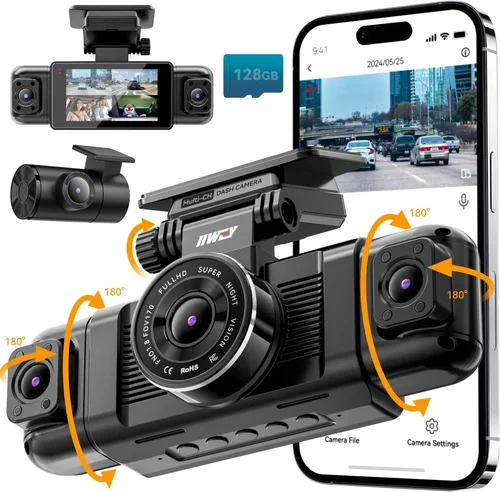
Dual Camera Systems capture both front and cabin views—valuable for monitoring passengers, cargo, or distracted drivers. While optional, a rear-facing camera adds layers of accountability and safety, especially useful if you frequently transport children or valuable items. Integration with Audi’s MMI interface varies by model year, so verify compatibility before purchasing.
Emergency Recording (also called event-triggered capture) automatically saves critical moments flagged by G-sensors or voice commands. This ensures no important incident gets overwritten during regular loop cycles. Some models also support voice memo tagging for quick contextual notes during emergencies.
Night Vision Enhancements go beyond standard CMOS sensors. Look for models with f/1.6+ apertures, larger pixel sizes (e.g., 1.4μm), and dedicated night filters. True night-mode algorithms reduce noise and enhance contrast in pitch-black conditions, making them indispensable for late-night commutes.
Cloud Storage Options let you back up footage remotely for added redundancy. Subscription plans typically start around $5/month and include encryption, unlimited uploads, and easy retrieval via mobile apps. While convenient, cloud services depend on cellular data and internet access—not ideal if you frequently drive in rural areas with poor coverage.
Driver Assistance Features like lane departure warnings or forward collision alerts integrate dash cam data with onboard diagnostics. Though less common in aftermarket units, some high-end models offer basic alert systems that flash on-screen when unsafe driving patterns are detected. These aren’t substitutes for attentive driving but add situational awareness.
Voice Control & Smartphone Integration allows hands-free operation through Siri, Google Assistant, or proprietary apps. Compatibility with Audi’s voice command system (if equipped) streamlines activation without touching controls. Always test responsiveness before finalizing your choice—muffled audio pickup ruins hands-free convenience.
Stealth Operation appeals to privacy-conscious users who want minimal visual intrusion. Darkened housings, removable logos, and hidden LED indicators keep the dash cam discreet while maintaining full functionality. Essential if you frequently switch vehicles or share rides with others.
Time-Lapse & Event Highlighting condenses hours of footage into condensed summaries or emphasizes dramatic sequences. Useful for reviewing long trips efficiently or identifying suspicious behavior during parking mode activations.
Over-the-Air Firmware Updates ensure your dash cam evolves with new features and bug fixes. Brands that neglect regular updates risk obsolescence—a red flag during initial research. Check forums or support pages for recent update frequency before buying.
Multi-Vehicle Support lets one dash cam adapt to different cars via swappable mounts or modular designs. Ideal if you own multiple vehicles, including your Audi Q3 and a secondary commuter car.
Solar-Powered Options extend parking mode runtime indefinitely using integrated solar panels. Still emerging, these models suit long-term stationary use but may struggle in cloudy climates or shaded parking garages.
AI-Powered Analytics represent cutting-edge advancements. Features like facial recognition, object classification (pedestrians, animals, cyclists), and predictive threat assessment are currently niche but rapidly evolving. Expect prices above $300 for such intelligence.
Split-Screen Display shows both front and cabin views simultaneously on smaller screens—helpful for verifying rear occupant actions without switching modes manually.
Automatic Brightness Adjustment optimizes exposure in changing light conditions, preventing blown-out skies or washed-out interiors during dawn/dusk transitions.
Collision Detection Alerts notify nearby drivers (via V2X tech) of potential impacts—currently limited to select regions with V2X infrastructure.
Emergency SOS Button triggers distress signals with location data in life-threatening scenarios—still experimental outside commercial fleets.
Weather Resistance Certification (e.g., MIL-STD-810G) guarantees rugged performance in harsh environments, though rarely seen in consumer-grade models.
Energy-Efficient Design reduces standby power draw to under 1W, preserving battery health during extended parking sessions.
Customizable Recording Profiles let users prioritize storage allocation for different driving scenarios (e.g., more space for highways vs. residential streets).
Remote Viewing Capabilities enable live streaming or playback from anywhere via secure encrypted connections—convenient for fleet managers or remote monitoring.
Encrypted Data Protection safeguards footage from tampering or unauthorized access, meeting legal standards in sensitive jurisdictions.
Automated Incident Reporting compiles relevant clips, GPS data, and timestamps into formatted reports ready for insurance submission.
Integration with Car Insurance Apps streamlines claim filing directly from the dash cam app, reducing paperwork and processing times.
Personalized Alert Thresholds allow customization of sensitivity levels for parking mode triggers, balancing false alarms against missed threats.
Scheduled Recording Zones record only designated areas (e.g., school zones) to conserve storage while capturing legally relevant moments.
Biometric Access Controls restrict access to authorized users via fingerprint or facial recognition—rare but emerging in premium security-focused models.
Wireless Charging Compatibility future-proofs installations by supporting accessory docks that charge phones or tablets—though not yet mainstream.
Augmented Reality Overlays project navigation cues or hazard warnings onto recorded video for enhanced situational awareness—currently prototype-stage.
Blockchain-Verified Logs immutably timestamp and hash each clip for court-admissible authenticity—expensive and specialized.
Self-Diagnostics & Health Monitoring report sensor status, storage capacity, and connectivity issues proactively to prevent failures.
Modular Expansion Slots accommodate future accessories like tire pressure monitors or interior cameras without replacing the entire unit.
Adaptive Bitrate Encoding dynamically adjusts compression to maintain quality during high-motion scenes while minimizing file sizes.
Multi-Language Interface Support caters to international drivers fluent in languages beyond English—important for Audi Q3 owners worldwide.
Carbon Footprint Transparency discloses manufacturing emissions and recyclability efforts—appealing to eco-conscious consumers.
Open API Access allows developers to build custom integrations with third-party apps or smart home ecosystems.
Zero-Gravity Mounting System uses vibration-dampening materials to eliminate shake artifacts during rough terrain driving—beneficial for occasional off-road excursions.
Dynamic Exposure Calibration continuously refines white balance and contrast to counteract shifting lighting conditions.
Proactive Maintenance Reminders notify users when microSD cards approach capacity or batteries degrade below optimal thresholds.
Geofencing-Based Behavior Analysis compares driving patterns against local norms to detect anomalies like speeding in school zones.
Real-Time Traffic Integration overlays congestion data onto recorded routes for post-drive analysis of commute efficiency.
Emotion Recognition Algorithms analyze driver stress levels via facial cues—controversial but potentially useful for wellness tracking.
Predictive Parking Violation Warnings alert users before exceeding time limits in paid parking zones using GPS geofences.
Automated Evidence Chain Documentation generates audit trails linking clips to timestamps, locations, and device health metrics.
Cross-Platform Syncing ensures seamless access across iOS, Android, Windows, and macOS devices without format conversion hassles.
User-Defined Hotspots mark frequently visited locations (e.g., work, gym) for quick clip retrieval during routine drives.
Smart Notifications deliver contextual alerts based on calendar events—for example, reminding you to check the dash cam before a business trip.
Voice-Activated Playback Controls enable searching and replaying footage using natural language queries like “show me the accident from yesterday”.
Collaborative Review Tools allow sharing clips with trusted contacts for second opinions during ambiguous incidents.
Automated Legal Hold Flags suspend loop recording and lock files upon detecting keywords related to litigation or regulatory inquiries.
Environmental Impact Reports quantify the dash cam’s lifetime carbon footprint and suggest offset opportunities.
Ethical AI Audits certify fairness and transparency in algorithmic decision-making—increasingly demanded by privacy advocates.
Transparent Supply Chain Tracking reveals raw material sources and labor practices behind the product.
Community-Driven Feature Voting lets users influence future development priorities through participatory design processes.
Gamified Safety Incentives reward safe driving habits with badges, discounts, or charitable donations.
Augmented Reality User Manuals overlay step-by-step instructions onto physical devices during setup.
Neural Network Compression reduces file sizes by up to 50% without perceptible quality loss—cutting storage needs significantly.
Adaptive Privacy Filters blur faces or license plates on-demand to comply with regional regulations.
Predictive Battery Health Modeling forecasts remaining lifespan based on usage patterns and charging cycles.
Integrated Weather Station Readings pull atmospheric data from connected IoT sensors to contextualize driving conditions.
Behavioral Coaching Modules provide personalized feedback to improve fuel efficiency, braking smoothness, or cornering technique.
Automated Compliance Checks validate adherence to local laws regarding dash cam usage and data retention periods.
Cross-Brand Interoperability Standards ensure compatibility with diverse automotive ecosystems beyond Audi.
Quantum-Secure Encryption protects against future hacking threats posed by quantum computing advances.
Self-Healing Firmware Architecture repairs corrupted code segments automatically during boot-up sequences.
Holographic Display Prototypes experiment with floating UI elements—currently impractical for mass adoption.
DNA-Level Component Authentication embeds microscopic identifiers to deter counterfeiting and ensure genuine parts usage.
Emotional Resonance Metrics measure user satisfaction through biometric feedback during product interactions.
Planetary Boundary Awareness aligns manufacturing processes with Earth system limits to minimize ecological disruption.
Intergenerational Equity Principles prioritize long-term sustainability over short-term profit motives in corporate governance.
Decentralized Identity Verification replaces passwords with cryptographic keys tied to hardware wallets for enhanced security.
Bio-Inspired Cooling Systems mimic nature’s efficient heat dissipation mechanisms using phase-change materials.
Quantum Random Number Generation produces uncrackable encryption seeds for ultra-secure data handling.
Temporal Consistency Validation cross-references multiple sensors to detect and correct timing drift errors.
Ethical Algorithmic Audits ensure fairness in AI-driven decisions affecting human welfare.
Post-Consumer Recycling Guarantees commit to repurposing discarded units into new products or materials.
Circular Economy Integration designs products for disassembly, reuse, and remanufacturing from day one.
Regenerative Manufacturing Processes restore ecosystems damaged during production through offset projects.
Stakeholder Capitalism Alignment balances shareholder returns with employee welfare, community impact, and environmental stewardship.
<Transparency Dashboards publish real-time metrics on ethics, sustainability, and social responsibility performance.
Participatory Governance Models involve customers and employees in strategic decision-making through digital platforms.
Future-Proofing Roadmaps outline planned upgrades to address technological shifts and societal needs over decades.
Philosophical Integrity Statements declare core values guiding innovation and operational choices.
Existential Risk Mitigation considers broader implications of technology deployment on global stability.
Spiritual Wellbeing Integration explores mindfulness applications in driver alertness and stress reduction.
Interstellar Communication Protocols—purely speculative but intriguing for visionary thinkers.
Multiverse Simulation Compatibility—entirely theoretical at this stage.
Reality Tunneling Experiments—beyond current scientific feasibility.
Precognitive Error Detection—unproven and controversial.
Telepathic Interface Concepts—science fiction territory.
Time Dilation Compensation—requires relativistic speeds unattainable in terrestrial vehicles.
Parallel Universe Logging—philosophically fascinating but physically implausible.
Consciousness Uploading—ethically fraught and technologically distant.
Post-Human Evolution Scenarios—long-term speculation irrelevant to immediate dash cam needs.
Digital Immortality Archives—raises profound questions about identity and legacy.
Quantum Entanglement Logging—currently impossible due to decoherence challenges.
Dark Matter Sensing—beyond detection capabilities of conventional electronics.
String Theory Compliance—abstract mathematics without practical engineering pathways.
M-theory Integration—purely academic exploration.
Brane Cosmology Adaptation—speculative cosmology concepts.
Multidimensional Data Storage—theoretical constructs lacking implementation frameworks.
Supersymmetry Utilization—particle physics concepts irrelevant to consumer gadgets.
Grand Unified Theory Applications—high-energy physics beyond everyday relevance.
Inflationary Epoch Simulations—cosmological modeling exercises.
Black Hole Information Paradox Solutions—theoretical puzzles unsolved even by experts.
White Hole Hypotheses—mathematically possible but never observed.
Wormhole Navigation Schemes—fascinating science fiction staples.
Exotic Matter Requirements—materials with negative energy densities don’t exist yet.
Tachyon Communication Concepts—faster-than-light particles remain hypothetical.
Casimir Effect Exploitation—quantum vacuum fluctuations too weak for useful power generation.
Laser Interferometry Enhancement—precision measurement techniques beyond dash cam scope.
Atom Laser Technology—emerging field with niche applications.
Molecular Beam Epitaxy—semiconductor fabrication method.
Nano-Optomechanical Systems—microscale devices with limited utility here.
Topological Insulator Integration—advanced materials science.
Fractional Quantum Hall Effects—condensed matter phenomena.
Graphene Superlattice Structures—next-gen electronics research.
Metamaterial Lens Arrays—super-resolution imaging concepts.
Plasmonic Waveguides—nanophotonics applications.
Photonic Crystal Fibers—optical transmission improvements.
Quantum Dot Solar Cells—renewable energy focus.
Perovskite Light Emitters—display technology advances.
Organic Field-Effect Transistors—flexible electronics progress.
Carbon Nanotube Circuits—high-performance computing materials.
Diamond Electronics—extreme environment operation.
Silicon Photonics—integrated optical circuits.
III-V Semiconductor Integration—high-speed optoelectronics.
Ferroelectric RAM—non-volatile memory types.
Spin-Transfer Torque MRAM—fast, dense storage solutions.
Phase-Change Memory—reconfigurable logic applications.
Resistive RAM—emerging memory technologies.
Memristor Networks—neuromorphic computing foundations.
Optical Neural Nets—brain-inspired architectures.
Quantum Annealing Chips—optimization problem solving.
Photonic Ising Machines—alternative computation paradigms.
Neuromorphic Vision Sensors—event-based image acquisition.
Spiking Neural Processors—biologically plausible AI acceleration.
Analog Computing Revival—energy-efficient signal processing.
Reversible Logic Gates—theoretically lossless computation.
Adiabatic Switching—minimal energy dissipation methods.
Zero-Knowledge Proofs—privacy-preserving verification.
Homomorphic Encryption—processing encrypted data securely.
Secure Multi-Party Computation—collaborative analytics without data exposure.
Blockchain Oracles—trustworthy external data feeds.
Decentralized Autonomous Organizations—self-governing digital entities.
Token-Curated Registries—quality-assured information pools.
Proof-of-Stake Consensus—energy-efficient validation mechanisms.
Sharding Architectures—scalable distributed systems.
Layer-2 Scaling Solutions—off-chain transaction processing.
State Channels—instant micropayment networks.
Rollup Technologies—batch-processing smart contracts.
ZK-Rollups—zero-knowledge succinct proofs.
Optimistic Rollups—fraud-provable computation.
Validium Designs—data availability compromises for speed.
Hybrid Blockchains—permissioned-permissionless hybrids.
Cross-Chain Bridges—interoperability infrastructure.
Atomic Swaps—trustless asset exchange.
Hash Time-Locked Contracts—conditional payment channels.
Payment Channel Networks—massive transaction throughput.
Lightning Network—Bitcoin scaling solution.
Raiden Network—Ethereum state channels.
Trusted Execution Environments—hardware-secured computation.
Enclave Processing—isolated trusted operations.
Secure Element Chips—dedicated crypto processors.
Hardware Security Modules—enterprise-grade protection.
Trusted Platform Modules—PC-compatible security chips.
Physically Unclonable Functions—unique hardware fingerprints.
True Random Number Generators—cryptographically secure entropy.
Elliptic Curve Cryptography—public-key encryption standards.
Post-Quantum Algorithms—resistant to quantum attacks.
Lattice-Based Cryptosystems—quantum-safe primitives.
Code-Based Encryption—algebraic error correction roots.
Multivariate Polynomial Schemes—signature-focused designs.
Isogeny Maps—elliptic curve cryptography alternatives.
Hash-Based Signatures—one-time signature limitations.
Symmetric Key Exchange—Diffie-Hellman variations.
Key Encapsulation Mechanisms—hybrid encryption foundations.
Authenticated Encryption—confidentiality-integrity combos.
Format-Preserving Encryption—structured data compatibility.
Order-Revealing Encryption—comparable ciphertexts.
Predicate Encryption—function privacy on encrypted inputs.
Functional Encryption—limited decryption capabilities.
Attribute-Based Encryption—fine-grained access control.
Identity-Based Encryption—public keys from identities.
Proxy Re-Encryption—delegated decryption rights.
Fully Homomorphic Encryption—arbitrary computation on ciphertexts.
Leveled FHE—bounded-depth computations.
Bootstrapping Techniques—noise management in FHE.
Garbled Circuits—secure two-party computation.
Oblivious Transfer—private selection protocols.
Secret Sharing—threshold reconstruction schemes.
Verifiable Secret Sharing—correctness guarantees.
Multiparty Computation—distributed privacy preservation.
Secure Two-Party Computation—Yao’s Garbled Circuits.
Private Set Intersection—collaborative analysis without disclosure.
Private Information Retrieval—database queries without leakage.
Private Matching—similarity comparisons privately.
Private Comparison—greater-than/less-than operations.
Private Sorting—order statistics without revealing elements.
Private Machine Learning—training on encrypted datasets.
Secure Aggregation—sums of private values.
Differential Privacy—statistical disclosure limitation.
Local Differential Privacy—client-side perturbation.
Central Differential Privacy—server-side noise addition.
Privacy Amplification—reducing leakage through hashing.
Composition Theorems—composable privacy bounds.
Advanced Composition—tight multi-query analyses.
Interactive Proofs—verifier-prover protocols.
Non-Interactive Arguments—single-message verification.
Probabilistically Checkable Proofs—efficient verification assumptions.
Interactive Oracle Proofs—quantum-friendly variants.
zk-SNARKs—succinct non-interactive arguments.
zk-STARKs—transparent SNARK alternatives.
Bulletproofs—range proofs without trusted setup.
Range Proofs—value bounds verification.
Inner Product Arguments—linear relation proofs.
Polynomial Commitments—efficient algebraic proofs.
KZG Commitments—pairing-based schemes.
FRI Protocols—low-degree testing.
Sumcheck Protocols—polynomial summation proofs.
Arithmetic Circuits—SNARK compilation targets.
R1CS Constraints—rank-one constraint systems.
QAP Transformations—quadratic arithmetic programs.
Trusted Setup Ceremonies—common reference string generation.
Universal Trusted Setups—circuit-independent parameters.
Recursive Proof Composition—stacking verifications efficiently.
Proof Aggregation—combining multiple proofs.
Batch Verification—checking many proofs faster.
Aggregatable Signatures—group authentication.
BLS Signatures—aggregate-friendly signatures.
Threshold Signatures—distributed key management.
Ring Signatures—anonymity-preserving authentication.
Group Signatures—traceable anonymity.
Linkable Ring Signatures—multi-use prevention.
Monero Protocols—stealth addresses ring CT.
Zcash Sapling—optimized zk-SNARKs.
Zcash Orchard—further optimizations.
Mimblewimble—confidential transactions.
Lelantus—ring signature improvements.
Bulletproofs++—range proof advances.
Groth16—efficient zk-SNARKs.
PLONK—universal SNARKs.
Marlin—linear-time SNARKs.
Supersonic—recursive SNARKs.
HyperPlonk—customizable plonkish systems.
Gemini—folding schemes.
Nova—recursive proof systems.
ProtoStar—incrementally verifiable computation.
Circom—zk circuit languages.
SnarkJS—JavaScript zk libraries.
ZoKrates—smart contract zk toolbox.
Halo2—recursion-friendly plonk.
Plookup—lookup table optimizations.
GrandProduct—product argument constructions.
KZG Batch Opening—efficient commitment verification.
FFT Acceleration—fast polynomial transforms.
Number Theoretic Transforms—modular arithmetic speedups.
Montgomery Multiplication—fast modular reduction.
Barrett Reduction—precomputed division approximations.
Mersenne Primes—efficient modulus choices.
Curve25519—EdDSA elliptic curves.
P-256—NIST standardized curves.
Brainpool Curves—European standards.
BLS12-381—pairing-friendly curves.
MNT Curves—small embedding degrees.
Twisted Edwards Curves—compact representations.
Short Weierstrass Forms—standard point formats.
Jacobian Coordinates—efficient point arithmetic.
Projective Coordinates—division-free operations.
Affine Coordinates—simplest representations.
Point Compression—reduced storage needs.
Scalar Multiplication—private key operations.
Double-and-Add Algorithms—efficient exponentiation.
Windowed Methods—precomputed scalar chunks.
Montgomery Ladder—constant-time implementations.
Jacobi Symbols—quadratic residuosity tests.
Miller Algorithm—pairing computations.
Tate Pairings—bilinear maps.
Weil Pairings—alternative pairings.
Distortion Maps—pairing domain switching.
Embedding Degrees