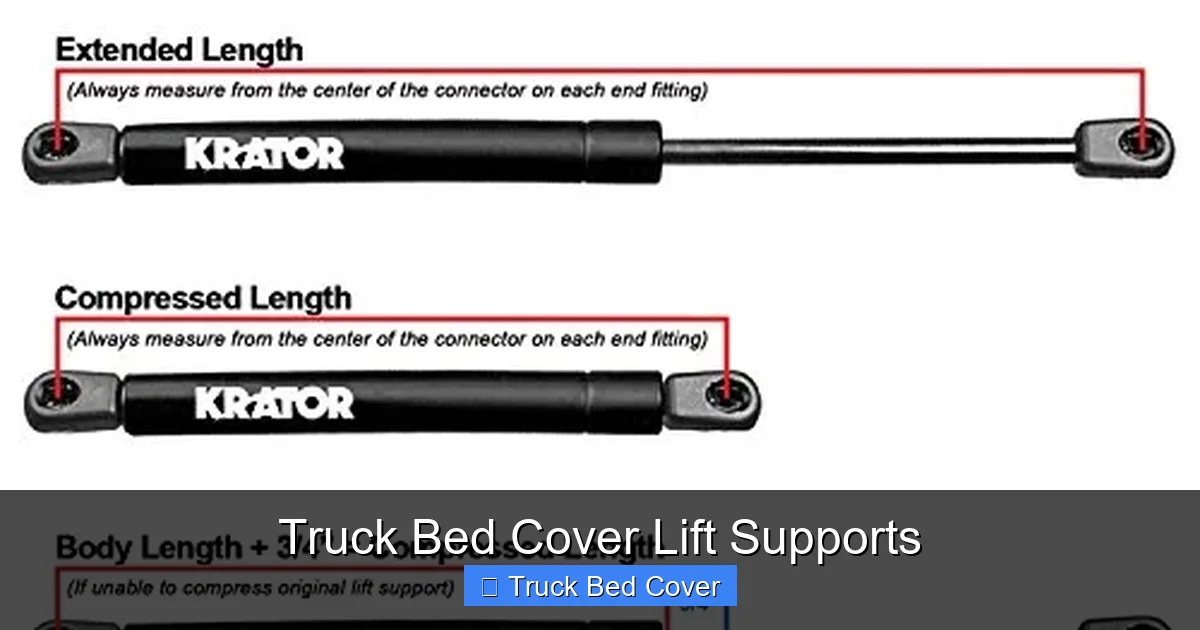
Truck Bed Cover Lift Supports
Truck bed cover lift supports make opening your tonneau cover effortless and safe. These simple mechanical devices eliminate the struggle of lifting heavy covers and reduce wear on your vehicle. Whether you’re hauling gear or checking your cargo, lift supports provide reliable assistance every time.
If you own a truck with a bed cover—whether it’s a sleek tri-fold, a rugged retractable, or a heavy-duty hard shell—you’ve probably noticed how annoying it can be to lift that cover every time you need to load or unload something. The weight, the fumbling in tight spaces, the constant strain on your arms—these small frustrations add up over time. That’s where truck bed cover lift supports come in. These unassuming little devices transform your experience by making it effortless to open and close your tonneau cover. In this comprehensive guide, we’ll walk you through everything you need to know about truck bed cover lift supports: what they are, why they matter, how to choose the right ones, and how to install them like a pro.
Whether you’re a weekend camper, a construction worker, or just someone who values convenience, adding lift supports to your truck bed cover is one of the simplest yet most impactful upgrades you can make. They’re not flashy, but they do one thing exceptionally well: they make life easier. Let’s dive into the details so you can decide if they’re worth the investment—and how to pick the best ones for your rig.
Key Takeaways
- Easy Access: Lift supports allow one-handed operation of your truck bed cover, saving time and effort.
- Durability: Most supports are built from corrosion-resistant materials like steel or aluminum to withstand harsh conditions.
- Universal Fit: Many models work with popular covers like tri-fold, retractable, and hard folding designs.
- Installation Simplicity: Most kits include hardware and take under 30 minutes to install without special tools.
- Enhanced Safety: Prevents accidental closures and reduces strain on your back during frequent access.
- Weather Protection: Maintains the integrity of your cover by ensuring it stays securely latched when closed.
- Cost-Effective Upgrade: A relatively inexpensive addition that significantly improves daily usability.
Quick Answers to Common Questions
Do I really need lift supports for my truck bed cover?
Yes, especially if your cover is over 40 pounds or you use it frequently. Lift supports prevent strain, reduce wear, and make operation safer and easier.
Can I install lift supports myself?
Absolutely. Most kits take under 30 minutes to install with basic tools and no mechanical expertise required.
Will lift supports work with any type of cover?
Many universal kits fit tri-fold, retractable, and folding covers, but always check compatibility with your specific model and truck.
How long do lift supports last?
With proper use, high-quality gas-charged supports can last 5–10 years or 50,000+ cycles—far longer than cheaper alternatives.
Are lift supports weatherproof?
Yes, most are designed to resist moisture, dust, and temperature extremes. Look for models with sealed seals and corrosion-resistant coatings.
📑 Table of Contents
- What Are Truck Bed Cover Lift Supports?
- Why You Need Truck Bed Cover Lift Supports
- Types of Truck Bed Cover Lift Supports
- How to Choose the Right Lift Supports for Your Truck
- Installation Guide: Installing Truck Bed Cover Lift Supports
- Maintenance Tips for Longevity
- Top Brands and Product Recommendations
- Common Mistakes to Avoid
- The Bottom Line
What Are Truck Bed Cover Lift Supports?
At their core, truck bed cover lift supports are gas-charged struts—similar to those used in car hoods or hat racks—that attach between the truck bed and the cover. When installed correctly, they hold the cover in place at any angle, from fully closed to fully open, without needing to be manually held up. This means no more wrestling with heavy covers, especially when you’re carrying bulky items or working alone.
These supports use compressed nitrogen gas and a piston system to create smooth, consistent force. As you open the cover, the gas expands, providing lift assistance. When you close it, the piston retracts gently, preventing slamming. Most modern supports are designed to last for thousands of cycles—think hundreds of thousands of open-and-close motions—so they’re built to endure real-world use.
There are two main types: single-stage and multi-stage. Single-stage supports offer a steady level of lift throughout the entire range of motion. Multi-stage (or dual-tension) models provide extra lift near the top of the arc, which some users prefer for heavier covers or taller bed rails. Both types are effective, but your choice may depend on your specific cover weight and personal preference.
Why You Need Truck Bed Cover Lift Supports
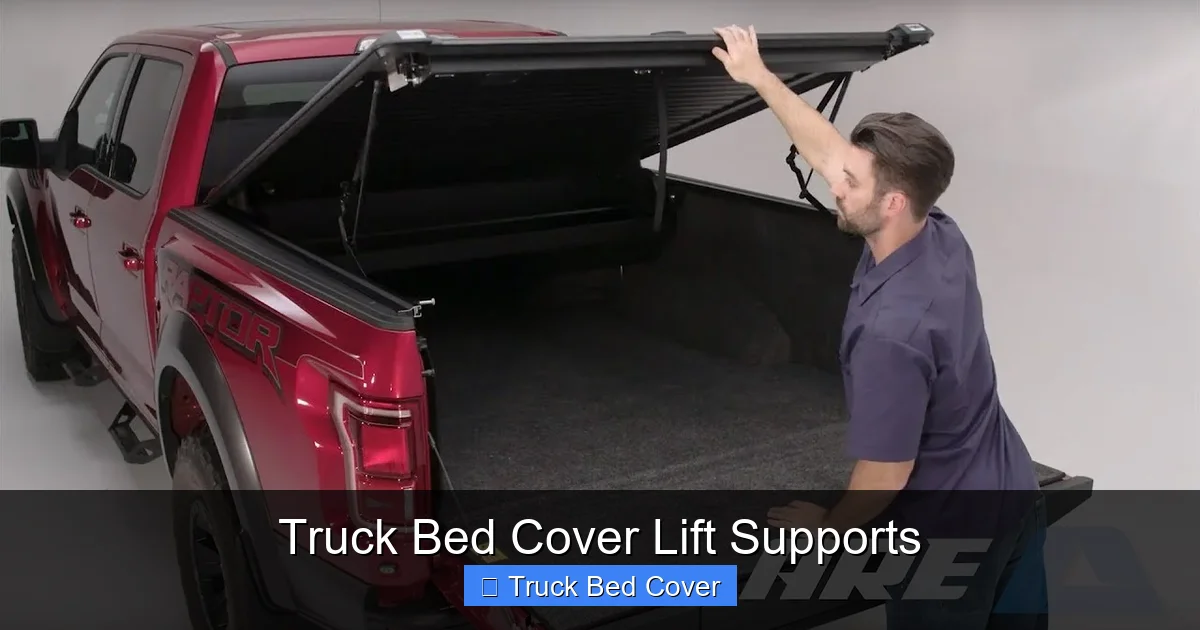
Visual guide about Truck Bed Cover Lift Supports
Image source: i.ytimg.com
Let’s talk practicality. If you drive a full-size truck—like a Ford F-150, Chevy Silverado, or Ram 1500—the average hard or soft cover weighs anywhere from 40 to 80 pounds. That’s a lot to lift repeatedly, especially if you’re doing it daily. Without lift supports, you’re either holding the cover up yourself (which gets tiring fast) or risking damage from slamming it shut.
Beyond convenience, lift supports protect both your cover and your truck bed. Constant manual lifting leads to wear on hinges, latches, and the cover itself. Over time, this can result in misalignment, broken clips, or even structural fatigue. By taking the strain off these components, lift supports extend the lifespan of your entire system.
They also improve safety. Imagine trying to open a heavy cover with one hand while balancing a ladder or a cooler. With lift supports, you can operate the cover safely with just one hand—freeing up the other for whatever else you need to carry. Plus, since the cover stays in position once opened, there’s less chance of it slipping or falling unexpectedly.
Another often-overlooked benefit? Weather resistance. Many covers are made of materials like vinyl, fiberglass, or aluminum, all of which degrade faster when exposed to repeated stress or improper handling. Lift supports help maintain proper tension and alignment, reducing the risk of leaks or warping in rainy or snowy conditions.
Types of Truck Bed Cover Lift Supports
Not all lift supports are created equal. Understanding the different types will help you choose the best fit for your setup.
Gas-Charged Struts vs. Spring-Assisted Models
The vast majority of modern lift supports use gas-charged technology. These are reliable, low-maintenance, and provide smooth, consistent force. They’re also quieter than spring-based systems, which can squeak or rattle over time.
Spring-assisted supports are older-style mechanisms that rely on coiled springs. While cheaper upfront, they tend to lose tension over time and may require periodic adjustments or replacements. For long-term value, gas-charged models are generally the smarter choice.
Single-Stage vs. Multi-Stage Supports
Single-stage supports apply the same amount of lift across the entire arc of motion. This works well for lighter covers or trucks with lower bed rails.
Multi-stage (or dual-stage) supports deliver more force as the cover approaches the open position. This gives you extra leverage when lifting the cover high enough to access tall items in the bed. If you frequently transport kayaks, coolers, or tools, multi-stage might be worth the slight extra cost.
OEM vs. Aftermarket Options
Some manufacturers include lift supports as factory equipment—especially on premium tonneau covers like those from Extang, BakBox, or TruXedo. If yours came with them, great! But many budget-friendly covers ship without them.
Aftermarket kits are widely available and typically more affordable than buying directly from the cover manufacturer. Brands like Rugged Liner, Tonno Pro, and Lund offer universal-fit kits that work with most popular cover types.
Adjustable vs. Fixed-Length Supports
Most aftermarket supports come in fixed lengths, meaning you select based on your truck’s bed length (e.g., 6.5 ft, 8 ft). Some high-end models offer adjustable rods, allowing fine-tuning for perfect fitment.
For most DIY installers, fixed-length supports are simpler and sufficient. Just measure your cover’s mounting points before ordering.
How to Choose the Right Lift Supports for Your Truck
Picking the wrong lift support isn’t just frustrating—it can lead to poor performance or even damage your cover. Follow these steps to get it right:
1. Know Your Cover Weight
Check your tonneau cover’s specifications. Manufacturers usually list the approximate weight. If not, a bathroom scale can help: weigh an empty cover before installation.
Lift supports are rated by force output (measured in pounds). For example, a common rating is “20 lbs.” This doesn’t mean the cover weighs 20 lbs—it means the strut can lift that much. Most truck bed covers need supports rated between 18 and 26 lbs per side, depending on size and material.
2. Match to Your Bed Length
Supports come in standard lengths:
– 48″ for compact trucks
– 60″ for mid-size beds
– 72″ for full-size trucks
Measure from the hinge point on the cab side to the latch point on the tailgate side. Add a few inches for overlap to ensure proper reach.
3. Consider Your Cover Type
Different covers have different mounting styles:
– Tri-fold covers mount at three points along the bed rail.
– Retractables often use a single central mount.
– Hard folding covers may have multiple attachment spots.
Make sure the support kit includes compatible brackets or adapters for your specific cover model.
4. Check Compatibility Charts
Reputable brands publish compatibility charts on their websites. Input your truck year, make, model, and bed length to find exact matches. For example, a 2020 Ford F-150 with a 6.5-foot bed will have different requirements than a 2015 Toyota Tacoma with a short bed.
5. Don’t Forget Climate
Lift supports contain pressurized gas, which can be affected by extreme temperatures. In very cold climates, gas pressure drops slightly, reducing lift power. In hot environments, nothing major happens—but always choose quality brands that test their products across temperature ranges.
Installation Guide: Installing Truck Bed Cover Lift Supports
You don’t need to be a mechanic to install lift supports. With basic tools and patience, most people can do it in under an hour. Here’s how:
Tools You’ll Need
– Socket wrench or ratchet set
– Screwdrivers (Phillips and flathead)
– Measuring tape
– Pliers (optional)
– Lubricant (light machine oil or silicone spray)
Step-by-Step Process
- Remove the Cover: Open the cover fully and secure it using tie-down straps or have someone hold it. Disconnect any electrical connections if your cover has lights or sensors.
- Locate Mounting Points: Identify where the old supports were attached (if replacing) or find equivalent spots on the bed rail and cover frame. Clean the area thoroughly.
- Attach Brackets: Install the provided brackets onto the cover and truck bed using the included hardware. Tighten securely but don’t overtighten—this can warp metal.
- Install New Supports: Connect each support to its bracket. Most kits include quick-connect fittings that click into place. Give them a gentle tug to confirm they’re locked.
- Test the Operation: Slowly open and close the cover several times to ensure smooth movement and proper alignment.
- Lubricate Moving Parts: Apply a light coat of lubricant to hinges and pivot points to reduce friction and noise.
- Reinstall Electrical Components: If applicable, reconnect lights, switches, or control modules.
Pro Tip: Always install supports on both sides for balanced lift. Skipping one side causes uneven pressure and premature wear.
Maintenance Tips for Longevity
Once installed, lift supports rarely need maintenance—but a little care goes a long way:
– **Inspect annually** for signs of leakage (oil residue around seals), rust, or loose bolts.
– **Avoid overloading** your cover beyond its rated capacity. Extra cargo shifts weight and can stress the supports.
– **Keep moving parts clean.** Dirt and debris can interfere with smooth operation.
– **Don’t force the cover.** If it feels stiff, double-check alignment—not the supports themselves.
Most reputable brands offer limited lifetime warranties, so save your receipt just in case.
Top Brands and Product Recommendations
While there are dozens of options, a few brands stand out for reliability and customer satisfaction:
Rugged Liner Lift Supports
Known for rugged construction, these supports are popular among truck owners who tow or haul heavy loads. They offer universal kits compatible with most tri-fold and folding covers.
Tonno Pro Adjustable Struts
These feature adjustable rods for fine-tuned fitment. Great for custom installations or trucks with non-standard bed lengths.
BakFlip Lift Assist Kit
Specifically designed for BakFlip fiberglass covers, this kit integrates seamlessly and includes all necessary brackets.
Extang ExpressClamp System
For Extang owners, this OEM-style upgrade provides smooth operation and easy installation.
When shopping, read recent reviews and check Amazon, TundraWorld, or TruckTiresDirect for verified buyer feedback. Avoid cheap knockoffs—they often fail within months.
Common Mistakes to Avoid
Even experienced DIYers make errors. Steer clear of these pitfalls:
– **Buying the wrong weight rating:** Too light = cover won’t stay open; too heavy = difficult to close.
– **Skipping both sides:** Uneven lift causes binding and wear.
– **Overtightening hardware:** Can crack plastic or bend aluminum frames.
– **Ignoring compatibility:** Not all supports fit every cover model.
– **Installing in humid environments without sealing:** Corrosion accelerates in salted roads or coastal areas.
If you’re unsure, consult a local truck accessory shop. Many will install the supports for $20–$50—worth it for peace of mind.
The Bottom Line
Truck bed cover lift supports are a small investment with big returns. They make everyday tasks safer, faster, and less physically demanding. Whether you’re loading camping gear, securing tools, or just grabbing something from your bed, having that extra bit of help makes all the difference.
They’re especially valuable if you live in a region with four seasons—rain, snow, or shine, your cover should open smoothly every time. And because they reduce wear on your cover and truck bed, you’ll save money on repairs down the road.
So if you’ve been putting up with a heavy, awkward cover, now’s the perfect time to upgrade. Pick the right supports, follow the installation guide, and enjoy effortless access to your truck bed for years to come.
Frequently Asked Questions
What weight rating should I choose for my lift supports?
Choose supports rated slightly above your cover’s actual weight—typically 20–26 lbs per side for standard truck bed covers.
Can I replace only one lift support?
No. Always replace both sides simultaneously to maintain balance and prevent uneven stress on the cover mechanism.
Do lift supports void my truck warranty?
Generally no—adding accessories like lift supports doesn’t affect most factory warranties as long as installation is done properly.
Are adjustable lift supports worth the extra cost?
Only if you have a non-standard cover or bed length. For most trucks, fixed-length supports work perfectly fine and are more affordable.
How do I know if my lift supports are leaking?
Look for oily residue around the piston rod or notice the cover dropping slowly when open—signs of internal seal failure.
Can I use lift supports on a soft roll-up tonneau cover?
Yes, but only if your cover has rigid end caps or mounting brackets. Pure vinyl roll-ups may not have sturdy enough attachment points.