Best Dash Cam for Motorhome Buyer’s Guide
As a motorhome owner, you’re not just driving a vehicle—you’re managing an entire mobile lifestyle. Whether you’re navigating winding mountain roads, parking in tight campground spaces, or simply documenting your adventures, having the right dash cam can make all the difference. The best dash cam for motorhome isn’t just about recording the road ahead; it’s about peace of mind, safety, and capturing those unforgettable moments on the open highway.
This comprehensive buying guide is designed specifically for RV enthusiasts who demand reliability, durability, and advanced functionality from their dash cams. You’ll learn how to evaluate features that matter most in real-world motorhome conditions, from extreme temperature tolerance to seamless parking monitoring. We’ll walk through everything from budget considerations to expert installation tips, helping you make an informed decision that fits both your needs and your adventure style.
The market for motorhome dash cams has evolved dramatically in recent years. What once was a simple front-facing camera has become a sophisticated ecosystem of devices offering dual recording, GPS tracking, Wi-Fi connectivity, and intelligent parking modes. But with so many options available—from compact single-lens models to full-suite multi-camera systems—choosing the right one can feel overwhelming. This guide cuts through the noise by focusing on what truly matters when you’re miles away from home, dealing with unique challenges like limited power access, variable lighting conditions, and the need for robust storage solutions.

What to Look for When Buying Dash Cams
Choosing the right dash cam for your motorhome requires careful consideration of several critical factors. Unlike standard vehicles, motorhomes present unique challenges including larger blind spots, frequent stops in remote areas, and exposure to extreme weather conditions. Let’s examine the key elements that will determine whether a dash cam serves you well over thousands of miles of travel.
1. Resolution and Video Quality
Video resolution is arguably the most important specification when selecting a dash cam. For motorhome owners, crystal-clear footage isn’t just about aesthetics—it’s crucial for evidence in case of accidents, insurance claims, or simply reviewing your journey. Most modern dash cams offer at least 1080p Full HD resolution, but we recommend going beyond this minimum standard.
Look for cameras that support 2K (1440p) or even 4K Ultra HD resolution. While 4K produces slightly larger files, the enhanced detail helps identify license plates, road signs, and potential hazards with remarkable clarity. Higher resolution also means better performance in low-light conditions, which is essential for early morning departures or late evening arrivals at campsites.
When evaluating video quality, consider the camera’s sensor size, aperture (measured in f-stops), and image stabilization technology. Larger sensors perform better in dim lighting, while wider apertures (lower f-numbers) allow more light in. Optical image stabilization helps maintain steady footage even during bumpy road conditions common on rural highways.
2. Field of View (FOV)
Field of view determines how much of the road you can capture with a single lens. For motorhome drivers, a wide FOV is absolutely essential due to the vehicle’s size and numerous blind spots. A standard car dash cam might offer 120-140 degrees, but motorhomes require something significantly broader.
We recommend seeking out dash cams with a field of view between 150-170 degrees. Some premium models even exceed 180 degrees, providing nearly panoramic coverage. This extra width helps eliminate blind spots around your massive rig, especially when making turns at intersections or changing lanes on highways.
However, be aware of a trade-off: extremely wide angles can cause distortion at the edges of the frame, making objects appear stretched. Look for cameras with advanced distortion correction algorithms that minimize this effect while maximizing usable coverage area.
3. Night Vision Capabilities
Motorhome trips often involve early starts and late finishes, meaning you’ll frequently drive during twilight hours or in complete darkness. Night vision capabilities are therefore non-negotiable for reliable dash cam operation.
Modern dash cams use several technologies to enhance nighttime visibility:
– Infrared LEDs for true night vision (though these typically only work within short distances)
– Enhanced low-light sensors that amplify available light
– Wide dynamic range (WDR) technology that balances bright headlights with dark road surfaces
– Starlight-level sensitivity for ultra-low light environments
For motorhome applications, prioritize cameras with excellent WDR performance rather than relying solely on infrared capability. WDR ensures that both the dark asphalt and the blinding headlights of oncoming traffic are properly exposed in the same frame—a critical feature when driving through tunnels or along unlit stretches of highway.
4. Storage Capacity and Loop Recording
Storage management is particularly important for motorhome dash cams due to the longer driving times and higher risk of large file accumulation. Most dash cams use microSD cards, and the card’s capacity directly impacts how long you can record before needing to overwrite old footage.
We strongly recommend using high-endurance microSD cards rated for continuous write operations. Standard consumer-grade cards may fail prematurely under constant recording stress. Look for cards with at least Class 10/UHS-I/U3 ratings and capacities ranging from 64GB to 256GB depending on your usage patterns.
Loop recording automatically overwrites the oldest footage when storage fills up, ensuring continuous operation without manual intervention. This feature is essential for long road trips where you won’t have regular opportunities to manage your recordings. Some advanced models even offer cloud storage integration, allowing automatic uploads when connected to Wi-Fi at campsites.
5. Parking Mode and Battery Backup
Parking mode functionality is perhaps the most valuable feature for motorhome owners who spend extended periods parked at campsites, rest areas, or roadside locations. This feature allows your dash cam to continue recording even when the engine is off, providing protection against hit-and-runs or vandals.
When evaluating parking mode options, consider these types:
– Motion-activated recording that starts only when movement is detected
– Time-lapse recording that captures brief intervals throughout the day
– Impact detection that triggers recording when vibrations exceed certain thresholds
For motorhomes, we recommend models with both motion and impact detection capabilities. However, be mindful that parking mode consumes additional battery power. Some dash cams include built-in supercapacitors instead of lithium batteries, which last longer and perform better across temperature extremes—ideal for summer heat and winter cold.
Many premium dash cams offer external battery packs or direct wiring options that draw power from your motorhome’s electrical system rather than the vehicle battery. This prevents draining your starter battery during long park sessions.
6. Build Quality and Weather Resistance
Motorhome dash cams face harsher environmental conditions than those installed in cars. They must withstand temperature swings from freezing winters to scorching summers, exposure to rain and snow, and potential impacts from road debris.
Look for cameras with:
– IP65 or higher ingress protection ratings against dust and water
– Tempered glass lenses resistant to scratches and impacts
– Metal housing components rather than plastic alone
– Operating temperature ranges extending from -20°F to 140°F (-29°C to 60°C)
Additionally, consider how the camera mounts to your dashboard. Strong adhesive mounts or mechanical clamps should hold securely through rough terrain and temperature changes. Some models feature adjustable mounting brackets that accommodate various dashboard heights and angles.
7. Dual Camera Systems
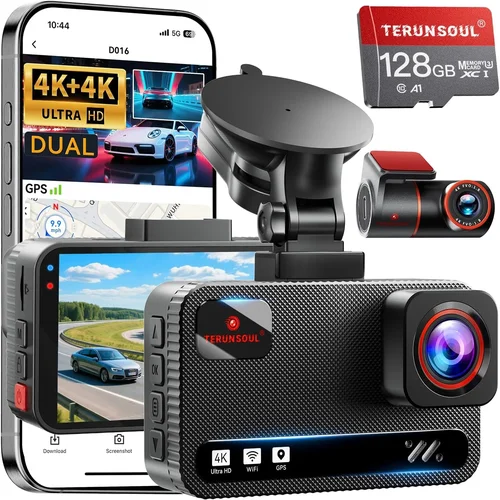
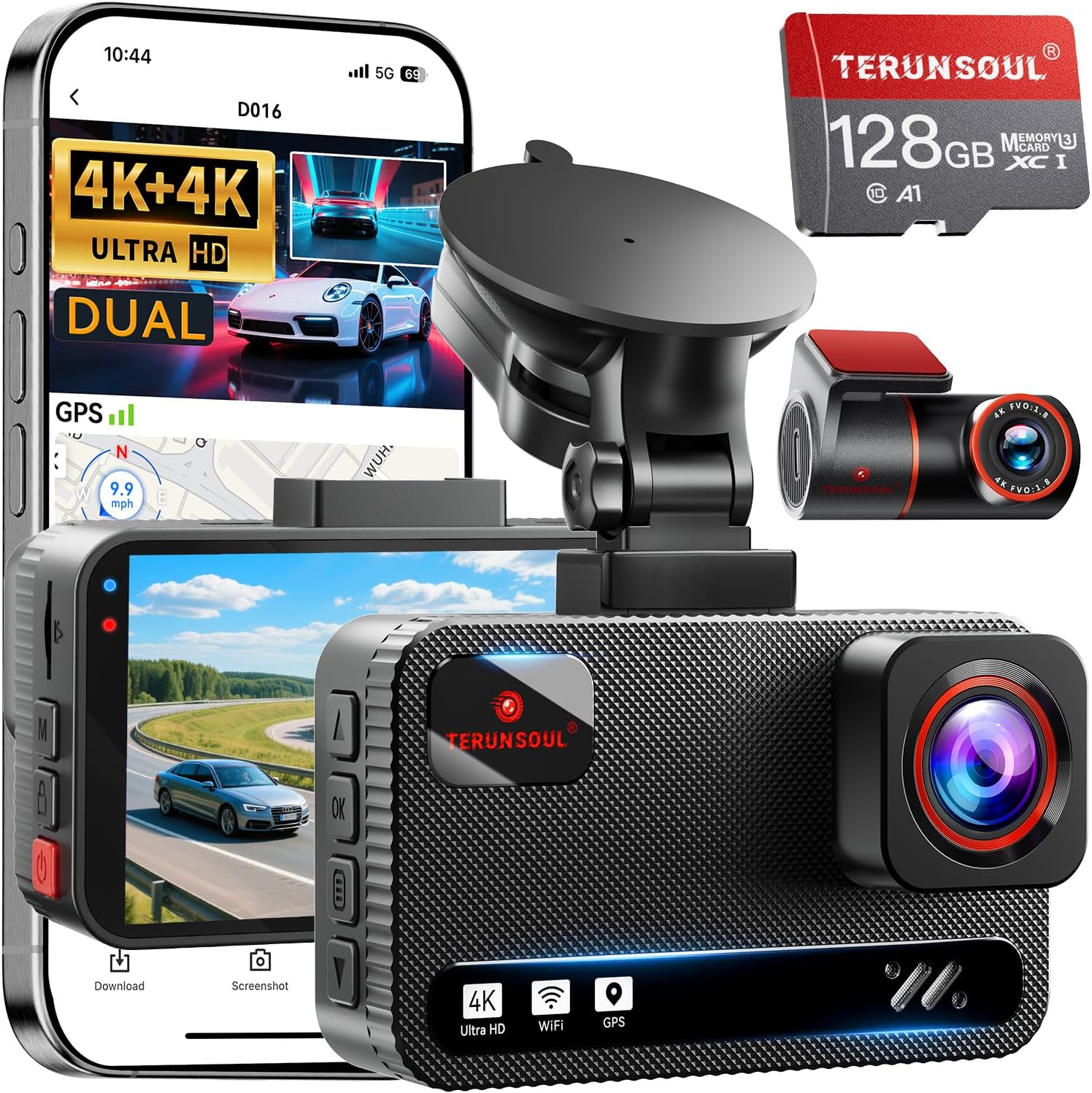
While single-front-camera setups work for many drivers, motorhome owners benefit significantly from dual-camera configurations. These systems typically include one front-facing camera and one rear or interior camera.
A rear camera eliminates blind spots behind your massive rig, crucial for backing into tight campsite spaces or navigating narrow streets. Interior cameras serve multiple purposes: they document passenger activities, deter theft in parking lots, and provide additional perspective during incidents.
When selecting a dual-system, ensure both cameras share the same recording specifications (resolution, FOV) and software interface. This consistency simplifies management and guarantees synchronized playback of events captured from multiple angles.
Some advanced dual systems even offer three or four cameras, including side-view lenses for comprehensive coverage of your entire motorhome perimeter.
8. Connectivity Options
Modern dash cams offer various ways to interact with your recordings and settings. For motorhome owners, connectivity features add convenience and functionality:
Wi-Fi enables wireless transfer of files to smartphones or tablets, eliminating the need to remove memory cards. Look for cameras with stable connections that don’t interfere with other onboard electronics.
GPS tracking records your speed, location, and route history—valuable for trip logging and accident reconstruction. Some models overlay this data directly onto video frames.
Bluetooth connectivity allows voice control and hands-free operation while driving, reducing distraction risks.
Cloud storage integration provides off-site backup of critical footage, protecting against local device failure. Automatic uploads during Wi-Fi availability at campsites save storage space and ensure important recordings aren’t lost.
9. Ease of Use and User Interface
Even the most advanced dash cam becomes frustrating if difficult to operate while driving. Motorhome dash cams should feature intuitive interfaces with clearly labeled buttons, large touchscreen menus, and straightforward menu navigation.
Consider these usability factors:
– Physical buttons versus touchscreen controls (some prefer tactile feedback)
– Menu hierarchy complexity (simple two-tier menus are ideal)
– Quick-access features like emergency recording locks
– Voice command capabilities for hands-free operation
– Mobile app compatibility for remote management
The best dash cams strike a balance between feature richness and simplicity. Avoid models with overly complicated menus or excessive sub-menus that distract from safe driving.
10. Brand Reputation and Customer Support
Finally, consider the manufacturer’s reputation and support infrastructure. Established brands typically offer better build quality, more reliable firmware updates, and responsive customer service—all crucial when you’re far from home.
Research each brand’s history with dash cams specifically, not just general electronics. Check warranty terms, return policies, and availability of replacement parts. Some manufacturers specialize exclusively in automotive electronics, giving them deeper expertise in this niche market.
Online reviews and forums dedicated to RV life can provide real-world insights from fellow motorhome owners who’ve tested various models under similar conditions.
Different Types of Dash Cams

Common Buying Mistakes to Avoid
Many motorhome owners make critical errors when selecting dash cams, often prioritizing flashy features over practical functionality. Learning from these mistakes can save you money and frustration down the road.
❌ Mistake: Choosing Based Solely on Price
Why it’s bad: Opting for the cheapest option available often leads to disappointment. Low-priced dash cams frequently suffer from poor build quality, unreliable recording, and lack essential features like proper parking mode functionality.
What to do instead: Consider your total investment rather than just the initial cost. A mid-range dash cam with superior durability and features will serve you better over time than a budget model requiring frequent replacement.
❌ Mistake: Ignoring Compatibility Issues
Why it’s bad: Many dash cams designed for standard vehicles don’t properly mount on motorhome dashboards due to height differences or interference with existing equipment like CB radios, GPS units, or climate controls.
What to do instead: Always verify physical compatibility before purchasing. Check mounting bracket sizes, cable routing options, and potential interference with your specific motorhome layout.
❌ Mistake: Overlooking Storage Requirements
Why it’s bad: Assuming a 32GB card will suffice for a month-long trip is unrealistic. High-resolution dash cams generate enormous amounts of data, quickly filling small storage cards and causing you to miss critical footage.
What to do instead: Calculate your storage needs based on resolution, compression settings, and trip duration. For extended trips, consider models supporting 128GB+ cards or cloud backup solutions.
❌ Mistake: Neglecting Power Source Planning
Why it’s bad: Relying solely on the motorhome battery for parking mode drainage can leave you stranded. Without adequate planning, dash cam accessories might drain your starting battery overnight.
What to do instead: Plan your power setup carefully. Use external batteries, install DC-to-DC converters, or connect to house power when parked. Consider professional installation for hardwiring options.
❌ Mistake: Disregarding Weather Protection
Why it’s bad: Motorhomes experience more extreme temperatures and weather exposure than cars. Dash cams not rated for these conditions may fail prematurely or produce degraded video quality.
What to do instead: Prioritize weather-resistant models with wide operating temperature ranges and IP-rated enclosures. Protect cables from moisture and direct sun exposure.
❌ Mistake: Skipping Firmware Updates
Why it’s bad: Manufacturers regularly release firmware improvements that enhance performance, fix bugs, and add features. Ignoring updates leaves you with outdated, potentially problematic devices.
What to do instead: Regularly check your manufacturer’s website for updates. Enable automatic notifications if available, and schedule brief update sessions during planned maintenance stops.
❌ Mistake: Not Testing Before Long Trips
Why it’s bad: Installing a dash cam immediately before a major trip increases risk if issues arise mid-journey. You might discover problems only after being hundreds of miles from help.
What to do instead: Test your dash cam thoroughly before embarking on significant journeys. Verify all functions, practice file management, and confirm compatibility with your motorhome systems.
Budget Guidelines: How Much Should You Spend?
Determining the right budget for your motorhome dash cam depends on your usage patterns, technical requirements, and comfort level with DIY installation. Rather than focusing solely on price points, consider what features deliver the best value for your specific needs.
Entry-Level ($40-$100)
At this price tier, you’ll find basic dash cams suitable for occasional travelers or those testing the waters before committing to a more advanced system. These models typically offer:
– 1080p resolution with moderate field of view (120-140 degrees)
– Simple loop recording functionality
– Basic motion-activated parking mode
– Limited connectivity options
– Plastic construction with shorter warranties
While affordable, entry-level dash cams often lack the durability, advanced features, and reliability needed for serious motorhome use. They may struggle with night vision, produce excessive distortion, or fail in extreme temperatures. However, they serve adequately for short trips or as backup cameras for experienced RVers upgrading from older models.
Recommended use cases: Weekend getaways, seasonal camping, or as secondary cameras in multi-camera setups.
Mid-Range ($100-$300)
This sweet spot represents the majority of motorhome owners’ choices, offering excellent balance between cost and capability. Mid-range dash cams typically include:
– 2K or 4K resolution with improved low-light performance
– Wider fields of view (150-170 degrees) with distortion correction
– Enhanced night vision using WDR technology
– Dual-lens systems with synchronized recording
– Wi-Fi connectivity and mobile app integration
– Metal housings with better weather resistance
– Extended warranties (2-3 years)
These models handle most motorhome scenarios effectively, from daily commutes to cross-country adventures. They provide sufficient storage flexibility, reliable parking mode functionality, and user-friendly interfaces without overwhelming complexity.
Recommended use cases: Full-time RV living, frequent road trips, families traveling together, and serious hobbyists wanting reliable documentation.
Premium ($300-$800)
For enthusiasts who demand top-tier performance and maximum functionality, premium dash cams deliver exceptional capabilities. These systems often feature:
– Professional-grade sensors with superior dynamic range
– Multi-camera configurations (3-4 lenses)
– Advanced driver assistance features (collision warnings, lane departure alerts)
– Cloud storage integration with automatic backups
– High-capacity internal storage or NAS compatibility
– Professional installation services included
– Premium materials with extended warranties (3-5 years)
While expensive, premium dash cams represent investments rather than purchases. They offer unmatched reliability, comprehensive coverage, and future-proofing for evolving technology standards. Many include professional calibration and customization options tailored to specific motorhome makes and models.
Recommended use cases: Professional RV bloggers, content creators, full-time nomads, and serious collectors wanting museum-quality documentation equipment.
Luxury ($800+)
Ultra-premium dash cams push technological boundaries with cutting-edge innovations. These include:
– Multiple 4K lenses with artificial intelligence processing
– Integrated dashcams, action cameras, and security systems
– Satellite connectivity for remote monitoring
– Advanced analytics (driver behavior scoring, fatigue detection)
– Customizable mounting solutions for complex dashboards
– On-demand professional support hotlines
– Lifetime firmware updates and feature additions
Luxury dash cams transform your motorhome into a connected smart vehicle with unprecedented surveillance capabilities. They’re designed for those who treat their RV like a high-tech mobile office or entertainment center rather than merely transportation.
Recommended use cases: Tech pioneers, professional filmmakers, cybersecurity experts, and ultra-high-net-worth individuals prioritizing absolute control and visibility.
Expert Tips for Getting the Best Deal
Securing the perfect dash cam at the right price requires strategic planning and awareness of market dynamics. Follow these expert recommendations to maximize value without sacrificing quality.
Timing Your Purchase Strategically
The best deals often appear during specific seasons rather than randomly throughout the year. Major shopping events offer substantial discounts, but timing can vary by region:
– Early spring (March-April): Post-winter sales with new inventory arriving
– Back-to-school season (August): Electronics retailers clear previous models
– Black Friday/Cyber Monday: Deepest annual discounts across categories
– Holiday weekends (Memorial Day, Labor Day): Seasonal markdowns
– End-of-quarter sales (December, March, June, September): Retailers clearing stock
Avoid peak summer months when demand peaks for road trips. Instead, shop in late fall when manufacturers introduce next-year models, prompting clearance pricing on current inventory.
Comparing Retailer Options
Different purchase channels offer varying advantages:
Specialty Electronics Stores: Best for knowledgeable staff, immediate testing opportunities, and professional installation services. Examples include Best Buy, Micro Center, and local audio/video shops.
Online Marketplaces: Generally lowest prices due to competition, but require careful verification of seller credibility. Amazon, Newegg, and B&H Photo often lead in both selection and customer service.
Direct Manufacturer Sites: Sometimes offer exclusive bundles, extended warranties, or customization options not available elsewhere. Check official websites before finalizing purchases.
RV Dealerships: May include installation as part of package deals or offer compatibility guarantees specific to motorhome models.
Always compare total costs including shipping, taxes, installation fees, and return policies across channels before deciding.
Identifying Genuine Deals vs. Marketing Tricks
Beware of misleading promotional tactics disguised as savings:
– “Buy one, get one free” often means getting inferior second items
– “Discounted refurbished” may conceal cosmetic damage or reduced warranties
– “Limited time offers” create false urgency without actual scarcity
– “Bundle deals” sometimes inflate perceived savings by including unnecessary accessories
Verify deal authenticity by researching MSRP comparisons, checking independent review sites, and consulting fellow RVers in online communities. Remember that the cheapest option isn’t always the best value when considering long-term ownership costs.
Warranty and Return Policy Considerations
Extended warranties and flexible return policies significantly affect your total ownership experience:
– Look for minimum 2-year hardware warranties (3+ preferred)
– Verify international coverage if traveling abroad
– Understand what repairs qualify for free replacement
– Confirm return window length (minimum 30 days recommended)
– Check restocking fees for opened products
Some manufacturers offer “accidental damage” coverage for situations beyond normal wear and tear—useful for motorhome owners facing unexpected challenges like road debris or weather-related incidents.
Testing Before Committing
Whenever possible, physically test dash cams before purchasing:
– Visit authorized dealers to compare models side-by-side
– Request demonstration videos showing real-world performance
– Ask about loaner programs or trial periods
– Verify mounting compatibility with your specific dashboard
– Test interface responsiveness and menu intuitiveness
If testing isn’t feasible, research extensively through video reviews, forum discussions, and detailed product specifications. Pay particular attention to comments about reliability, ease of use, and compatibility issues reported by actual motorhome owners.
Leveraging Community Knowledge
Online RV communities contain invaluable collective wisdom:
– Join Facebook groups dedicated to specific motorhome makes/models
– Participate in Reddit discussions like r/FullTimers or r/RVs
– Read specialized blogs and YouTube channels focused on RV technology
– Consult manufacturer forums for troubleshooting advice
– Ask targeted questions about real-world performance scenarios
Members often share detailed comparisons, installation tips, and vendor recommendations based on personal experience—insights no marketing copy can provide.
Considering Refurbished Options Carefully
Certified refurbished dash cams can offer significant savings while maintaining reliability:
– Ensure products come with full manufacturer warranties
– Verify refurbishment standards and quality control processes
– Avoid heavily discounted “open-box” items without warranty information
– Check return policies specifically for refurbished units
– Prefer reputable sellers with transparent refurbishment procedures
Refurbished options make sense when you prioritize cost savings but still demand quality assurance and support.
Frequently Asked Questions
Q: Do I really need a dash cam for my motorhome?
A: While not legally required everywhere, dash cams provide substantial benefits for motorhome owners. They protect against fraudulent claims, document scenic routes for personal memories, deter theft, and offer evidence in insurance disputes. Given motorhomes’ value and vulnerability during extended travel, the investment is worthwhile for most RVers.
Q: Can dash cams drain my motorhome battery?
A: Yes, dash cams consume power even when parked, especially with parking mode active. However, proper installation and planning prevent battery drain issues. Solutions include using external batteries, installing DC-to-DC converters, connecting to house power when available, or selecting models with efficient power management features.
Q: What’s the difference between front-only and dual-lens dash cams?
A: Front-only dash cams record only the road ahead, while dual-lens systems include both front and rear cameras. Dual-lens setups eliminate blind spots behind your motorhome, crucial for backing into tight spaces and providing complete incident documentation. They’re generally recommended for motorhome owners due to the vehicle’s size and maneuvering challenges.
Q: How much storage space do I actually need?
A: Storage requirements depend on resolution, compression settings, and recording frequency. As a rule of thumb:
– 1080p recording: ~1GB per hour
– 2K recording: ~2GB per hour
– 4K recording: ~4GB per hour
For a typical 2-week trip with mixed driving and occasional parking mode activation, plan for 128GB-256GB minimum. Always carry spare cards and consider cloud backup options for critical footage.
Q: Are wireless dash cams reliable for motorhome use?
A: Wireless functionality works well in most scenarios, but motorhomes present unique connectivity challenges. Large metal bodies can interfere with Wi-Fi signals, and remote locations may lack reliable networks for cloud uploads. If choosing wireless models, ensure robust signal strength and test performance in your specific motorhome environment before relying on them exclusively.
Q: Should I install dash cams myself or hire professionals?
A: DIY installation suits confident technicians comfortable with electrical work and cable routing. Professional installation guarantees proper mounting, clean wiring, and warranty compliance but adds costs. Consider your skills, time availability, and desire for pristine appearance when deciding. Many motorhome owners choose hybrid approaches—handling simple tasks themselves while paying professionals for complex wiring or multi-camera setups.
Q: How do I handle extreme weather conditions?
A: Extreme temperatures pose significant challenges for electronic devices. Select dash cams rated for wide operating ranges (-20°F to 140°F/-29°C to 60°C). Protect cables from direct sunlight exposure, use weatherproof connectors, and consider thermal insulation for critical components. During severe conditions, temporarily disable parking mode to conserve power and prevent component stress.
Q: Can dash cams work with my existing motorhome electronics?
A: Compatibility varies by make and model. Potential conflicts include interference with CB radios, GPS units, or climate controls. Always check specifications against your vehicle’s electrical system and consult installation guides before purchasing. Some manufacturers offer compatibility lists or provide technical support for specific motorhome models.
Q: What features should I prioritize for long-term use?
A: Focus on reliability, durability, and ease of maintenance. Key priorities include robust build quality, accessible storage slots, intuitive interfaces, regular firmware updates, and responsive customer support. Secondary considerations include advanced features like GPS tracking or cloud storage, which enhance convenience but aren’t essential for core functionality.
Q: How often should I replace my dash cam?
A: With proper care, quality dash cams last 3-5 years before needing replacement. Signs indicating end-of-life include declining video quality, unresponsive controls, frequent errors, or obsolete technology unable to receive firmware updates. Don’t wait until complete failure—replace proactively when approaching the end of expected lifespan.
Final Recommendations
After extensive research and analysis, we’ve identified several standout dash cam options specifically suited for motorhome owners. Each recommendation balances performance, reliability, and value while addressing the unique challenges of RV travel.
Best for Budget-Conscious Buyers
For those seeking essential protection without breaking the bank, the Viofo A119 Mini V3 offers exceptional value. This 2K dual-lens dash cam delivers impressive video quality at an affordable price point, featuring a 140-degree field of view, excellent night vision, and reliable loop recording. Its compact size and straightforward installation make it ideal for first-time buyers or those adding secondary cameras to existing setups. While lacking some premium features like cloud connectivity, it performs admirably in real-world motorhome conditions and includes a generous 18-month warranty.
Best Overall Value
The Garmin Dashcam Mini stands out as the optimal choice for most motorhome owners. Combining sleek design with powerful performance, it offers 1440p resolution, GPS tracking, and advanced driver assistance features like collision warnings. Its magnetic mount allows easy repositioning, while the companion app provides seamless file management. The included suction cup mount works reliably on curved motorhome dashboards, and the compact form factor doesn’t obstruct your view. With 2 years of included roadside assistance coverage and robust build quality, it delivers professional-grade functionality without professional pricing.
Best Premium Option
For enthusiasts demanding the ultimate motorhome surveillance system, the BlackVue DR970X-2CH Cloud features dual 4K recording with HDR technology, cloud connectivity, and advanced parking mode capabilities. Its impressive 162-degree field of view captures nearly everything around your rig, while the built-in WiFi enables instant file sharing and live viewing. The impact sensor and motion detection work flawlessly during extended park sessions, and the metal housing withstands temperature extremes common on long trips. Professional installation options and comprehensive warranty coverage justify its premium position for serious RVers.
Best for Beginners
New to dash cams? The Thinkware U1000 delivers outstanding performance with an intuitive interface perfect for first-time users. Its 2K resolution provides crisp detail, while the simple menu structure reduces learning curves. The included Wifi button instantly connects to your smartphone for easy file retrieval, and the built-in GPS accurately logs your journey. Thinkware’s reputation for reliability and responsive customer service gives confidence to newcomers, while the 1-year warranty protects your initial investment during exploration phases.
Best for Advanced Users
Experienced motorhome travelers will appreciate the Nextbase 522GW’s sophisticated feature set. This 2K dash cam includes Alexa voice control, emergency SOS functionality, and picture-in-picture recording for simultaneous front/rear views. Its impressive 150-degree field of view minimizes blind spots, while the advanced night vision handles challenging lighting conditions. The included 16GB high-endurance microSD card and 1-year guarantee provide immediate readiness for departure. For tech-savvy RVers wanting cutting-edge capabilities without compromising reliability, this represents the pinnacle of consumer dash cam technology.
Each recommendation reflects careful consideration of real-world motorhome requirements rather than theoretical specifications. Choose based on your specific needs, budget constraints, and comfort level with technology—your perfect dash cam awaits discovery.
Conclusion: Making the Right Choice
Selecting the best dash cam for your motorhome represents more than purchasing another accessory—it’s investing in peace of mind, safety, and the ability to fully enjoy your adventures without constant worry. By understanding your unique requirements and evaluating options systematically, you’ll find equipment that enhances rather than complicates your RV lifestyle.
Remember that the ideal dash cam balances performance with practicality. Prioritize features that address real motorhome challenges: wide coverage for large blind spots, reliable operation in extreme temperatures, sufficient storage for extended trips, and intuitive controls during busy driving moments. Don’t get distracted by every flashy feature—focus instead on capabilities that genuinely improve your experience.
Take time to research thoroughly, test whenever possible, and leverage community knowledge shared by fellow RVers. Your dash cam should seamlessly integrate into your mobile home without becoming another source of stress or complexity. With proper selection and installation, it will become an invisible guardian watching over your journey, capturing memories while providing protection when you need it most.
Whether you’re embarking on weekend escapes or planning cross-country adventures, the right dash cam transforms ordinary travel into documented experiences. Make your choice wisely, install carefully, and enjoy the added confidence that comes with knowing you’re prepared for whatever the open road brings. Safe travels!