Ultimate Dash Cam Buying Guide
Ultimate Dash Cam Buying Guide
In today’s increasingly complex driving environment, having reliable video evidence can make all the difference in insurance claims, legal disputes, and simply ensuring peace of mind on the road. A quality dash cam with both front and rear cameras has become an essential automotive accessory rather than just a convenience. This comprehensive buying guide will walk you through everything you need to know about selecting the best dual-channel dash cam system for your vehicle.
This article covers all critical aspects from technical specifications to budget considerations, helping you navigate the overwhelming market options and find the perfect solution that matches your driving habits, vehicle type, and security requirements. Whether you’re a daily commuter, frequent traveler, or someone who wants maximum protection for their investment, this guide provides expert insights to ensure you make an informed decision that delivers lasting value.

What to Look for When Buying Dash Cams
Budget & Price Range
Understanding your budget is the first step in finding the right dash cam. Entry-level dual-channel systems typically range from $100-$200, offering basic 1080p recording with essential features. Mid-range models ($200-$400) provide better image quality, enhanced functionality, and improved build quality. Premium systems ($400+) deliver 4K recording, advanced driver assistance features, superior night vision, and robust construction suitable for demanding conditions.
Consider not just the initial purchase price but also ongoing costs like storage cards, potential repairs, and feature upgrades. Many manufacturers offer bundled deals that include multiple cameras, mounting hardware, and extended warranties that can provide better long-term value despite higher upfront costs.
Resolution & Image Quality
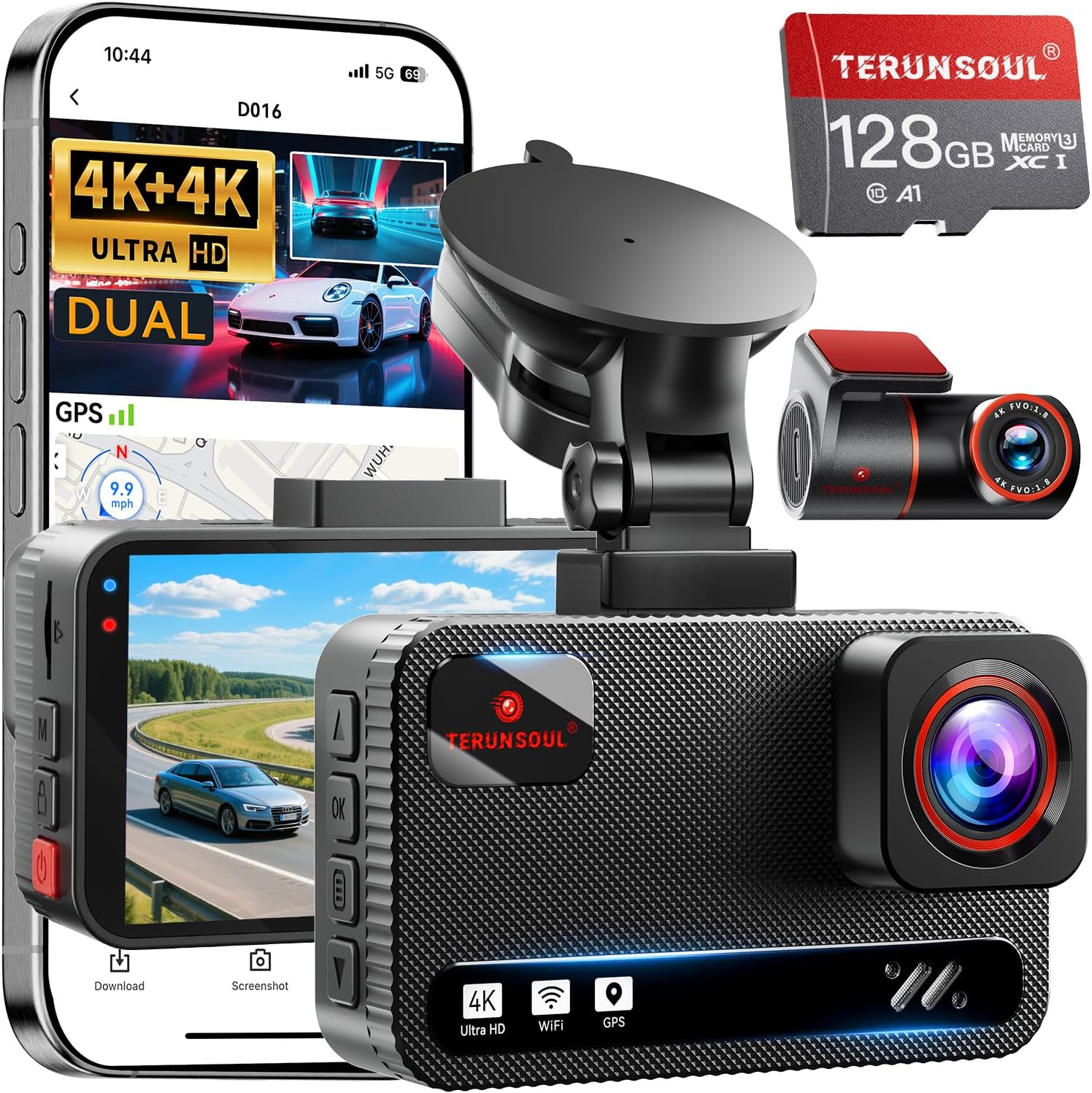
Video resolution directly impacts the clarity and detail captured during incidents. For front camera recording, aim for at least 1080p Full HD, though 2K (1440p) or 4K Ultra HD provides significantly improved detail for identifying license plates and facial features. Rear cameras typically have lower resolution since they capture less critical information, but 720p should be the minimum standard.
The sensor size and aperture also affect image quality, especially in challenging lighting conditions. Larger sensors perform better in low light, while wider apertures allow more light capture. Look for dash cams with f/1.8 or lower aperture values for improved night performance.
Field of View (FOV)
The field of view determines how much of the road and surrounding area your dash cam captures. Front cameras should have a horizontal FOV of 130-150 degrees to cover the entire lane and adjacent lanes. Rear cameras typically have 120-140 degree FOVs to capture traffic behind and around your vehicle.
Wider FOVs provide better coverage but may introduce distortion at the edges of the frame. Advanced systems use multiple lenses with overlapping fields of view to eliminate blind spots while maintaining image quality throughout the frame.
Night Vision Capabilities
Night driving presents unique challenges for dash cams, requiring specialized technology to maintain visibility in darkness. Look for cameras with large aperture lenses (f/1.8 or lower), high-quality CMOS sensors, and built-in infrared LEDs or starlight sensors. Some premium models feature adaptive exposure control that automatically adjusts settings based on lighting conditions.
Advanced night vision technologies include HDR (High Dynamic Range) processing that balances bright headlights with darker road surfaces, and noise reduction algorithms that minimize graininess without sacrificing detail. These features are particularly valuable for capturing clear evidence during nighttime accidents or incidents.
Storage Capacity & Loop Recording
Most dual-channel dash cams require a microSD card with Class 10 speed rating and UHS-I or higher compatibility. A 64GB card typically provides 2-3 hours of continuous recording, while 128GB offers 4-6 hours. Consider your typical driving patterns when selecting storage capacity.
Loop recording automatically overwrites the oldest footage when the card fills up, ensuring continuous operation without manual intervention. Some systems support cloud storage or WiFi connectivity for wireless file transfer and remote viewing, eliminating the need for physical card removal.
Build Quality & Durability
Dash cams face extreme temperature variations, vibrations, and potential impact during collisions. Look for devices with metal housings, shock-resistant mounts, and operating temperature ranges from -4°F to 158°F (-20°C to 70°C). IP65 or higher waterproof ratings provide additional protection against moisture and dust.
Quality construction includes secure wiring harnesses that won’t come loose during installation, and reliable power connections that maintain consistent operation. Premium models often feature military-grade components and undergo rigorous testing for long-term reliability.
Features & Functionality
Modern dash cams offer numerous advanced features beyond basic recording. G-sensor technology automatically saves clips when sudden movements or impacts are detected. Parking mode monitors your vehicle when parked and records events using battery backup or hardwired power.
Other valuable features include GPS logging for speed and location tracking, Wi-Fi connectivity for smartphone app control, voice commands for hands-free operation, and advanced driver assistance systems (ADAS) like collision warnings and lane departure alerts. Some models integrate with car alarm systems for comprehensive security monitoring.
Brand Reputation & Customer Support
Established brands with proven track records typically offer better quality control, more reliable customer service, and longer product lifespans. Research manufacturer reputation through independent reviews, consumer reports, and industry certifications before making your selection.
Reliable customer support is crucial for troubleshooting issues, obtaining firmware updates, and addressing warranty claims. Look for companies that provide responsive email support, detailed documentation, and active community forums where users share experiences and solutions.
Installation Complexity
Installation difficulty varies significantly between models and affects long-term usability. Simple plug-and-play systems with magnetic mounts require minimal effort but may lack stability. Professional-grade installations involving hardwiring to the fuse box provide permanent power but require electrical knowledge or professional assistance.
Consider your comfort level with automotive electronics and available tools when evaluating installation requirements. Some manufacturers offer installation services for an additional fee, while others provide detailed video tutorials and step-by-step guides to simplify the process.
Warranty & After-Sales Service
A comprehensive warranty covering parts and labor for 1-3 years indicates manufacturer confidence in product quality. Extended warranties may be available for purchase, providing additional protection beyond standard coverage periods.
Check warranty terms carefully, as some exclusions may apply to water damage, accidental drops, or unauthorized modifications. Reliable after-sales service includes firmware updates, technical support, and replacement parts availability for seamless long-term operation.
Different Types of Dash Cams

Common Buying Mistakes to Avoid
❌ Mistake: Choosing Based Solely on Price
Why it’s bad: The cheapest dash cam might seem appealing initially, but poor image quality, unreliable performance, and lack of essential features can leave you unprotected during critical situations. Low-cost models often compromise on critical components like sensors, lenses, and processing chips.
What to do instead: Focus on value rather than absolute lowest price. Compare features across different price points to identify models that offer the best combination of quality, functionality, and durability for your needs and budget.
❌ Mistake: Ignoring Storage Requirements
Why it’s bad: Underestimating storage needs leads to frequent card swaps, lost footage due to full cards, and operational interruptions. Many users discover they need larger capacity cards than originally planned once they start recording regularly.
What to do instead: Calculate your expected recording time based on daily commute length and desired retention period. Choose a card with 25-50% extra capacity beyond your immediate needs, and consider cloud backup options for important files.
❌ Mistake: Overlooking Installation Complexity
Why it’s bad: Complex installations without proper tools or knowledge can damage vehicles, create electrical issues, or result in improper mounting that affects recording quality and safety. DIY attempts sometimes void warranties or create fire hazards.
What to do instead: Assess your mechanical aptitude honestly before purchasing. Consider professional installation services, especially for hardwiring to fuse boxes, or choose models with simple magnetic mounts and cigarette lighter power adapters.
❌ Mistake: Neglecting Night Performance
Why it’s bad: Assuming all dash cams perform equally in darkness leads to poor-quality nighttime recordings that fail to provide useful evidence. Many budget models struggle with low-light conditions, producing grainy or washed-out footage.
What to do instead: Prioritize models with dedicated night vision capabilities, large aperture lenses, and low-light optimization features. Test sample videos online before purchasing to evaluate real-world night performance.
❌ Mistake: Forgetting About Warranty Coverage
Why it’s bad: Purchasing without understanding warranty terms can leave you responsible for repair costs or replacements if the device fails within the coverage period. Some warranties exclude common failure points or have confusing claim procedures.
What to do instead: Read warranty documentation thoroughly, ask about coverage specifics during sales consultations, and verify manufacturer reputation for honoring warranty claims. Consider extended warranty options for expensive systems.
❌ Mistake: Overlooking Compatibility Issues
Why it’s bad: Incompatibility with your vehicle’s electrical system, dashboard space, or existing accessories can render the dash cam unusable or cause operational problems. Some cars have limited fuse box access or incompatible cigarette lighter sockets.
What to do instead: Research your vehicle model specifically, check manufacturer compatibility lists, and verify physical dimensions match available mounting locations. Consider universal mounting solutions for flexible placement.
❌ Mistake: Skipping Feature Research
Why it’s bad: Not understanding available features leads to purchasing models that lack functionality you actually need, or buying unnecessarily complex systems with features you’ll never use. This results in paying for capabilities that don’t benefit your specific situation.
What to do instead: Create a list of essential and desirable features based on your driving habits, vehicle type, and security priorities. Compare feature sets across multiple models to identify the optimal balance of capabilities.
Budget Guidelines: How Much Should You Spend?
Entry-Level ($100 – $200)
This price range offers reliable basic dual-channel functionality for everyday drivers seeking essential protection without breaking the bank. Models in this category typically feature 1080p front recording, 720p rear recording, loop recording, G-sensor, and parking mode. While image quality may not be exceptional, these systems provide adequate evidence for most common incidents and offer dependable performance for daily commuting.
Recommended features include automatic event detection, motion-activated recording during parking, and simple mobile app integration. Build quality is generally good for the price point, though materials may feel less premium than higher-end models. Warranty coverage usually spans 12-18 months, providing reasonable protection for the investment.
Mid-Range ($200 – $400)
The sweet spot for most buyers, mid-range dash cams deliver excellent value by combining improved image quality, enhanced features, and better build materials. This category typically includes 2K or 4K front recording, superior low-light performance, GPS logging, Wi-Fi connectivity, and advanced driver assistance features.
Models in this range often feature metal housings, improved lens quality, and more sophisticated processing algorithms that enhance overall video quality. Additional capabilities may include voice control, cloud storage integration, and customizable recording settings. Installation complexity varies, but many models offer simpler setup processes than premium alternatives.
Premium ($400 – $600)
For serious drivers, frequent travelers, or those requiring maximum protection, premium dash cams offer top-tier performance and advanced functionality. These systems typically feature 4K Ultra HD recording, superior night vision capabilities, multi-camera support, and robust build quality designed for demanding conditions.
Advanced features include AI-powered object recognition, collision warning systems, automatic emergency response protocols, and professional-grade mounting solutions. Premium models often come with extended warranties (2-3 years) and professional installation services, reflecting their higher reliability standards and target market expectations.
Luxury ($600+)
Luxury dash cams represent the pinnacle of automotive recording technology, featuring cutting-edge innovations that go far beyond basic recording capabilities. These systems incorporate artificial intelligence, machine learning algorithms, and sophisticated sensor fusion to provide unparalleled situational awareness and evidence collection.
Features include real-time traffic analysis, predictive collision avoidance, automated incident reporting to authorities, and comprehensive fleet management integration. Luxury models often serve as central hubs for vehicle security systems, integrating with alarm systems, GPS tracking, and other automotive electronics. While expensive, these systems provide maximum protection and peace of mind for high-value vehicles and professional drivers.
Expert Tips for Getting the Best Deal
Timing Your Purchase
Avoid buying during peak shopping seasons when prices are inflated. The best deals typically appear during off-seasons, back-to-school periods, and major holidays like Black Friday and Cyber Monday. Electronics retailers often offer substantial discounts during these times, and manufacturers frequently release new models that make older versions more affordable.
Consider waiting for product refresh cycles, which usually occur 12-18 months after launch. Newer models often drop 15-30% in price once successors are announced, while clearance sales provide additional savings on current-generation devices.
Comparing Retailers
Online retailers like Amazon, Best Buy, and Walmart offer competitive pricing but may lack in-person support. Specialty automotive stores provide professional installation services and expert advice but typically charge premium prices. Direct manufacturer purchases often include exclusive bundles and warranty extensions.
Read customer reviews across multiple platforms to identify consistent pricing patterns and potential hidden fees. Some retailers offer price matching guarantees that can save you money if you find lower prices elsewhere.
Identifying True Discounts
Beware of inflated original prices used to justify “discounted” deals. Legitimate discounts typically reflect genuine market pricing rather than manufactured savings. Compare current prices with historical data to verify actual savings.
Look for bundle deals that include multiple accessories like extra mounts, cables, or extended warranties. These packages often provide better value than purchasing items separately, even if the individual components seem overpriced.
Warranty Considerations
Always verify warranty coverage details before purchasing. Some retailers offer extended warranty options for an additional fee, but these may duplicate existing manufacturer coverage. Check whether the warranty covers international usage, accidental damage, and water ingress.
Register your product immediately to activate warranty benefits and receive important firmware updates. Keep purchase receipts and documentation in a safe place for warranty claims and potential resale.
Return Policies
Understand return policies thoroughly, especially for online purchases. Most reputable retailers offer 30-90 day return windows, but some electronics have restocking fees or require original packaging. Test your dash cam thoroughly upon receipt to ensure it meets your expectations.
If purchasing in person, take advantage of store return policies that may be more flexible than manufacturer policies. Keep all packaging and accessories until you’ve confirmed the device works properly in your vehicle.
Testing Before Buying
Whenever possible, test dash cams in-store or request samples from manufacturers. Evaluate image quality in different lighting conditions, check menu navigation intuitiveness, and verify that mounting options work with your dashboard layout.
Ask sales staff about demonstration units and request to see sample footage. Many stores have loaner programs that let you install and test the device before committing to a purchase.
Negotiating Better Terms
Don’t hesitate to negotiate when purchasing expensive systems. Ask about additional accessories, installation services, or warranty extensions. Some retailers offer price adjustments if competitors have lower prices, and knowledgeable salespeople may have discretionary discount authority.
Consider bundling multiple purchases, such as dash cam plus tire pressure monitoring system or security cameras, as retailers often provide package discounts for complementary products.
Long-Term Value Assessment
Evaluate total cost of ownership rather than just initial price. Factor in potential repair costs, replacement part availability, software update frequency, and resale value. Systems with better build quality and brand reputation often retain value better and require fewer repairs over time.
Consider subscription-based cloud storage services versus one-time hardware purchases. While subscriptions cost more long-term, they provide convenient backup and remote access capabilities that may justify recurring expenses for some users.
Frequently Asked Questions
Q: Do I really need a dual-channel dash cam with both front and rear cameras?
A: Yes, dual-channel systems provide comprehensive coverage that single-lens cameras cannot match. Having both front and rear cameras ensures complete situational awareness, capturing incidents from multiple angles. This is especially valuable for insurance claims, as it eliminates questions about what happened from either direction. Dual-channel systems also help prevent tampering with evidence, as attackers would need to disable both cameras simultaneously.
Q: What’s the difference between 1080p, 2K, and 4K recording?
A: Resolution refers to the number of pixels in each video frame, directly affecting image detail and clarity. 1080p (1920×1080) provides standard Full HD quality suitable for most driving scenarios. 2K (2560×1440) offers approximately 1.7x more detail than 1080p, enabling clearer license plate and facial recognition. 4K (3840×2160) provides 4x the resolution of 1080p, delivering exceptional detail for forensic analysis and close-up identification. Higher resolutions require more storage space and processing power but significantly improve evidence quality.
Q: How much storage do I actually need for my dash cam?
A: Storage requirements depend on your daily driving distance and desired footage retention period. A 64GB microSD card typically holds 2-3 hours of 1080p recording, while 128GB cards provide 4-6 hours. For daily commuters, a 128GB card may suffice for 1-2 weeks of recording with loop overwrite enabled. Frequent travelers or long-distance drivers should consider 256GB+ cards or cloud storage solutions. Always purchase high-quality cards (Class 10, UHS-I or higher) to prevent recording failures.
Q: Can dash cams drain my car battery?
A: Modern dash cams consume minimal power, typically 1-3 watts during recording. When properly installed with parking mode, they shouldn’t drain batteries under normal circumstances. However, leaving parking mode active for extended periods (weeks) could theoretically drain batteries in vehicles with weak charging systems. Using parking mode only when needed and considering battery disconnect switches for older vehicles prevents unexpected drain issues.
Q: Will a dash cam work in extreme weather conditions?
A: Quality dash cams are designed to operate in temperatures from -4°F to 158°F (-20°C to 70°C). They withstand rain, snow, and humidity through sealed housings and protective coatings. However, extreme conditions affect performance differently: cold weather reduces battery efficiency, while heavy rain or snow can temporarily obscure lenses. Regular cleaning and proper positioning help maintain visibility in adverse weather. Premium models feature enhanced sealing and anti-fogging technologies for improved performance in harsh conditions.
Q: How do I know if my dash cam footage will be admissible in court?
A: Admissibility depends on jurisdiction-specific rules, but quality dash cam footage generally meets evidentiary standards when properly maintained. Key factors include: consistent timestamp accuracy, clear audio/video quality, chain-of-custody documentation, and absence of manipulation. Store footage securely, avoid editing or deletion of relevant clips, and ensure your dash cam meets local technical standards. Some courts prefer manufacturer-verified devices with tamper-proof recording capabilities.
Q: Can I install a dash cam myself, or should I hire a professional?
A: Most modern dash cams are designed for DIY installation with simple magnetic mounts and cigarette lighter power adapters. Basic installations take 15-30 minutes and require only a screwdriver and cable ties. However, hardwiring to the fuse box requires electrical knowledge and carries risks of damaging your vehicle’s electrical system. Professional installation costs $50-150 but ensures proper wiring, secure mounting, and warranty preservation. Choose based on your comfort level and the installation complexity of your chosen model.
Q: What happens to old footage when the memory card fills up?
A: Loop recording automatically overwrites the oldest footage when the card reaches capacity, ensuring continuous operation without manual intervention. This is the standard behavior for all dash cams and requires no user action. However, some models with G-sensors or impact detection preserve event-triggered footage in separate protected folders, preventing accidental overwriting of important clips. Always verify your specific model’s overwrite behavior before relying on it for critical evidence.
Q: Are there privacy concerns with dash cam recordings?
A: Yes, privacy considerations are important. Dash cams record public spaces and potentially capture other drivers’ license plates, faces, and activities. Ensure your usage complies with local laws regarding recording and data storage. Some jurisdictions require consent for audio recording. Secure storage prevents unauthorized access, and regular deletion of non-essential footage helps protect privacy. Consider disabling audio recording if not legally permitted in your area.
Q: How often should I update my dash cam firmware?
A: Firmware updates typically occur 1-4 times per year and address bugs, improve performance, or add new features. Enable automatic updates when available, but manually check periodically for important improvements. Outdated firmware can cause compatibility issues with newer storage cards, reduce battery life, or create security vulnerabilities. Keep your device connected to power during updates to prevent interruption, and verify successful installation through system menus.
Our Final Recommendations
Best for Budget-Conscious Buyers
The Viofo A119 V3 Dual Channel Dash Cam stands out as the optimal choice for those prioritizing essential dual-camera functionality without excessive expense. Priced around $150, it delivers reliable 1080p front recording and 720p rear capture with dependable performance in various conditions. Its compact design fits virtually any vehicle dashboard, while the included suction cup mount provides flexible positioning options.
Key strengths include robust G-sensor technology for automatic event detection, parking mode with impact detection, and straightforward mobile app integration for wireless file transfer. The device operates reliably in temperatures from -4°F to 158°F and comes with a 12-month warranty. For its price point, the A119 V3 offers exceptional value, making it ideal for daily commuters and occasional travelers seeking basic protection without overspending.
Best Overall Value
The BlackVue DR970-2G Dual Camera System represents the perfect balance of features, quality, and reliability for the average driver. Priced at approximately $350, this premium system delivers 2K front and 1080p rear recording with exceptional image quality thanks to advanced image stabilization and superior low-light performance.
Its standout features include cloud connectivity for remote viewing and playback, GPS logging with speed tracking, and robust build quality suitable for demanding conditions. The BlackVue app provides intuitive controls and automatic cloud backup capabilities, while professional-grade mounting solutions ensure secure installation. With 2-year warranty coverage and proven reliability in real-world conditions, this system justifies its investment for drivers who want top-tier performance without the luxury price tag.
Best Premium Option
The Thinkware U1000 Dual Channel Dash Cam sets the industry standard for premium dash cam performance and innovation. At around $500, it delivers true 4K UHD recording from the front camera and 2K recording from the rear, providing unprecedented detail for forensic analysis and evidence collection.
Advanced features include Super Night Vision technology, advanced driver assistance systems (ADAS), and sophisticated impact detection algorithms. The system integrates seamlessly with Thinkware’s mobile apps for cloud storage, real-time GPS tracking, and intelligent parking surveillance. Military-grade construction ensures durability in extreme conditions, while comprehensive warranty coverage reflects manufacturer confidence in product quality. This system represents the pinnacle of consumer dash cam technology for discerning drivers and professionals.
Best for Beginners
The Rexing V1P Pro Dual Channel Dash Cam excels as an accessible entry point for new dash cam users. Priced affordably at $180, it offers user-friendly operation with simplified menus and clear visual indicators. The included 128GB high-speed microSD card eliminates initial setup hassles, while the magnetic mount allows quick repositioning and easy removal for storage.
Beginner-friendly features include automatic loop recording, motion-activated parking mode, and straightforward Wi-Fi connectivity for smartphone app control. The Rexing app provides intuitive file management and playback capabilities, while comprehensive documentation simplifies installation and operation. With reliable performance and responsive customer support, this system removes barriers for first-time users while delivering dependable protection for everyday driving scenarios.
Best for Advanced Users
The Garmin Dash Cam Pro Series offers unparalleled functionality for experienced drivers seeking maximum situational awareness and integration capabilities. Priced at $450, this advanced system combines superior recording quality with comprehensive mapping features and driver assistance technologies.
Its advanced features include live traffic monitoring, incident detection with automatic alert to emergency contacts, and seamless integration with Garmin’s ecosystem of navigation and safety products. The system provides real-time hazard alerts, lane departure warnings, and forward collision warnings, while premium construction ensures reliable operation in challenging conditions. For tech-savvy drivers who want the most comprehensive dash cam experience with maximum integration possibilities, this system delivers unmatched value through its sophisticated feature set and proven reliability.
Conclusion: Making the Right Choice
Selecting the perfect dual-channel dash cam requires careful consideration of your specific needs, budget constraints, and long-term expectations. Rather than focusing solely on price or flashy features, prioritize the elements that matter most for your driving situation and security requirements. Whether you’re a cautious commuter seeking basic protection, a frequent traveler wanting comprehensive coverage, or a professional driver needing maximum evidence quality, understanding your priorities will guide you toward the ideal solution.
Remember that a quality dash cam is an investment in your peace of mind and protection. The most expensive option isn’t always the best fit, nor is the cheapest model necessarily inadequate. Instead, focus on finding the right balance of features, image quality, reliability, and value that aligns with your lifestyle and driving patterns. Take advantage of the comprehensive information provided in this guide to make an educated decision that will serve you well for years to come.
Before making your final selection, research thoroughly, compare multiple options, and consider professional installation if needed. Don’t rush the decision—your choice will impact your safety and potentially affect legal outcomes in the future. With the right dash cam system in place, you’ll drive with greater confidence, knowing you have reliable evidence and comprehensive protection covering every angle of your journey.