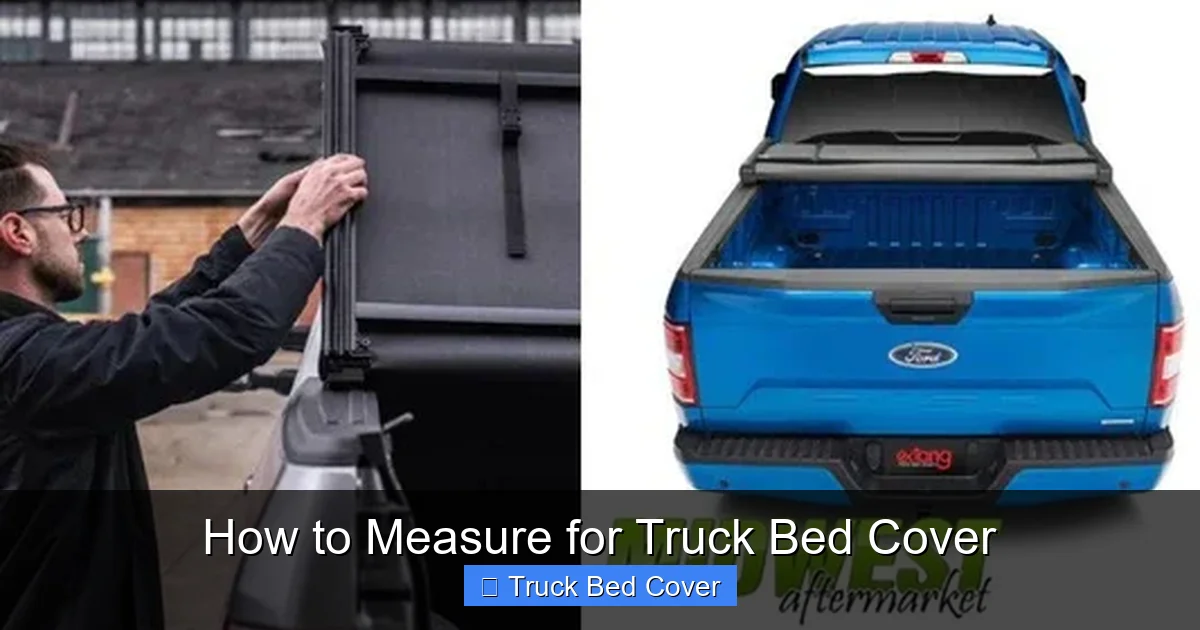
How to Measure for Truck Bed Cover
Measuring for a truck bed cover is easier than you think—and getting it right means better protection, a cleaner look, and fewer headaches later. Whether you’ve got a shorty, standard, or long bed, this guide walks you through every step. We’ll help you avoid costly errors and pick a cover that fits like it was made just for your ride.
Key Takeaways
- Know your truck’s exact model and bed size: Always check your vehicle’s manual or VIN to confirm bed dimensions—don’t guess!
- Measure length, width, and height correctly: Use a tape measure from bumper to tailgate, side rails to side rails, and inside the bed walls.
- Account for accessories like toolboxes or bed liners: These can block coverage and require custom measurements.
- Choose the right cover type based on your needs: Roll-up, tri-fold, retractable, or tonneau—each has unique measurement requirements.
- Double-check before ordering: Most manufacturers offer templates or virtual fitting tools to ensure accuracy.
- Consider seasonal storage and ease of access: A poorly measured cover may limit cargo space or make loading harder.
- Don’t skip professional installation if unsure: Even small gaps can reduce security and weather resistance.
[FEATURED_IMAGE_PLACEHOLDER]
# How to Measure for Truck Bed Cover
If you’re thinking about upgrading your truck with a bed cover—also called a tonneau cover—you’re probably excited about the improved aerodynamics, security, and style. But before you rush out to buy one, there’s one crucial step you can’t skip: measuring your truck bed properly. Getting the measurements wrong might lead to a cover that doesn’t fit, looks awkward, or worse—doesn’t seal properly, letting in rain or allowing tools to rattle around.
The good news? Measuring for a truck bed cover isn’t rocket science. With a little patience and the right tools, you’ll have accurate measurements in under ten minutes. This guide walks you through everything—from identifying your truck’s specs to double-checking your work—so you end up with a cover that fits perfectly and lasts for years.
Whether you’re shopping for a roll-up, tri-fold, soft roll-up, or hard top cover, knowing how to measure ensures you get the best value and performance. Let’s dive into the details.
## Understanding Your Truck Bed Configuration
Before you even grab a tape measure, you need to know what kind of truck bed you’re working with. Not all trucks are created equal—and even within the same make and model, there can be differences depending on year, trim level, and optional features.
### Identifying Bed Length
Truck beds come in three main lengths: short (5.5 feet), standard (6.5 feet), and long (8 feet). The most common in North America is the 6-foot bed. To find yours:
– Check your owner’s manual—it usually lists bed dimensions.
– Look at the sticker inside the driver’s door jamb—it shows cab size and sometimes bed length.
– Count the wheel wells from front to back when parked straight.
For example, a Ford F-150 with a SuperCrew cab typically has a 5.5-foot bed, while an extended cab might have 6.5 feet. If you’re still unsure, compare photos of your truck online or consult a dealer using your VIN number.
### Recognizing Cab vs. Bed Size
Sometimes people confuse cab size with bed size. The cab refers to where the driver sits, while the bed is the open area behind it. Some trucks have different bed sizes depending on whether they have regular, extended, or crew cabs. Always measure the actual bed space—not the cab.
Also note if your truck has a standard bed or a “long bed” configuration. For instance, a GMC Sierra 1500 has a standard bed of 6.25 feet, while the 3/4-ton version offers an extra foot of length.
### Considering Bed Type: Standard vs. Flared vs. Step Side
Most pickup trucks today have either standard (smooth) sides or flared (wide) sides. Some older models have step-side designs where the rear fender flares outward. Make sure your cover matches your bed style—some covers only work with specific configurations.
## Essential Tools You’ll Need
Measuring for a truck bed cover doesn’t require fancy equipment. Just gather these simple items before you start:
– A reliable tape measure (at least 25 feet long)
– A notepad or phone to record numbers
– A friend (optional but helpful for tricky angles)
– A flashlight (in case it’s dark or hard to see inside the bed)
Avoid using yardsticks or rulers—they’re too short and break easily. And never estimate! Even half an inch off can mean the difference between a snug fit and constant rattling.
## Step-by-Step Measurement Process
Now comes the fun part: actually measuring your bed. Follow these steps carefully, and you’ll avoid common pitfalls.
### Measuring Bed Length
Start by opening the tailgate fully. Then, place one end of your tape measure against the inner edge of the front bulkhead (the wall separating the cab from the bed). Stretch it straight across to the inside corner of the tailgate latch assembly.
Record this number. Most covers list their length in whole inches, so round to the nearest quarter-inch if needed. For example, if you measure 77.25 inches, write down 77.25 or 77¼”.
Pro tip: Have someone hold the tape steady at the tailgate end—this prevents sagging or misalignment.
### Measuring Bed Width
Next, measure the width across the widest part of the bed. Place the tape horizontally along the floor, stretching from the inside edge of one bed rail to the opposite rail.
Most standard beds are about 58–60 inches wide. However, flared beds (like those on Dodge Rams or Ford Super Dutys) can be wider at the rear—sometimes up to 62 inches. Always measure at the point where your cover will sit.
Note: If you plan to install a bedliner or spray-on coating, account for its thickness. A ¾-inch liner reduces usable width by that amount.
### Measuring Bed Height (for Low-Pro or Custom Covers)
Some specialty covers—especially low-profile models—require measuring the vertical clearance inside the bed walls. Stand upright in the center of the bed and use a ruler or tape to mark how high you can go without hitting the roof.
This is especially important if you carry tall items like ladders or pipes regularly. Also consider any existing accessories like toolboxes or tie-down brackets that might affect height.
### Checking Tailgate Clearance
Even though you won’t be measuring the tailgate itself, its operation matters. Make sure the tailgate opens fully without interference from the cover. Some soft covers need extra clearance; hard covers often require reinforcement at the tailgate hinge area.
Test the tailgate movement after installing the cover (if possible) to confirm smooth operation.
## Accounting for Accessories and Modifications
One of the biggest reasons covers don’t fit well is forgetting about modifications. Don’t assume your stock truck is “standard.” Here’s what to watch for:
### Toolboxes and Lockboxes
A common issue is mounting a toolbox inside the bed. These take up space and shift the effective width of your bed. Measure from the outer edge of the box to the nearest rail to determine usable width.
Some covers come with special adapters or cutouts for toolboxes—check manufacturer specs. Others allow removal during installation but require reattachment afterward.
### Bed Liners and Spray-On Coatings
Most factory-installed bedliners add ½ to ¾ inch of thickness. If you’ve added a drop-in liner yourself, measure again after installation. Some covers specify compatibility with certain liner types—soft covers usually work fine, but hard covers may need extra bracing.
### Tie-Down Rings and Brackets
These are generally no problem, but oversized brackets or multiple rings clustered together might interfere with the cover’s sealing mechanism. Try running your hand along the rails to feel for obstructions before finalizing measurements.
### Headache Rack or Roof Rails
While these sit above the bed, some headache racks extend into the bed area and can block full coverage near the cab. Measure from the highest point of any protruding accessory to ensure the cover clears it.
## Choosing the Right Cover Type Based on Measurements
Different cover styles have different requirements. Once you have your measurements, match them to the best cover option.
### Roll-Up Covers
These unfold like a roll and lock into place behind the bulkhead. They’re flexible and affordable but require precise width and length. Most roll-ups fit beds within 1 inch tolerance.
### Tri-Fold Covers
Made of multiple panels hinged together, tri-folds fold forward and lie flat over the bed. They’re popular for their balance of security and convenience. Ensure your bed rails aren’t too narrow—most require at least 3–4 inches of rail depth.
### Retractable Covers
These slide open like a garage door. They need extra track space at both ends of the bed and usually require professional installation. Check if your truck has reinforced bed rails—many retractables won’t work on older models without modifications.
### Soft Folding (Non-Roll-Up) Covers
Similar to tri-folds but made entirely of fabric. They’re lighter but less durable in extreme weather. Again, focus on length, width, and rail compatibility.
### Hard Top Covers
Full-length hard shells replace the entire tailgate area. These demand exact measurements because even a slight mismatch causes leaks or poor sealing. Brands like ARE, UnderCover, and BAK offer custom-fit options based on VIN input.
## Double-Checking Before Ordering
It’s tempting to order immediately after measuring, but taking a few extra minutes saves money and frustration.
### Use Manufacturer Templates
Many reputable brands provide downloadable PDF templates or interactive fitting tools on their websites. Print these out, tape them to your bed, and compare real-world dimensions.
### Compare Multiple Sources
Cross-reference your measurements with at least two trusted retailers. Sometimes small discrepancies exist due to rounding or regional variations.
### Read Customer Reviews
Search for reviews mentioning “fits perfectly” or “had to return due to size.” Real buyers often report sizing issues that official specs miss.
## Common Mistakes to Avoid
Even experienced truck owners make these errors. Steer clear of them:
– Measuring without the tailgate closed: Always test with the tailgate shut—covers seal tighter this way.
– Ignoring seasonal expansion: Metal beds expand in heat; fabric covers stretch slightly. Factor in minor adjustments.
– Assuming all Fords or Chevy trucks are the same: Even within the same brand, bed dimensions vary by year and engine size.
– Overlooking warranty implications: An ill-fitting cover may void the manufacturer’s warranty if damage occurs during improper installation.
## When to Seek Professional Help
If you’re unsure about any measurement—or if you own a rare truck model—consider visiting a local auto parts store. Many carry fitting guides and staff trained to assist with cover selection.
Alternatively, hire a professional installer. While not always necessary, they bring precision tools and experience that DIYers often lack. Plus, installation counts toward warranty claims if done incorrectly.
## Final Tips for a Perfect Fit
Here’s how to wrap things up smoothly:
– Label each measurement clearly (e.g., “Length: 77.25 in”).
– Include your truck’s VIN when contacting sellers—it confirms exact specs.
– Order slightly larger if in doubt—but never smaller!
– Keep original packaging until satisfied with fit.
With careful attention, your new truck bed cover will enhance your truck’s appearance, protect your cargo, and last for years to come.
Can I measure my truck bed myself?
Absolutely! With a tape measure and basic instructions, anyone can get accurate bed dimensions. Just follow the steps above and double-check your work.
What if my cover doesn’t fit perfectly?
Contact the seller immediately—most reputable companies accept returns or offer exchanges for sizing issues. Never force a misfit cover into place.
Do I need special tools to install the cover?
Usually no. Most covers use clamps, bolts, or straps that require only a wrench or screwdriver. Retractables may need drilling or professional setup.
Will a cover fit if I add a bedliner later?
Possibly, but you’ll need to remeasure after installation. Some covers are designed to work with liners; others aren’t. Check compatibility first.
How often should I re-measure my bed?
Only if you modify your truck significantly—like adding a new toolbox or replacing the tailgate. Otherwise, once every few years is enough.
Is it worth paying more for a custom-fit cover?
Yes—if you drive frequently and carry valuable cargo. Custom covers offer superior sealing, durability, and aesthetics compared to universal models.
Can I install the cover over a spray-in bedliner?
Many modern covers are compatible, but verify with the manufacturer. Some require modified mounting hardware or special brackets.
What’s the difference between a soft and hard cover?
Soft covers (fabric) are lighter and cheaper but less secure. Hard covers (aluminum/plastic) offer better theft protection and weather sealing but cost more.
How do I clean and maintain my bed cover?
Wipe fabric covers with mild soap and water. Hard covers can be hosed down. Always dry thoroughly and avoid harsh chemicals that degrade UV protection.
Will a cover improve my gas mileage?
Yes—aerodynamic covers reduce wind resistance, potentially improving fuel economy by 5–10% depending on driving conditions.
This is a comprehensive guide about how to measure for truck bed cover.
Key Takeaways
- Understanding how to measure for truck bed cover: Provides essential knowledge
Quick Answers to Common Questions
What is how to measure for truck bed cover?
how to measure for truck bed cover refers to essential knowledge and techniques.
Frequently Asked Questions
What is how to measure for truck bed cover?
how to measure for truck bed cover is an important topic with many practical applications.