How to Measure a Truck Bed for a Tonneau Cover
Measuring your truck bed correctly is the most important step when installing a tonneau cover. A proper measurement ensures a secure fit, prevents water leakage, and maximizes cargo protection. Whether you have a short, standard, or long bed, this guide walks you through every detail you need to know.
Key Takeaways
- Measure from rail to rail: Always measure inside the bed rails, not outside, for accurate tonneau cover sizing.
- Include overhang if needed: Some covers require 1–2 inches of overhang beyond the truck bed for proper sealing.
- Check for bed liner interference: Rubber or spray-on liners can affect measurements and may require adjustments or removal.
- Note your truck’s year and model: Different models have unique dimensions, so confirm compatibility before ordering.
- Double-check all sides and angles: Measure length, width, and height—especially if you’re installing a hard or retractable cover.
- Use a tape measure and level surface: Accuracy depends on consistent tools and stable conditions.
- Consider aftermarket modifications: Toolboxes, bed caps, or racks can alter measurements and require custom fitting.
Quick Answers to Common Questions
Do I need to remove my bed liner to install a tonneau cover?
Not always. Many modern tonneau covers are designed to work with spray-in or rubber bed liners. However, you may need to adjust clamps or choose a low-profile model. Always check the product description for “liner compatibility.”
Can I install a tonneau cover over a toolbox in my truck bed?
Yes, but only certain types of covers work. Split-fold or retractable covers can accommodate center-mounted toolboxes. Snap-on covers may also work if they’re flexible enough. Measure around the box and confirm fit with the manufacturer.
How often should I recheck my truck bed measurements?
Only if you modify your truck (e.g., add a cap, liner, or rack). Otherwise, once is enough since factory dimensions rarely change. Store your notes safely in case you need them later.
What happens if my cover is slightly too small?
Most soft covers can stretch a bit, but hard covers won’t fit at all. If undersized, you risk poor sealing, water leaks, or inability to close the cover completely. Always round up slightly or contact the seller for advice.
Is it worth paying extra for a custom-fit cover?
Absolutely, if you have a rare truck model or significant modifications. Custom fits reduce installation time, improve aesthetics, and enhance durability. For most standard trucks, pre-sized options are sufficient—but custom is ideal for perfectionists.
📑 Table of Contents
- How to Measure a Truck Bed for a Tonneau Cover: The Complete Guide
- Why Accurate Measurements Matter
- Understanding Truck Bed Sizes
- What You’ll Need Before Measuring
- Step-by-Step: How to Measure Your Truck Bed
- Common Mistakes People Make When Measuring
- Choosing the Right Tonneau Cover Based on Your Measurements
- Aftermarket Modifications That Affect Measurements
- Final Tips for a Perfect Fit
- Conclusion
How to Measure a Truck Bed for a Tonneau Cover: The Complete Guide
If you’re shopping for a tonneau cover for your pickup truck, you’ve probably seen dozens of options online—flat panels, rolling shutters, folding lids, and more. But before you click “add to cart,” there’s one crucial step that many new truck owners skip: measuring your truck bed accurately. Without the right measurements, even the highest-rated cover might not fit properly, leading to leaks, poor security, or installation headaches.
In this comprehensive guide, we’ll walk you through exactly how to measure your truck bed for a tonneau cover, whether you’re a first-time buyer or upgrading an existing setup. From understanding different cover types to avoiding common mistakes, we’ve got you covered—literally. By the end of this article, you’ll know how to take precise measurements, interpret them correctly, and choose the perfect cover for your truck.
Let’s dive in.
Why Accurate Measurements Matter
Think of your truck bed as a puzzle. A tonneau cover is the final piece that locks everything together. If that piece doesn’t fit right, the whole structure becomes unstable. Here’s why getting your measurements spot-on is non-negotiable:
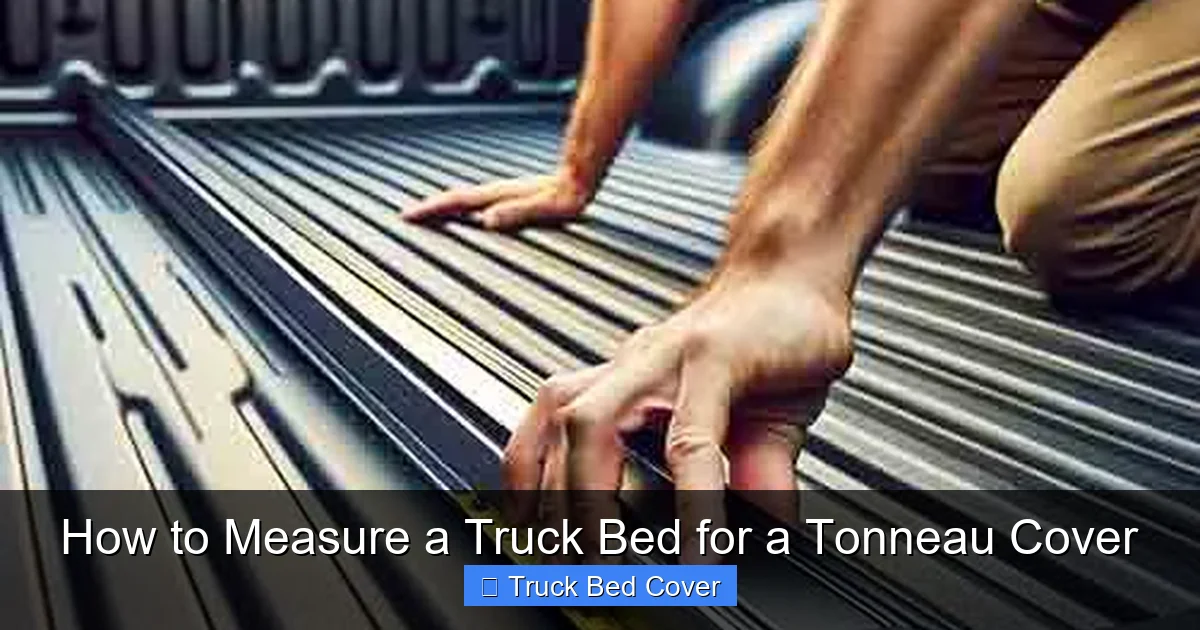
Visual guide about How to Measure a Truck Bed for a Tonneau Cover
Image source: richsautobodyshop.com
- Water resistance: A poorly fitted cover won’t seal properly, allowing rain, snow, and dirt to get into your bed.
- Cargo security: Loose edges or gaps give thieves a chance to pry open your cover and steal your gear.
- Longevity: Misaligned covers can warp over time due to wind and sun exposure.
- Ease of use: A cover that doesn’t fit well can be difficult to open, close, or roll up smoothly.
Many people assume that because their truck is a “standard” model, they can just order any universal cover. But even slight variations in bed size—like between a 5.5-foot and 6-foot bed—can mean the difference between a perfect fit and a frustrating return process.
Understanding Truck Bed Sizes
Before you grab your tape measure, it’s important to understand the three main truck bed lengths available today:
Short Bed (5.5 to 5.8 feet)
Common on smaller trucks like the Ford F-150 or Chevrolet Silverado 1500. Ideal for city driving and tight parking.
Example: The 2023 Ford Ranger has a 5-foot 4-inch bed—measure carefully!
Standard Bed (6 to 6.5 feet)
The most popular size across brands. Offers a good balance of cargo space and maneuverability.
Tip: Most tonneau covers are designed for standard beds, so availability is usually strong.
Long Bed (7 to 8 feet)
Found on heavy-duty trucks like the Ford Super Duty or Ram 3500. Great for hauling large items.
Note: Long-bed covers often cost more due to larger material needs.
Always confirm your exact bed length using your truck’s owner’s manual or by checking the manufacturer’s website. Don’t rely on memory—measurements can vary slightly between years and trims.
What You’ll Need Before Measuring
Gather these tools before starting:
- A reliable tape measure (at least 10 feet long)
- A notepad or phone to record numbers
- A flashlight (if working at night or in low light)
- A helper (optional but helpful for tricky angles)
Optional but useful:
- A digital caliper (for precision on narrow spaces)
- A level (to ensure surfaces are straight)
Make sure your truck is parked on a flat surface and the bed is clean and dry. Dust, mud, or moisture can throw off your readings.
Step-by-Step: How to Measure Your Truck Bed
Now comes the core part—actually taking the measurements. Follow these steps carefully to avoid errors.
Step 1: Measure the Length Inside the Bed Rails
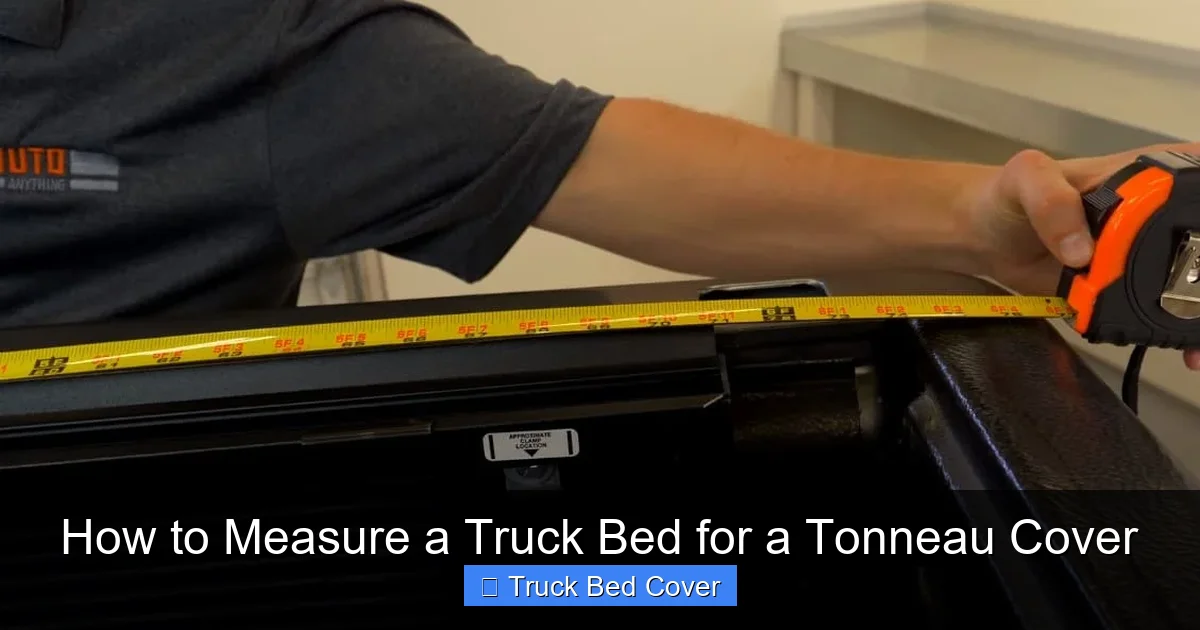
Start by measuring from the inside edge of the front bed rail to the inside edge of the rear bed rail. This is critical because most tonneau covers sit directly on top of the rails.
Pro tip: Use a flexible tape measure to follow the curve of the rail if necessary. Don’t force it straight—rail shapes can vary slightly.
Record this number in inches.
Step 2: Measure the Width Inside the Bed Rails
Measure across the widest part of the bed—usually near the middle. Again, go from rail to rail, inside the metal edges.
Example: If your measurement reads 54 inches, that’s your width.
Note: Some soft covers can stretch slightly, but hard covers need exact width matching.
Step 3: Check the Height (for Retractable Covers)
If you’re considering a retractable or roll-up cover, measure the vertical distance from the top of the bed rails down to the floor of the truck bed. This affects how much material the cover can hold when rolled.
Typical range: 12 to 18 inches.
Tip: Retractable covers work best on beds without high side rails or toolboxes.
Step 4: Account for Overhang (If Required)
Some manufacturers recommend adding 1–2 inches to your measurements to allow for proper sealing and expansion. Check the product specifications before finalizing your order.
Why overhang matters: It creates a watertight seal along the edges when the cover is closed.
Step 5: Double-Check All Four Corners
Beds aren’t always perfectly square. Measure each corner to ensure consistency. If one side is longer than the other, note which one and inform the seller—they may offer a custom-sized cover.
Step 6: Document Everything
Write down:
- Bed length (front rail to back rail)
- Bed width (middle of bed)
- Any obstructions (toolbox, cap, etc.)
- Your truck’s make, model, and year
This information will save you time when comparing products online.
Common Mistakes People Make When Measuring
Even experienced truck owners sometimes slip up. Here are the most frequent errors—and how to avoid them.
Mistake #1: Measuring Outside the Rails
You might think measuring from outside the rails gives you the full width, but it includes the rail thickness. Most covers sit *inside* the rails, so your measurement must reflect that.
Fix: Always measure from the inner edge of the rail.
Mistake #2: Ignoring Bed Liner Thickness
If you have a rubber or spray-on bed liner, it adds ¼ to ½ inch to the interior dimensions. Some covers won’t fit unless you remove the liner or choose a low-profile design.
Solutions:
- Remove the liner temporarily during installation
- Look for covers labeled “liner-compatible”
Mistake #3: Forgetting About Toolboxes
A toolbox mounted in the bed reduces usable width significantly. Measure around it or plan to install the cover before adding the box.
Workaround: Some covers come with split configurations to accommodate center-mounted boxes.
Mistake #4: Using Old or Damaged Tape Measures
A stretched or loose tape measure leads to inaccurate readings. Replace old tapes or calibrate them if possible.
Mistake #5: Not Accounting for Weather Expansion
Materials expand in heat and contract in cold. If you live in extreme climates, consider ordering a cover with a bit of extra room or one made from flexible materials.
Choosing the Right Tonneau Cover Based on Your Measurements
Once you have your measurements, match them to the right type of cover:
Soft Roll-Up Covers
Best for: Budget-conscious buyers who want basic security and weather protection.
- Typically require precise length/width matching
- Can stretch slightly to fit wider beds
- Easy to install and remove
Hard Folding Covers
Best for: Those wanting maximum security and a sleek look.
- Need exact dimensions for panel alignment
- Often include clamps that attach to rails
- More expensive but durable
Retractable Covers
Best for: High-end users who value convenience and full bed access.
- Require height clearance and smooth rails
- Usually custom-fitted
- Pricier but feature-rich
Snap-On Soft Covers
Best for: Quick installs without drilling.
- Flexible material adapts to minor dimension changes
- Lighter weight than rolling covers
- Less secure than hard covers
Aftermarket Modifications That Affect Measurements
If you’ve modified your truck, your measurements might differ from stock specs. Common modifications include:
- Bed Caps: These extend the bed length by several inches. Measure from the front of the cap, not the bumper.
- Spray-In Liners: As mentioned earlier, they reduce interior space by up to ½ inch per side.
- Side Steps or Running Boards: While they don’t touch the bed, they can interfere with clamp placement on hard covers.
- Roof Racks: Usually don’t affect bed measurements, but check if the cover requires overhead clearance.
When in doubt, consult the cover manufacturer’s compatibility chart or customer support team. Many companies offer free measurement verification services.
Final Tips for a Perfect Fit
Here are some last-minute tricks to ensure success:
- Order from reputable brands: Companies like BakBox, UnderCover, and TruXedo provide detailed sizing guides and responsive support.
- Read reviews: Look for buyers who mention fit issues or installation tips specific to your truck model.
- Watch installation videos: Seeing the process helps anticipate challenges.
- Allow extra time: Even simple covers can take 1–2 hours to install properly.
- Test the seal: After installation, pour a little water on the cover and check for leaks.
Conclusion
Measuring your truck bed for a tonneau cover isn’t rocket science—but it does require attention to detail. Take your time, use the right tools, and double-check every number. With accurate measurements, you’ll get a cover that seals tight, protects your cargo, and looks great on your rig.
Remember: a little extra effort now saves you from returns, repairs, or frustration later. Whether you’re protecting expensive equipment, keeping groceries dry, or just wanting a cleaner look, the right tonneau cover makes a big difference.
So grab that tape measure, clear out your bed, and get ready to upgrade your truck like a pro.
Frequently Asked Questions
How do I measure the inside of my truck bed rails?
Use a tape measure to go from the inner edge of the front rail to the inner edge of the rear rail for length, and across the widest point for width. Make sure the tape follows the contour of the rail rather than cutting across it.
Can I use a tonneau cover if I have a bed liner?
Yes, many tonneau covers are compatible with both rubber and spray-in bed liners. Look for models specifically advertised as “liner-friendly.” In some cases, you may need to adjust the clamping system or choose a lower-profile design.
What’s the difference between measuring for a soft vs. hard cover?
Soft covers are more forgiving and can stretch slightly to fit minor dimension differences. Hard covers require exact measurements since they’re rigid panels. Always match hard cover specs precisely, while soft covers allow a small margin of error.
Should I add extra inches to my measurements?
Sometimes. Some manufacturers recommend adding 1–2 inches for overhang to ensure a watertight seal. Check the product specifications before ordering. Adding too much space can cause sagging or difficulty closing the cover.
How do I handle uneven or warped truck beds?
Measure each corner separately and report discrepancies to the seller. Most reputable brands offer solutions like adjustable clamps or custom cuts. Avoid forcing a cover onto a severely warped bed—it may damage the cover or rails.
Can I measure my truck bed myself, or do I need help?
You can measure most parts alone, especially length and width. However, getting a second person helps verify tricky angles, reach high areas, or stabilize the tape measure during long spans. It’s optional but recommended for accuracy.