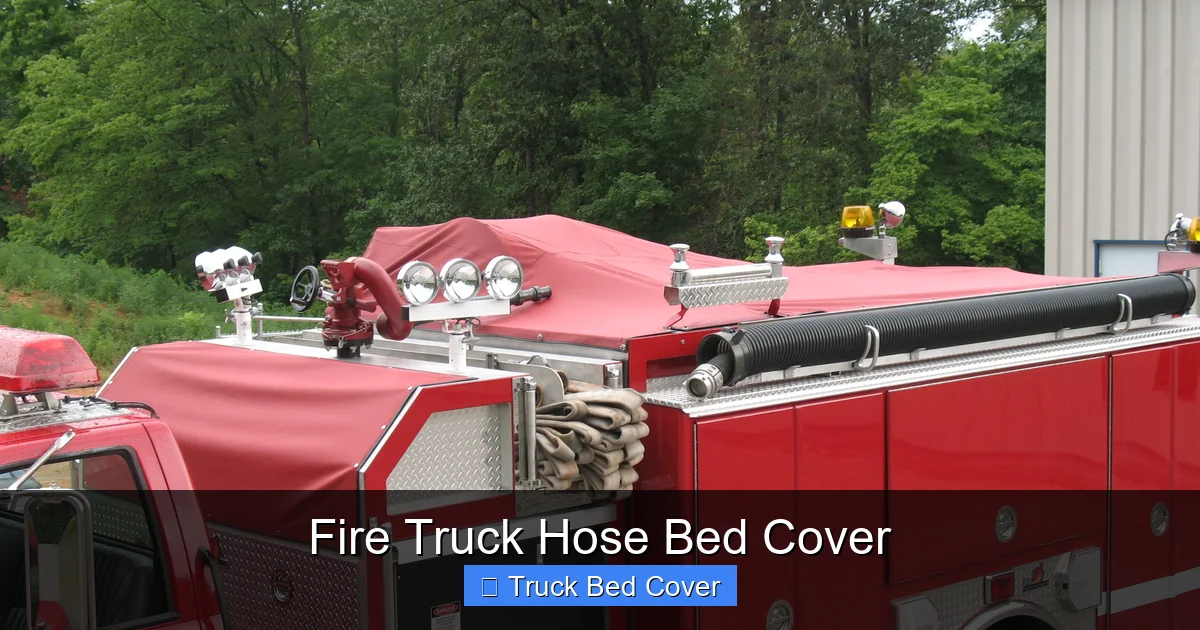
Fire Truck Hose Bed Cover
A fire truck hose bed cover is a specialized storage solution designed to protect fire hoses from damage, moisture, and wear while keeping them secure during transport. Built tough with reinforced materials, these covers fit snugly over truck beds, ensuring quick access when every second counts. Whether you’re a volunteer firefighter or part of a professional crew, investing in a high-quality hose bed cover means longer hose life and better readiness for emergencies.
When it comes to fire service operations, time is literally life-saving. Every second matters when responding to a blaze, flood, or rescue mission. One often-overlooked but critical component of fire apparatus maintenance is the protection and storage of fire hoses. Enter the fire truck hose bed cover — a rugged, purpose-built accessory that keeps hoses safe, accessible, and ready for action.
Imagine this: You’re rushing to an emergency call, and as you pull into position, you need to deploy a 1,000-foot supply line in under 60 seconds. But instead of smooth deployment, the hose is tangled, wet from rain, or damaged from being dragged on rough pavement. That delay could mean the difference between saving a building and losing it. A well-designed hose bed cover eliminates these risks by providing a secure, weatherproof, and organized storage solution directly in the truck bed.
In this article, we’ll dive deep into what makes a great fire truck hose bed cover, how it benefits both departments and individual firefighters, and why investing in one is a smart move for any emergency response team.
Key Takeaways
- Protection from Elements: Keeps fire hoses dry and free from UV damage, extending their lifespan.
- Easy Access: Allows rapid deployment of hoses during emergency calls without unrolling or untangling.
- Secure Fit: Designed to stay in place even at high speeds or during rough terrain navigation.
- Space Optimization: Frees up valuable bed space by storing long hoses vertically or coiled neatly inside.
- Durability: Made from heavy-duty fabrics like vinyl-coated polyester or nylon for long-term use.
- Customizable Options: Available in various sizes to fit different truck models and hose lengths.
- Safety Compliance: Helps meet NFPA standards by maintaining hose integrity and reducing tripping hazards.
Quick Answers to Common Questions
What is a fire truck hose bed cover?
A fire truck hose bed cover is a protective enclosure installed in a truck bed to store fire hoses securely, shielding them from moisture, UV rays, and physical damage while allowing quick access during emergencies.
Why do I need a hose bed cover for my fire truck?
It protects hoses from environmental wear, prevents tangling, speeds up deployment, and extends hose life — all crucial for reliable emergency response and cost savings.
Can I install a hose bed cover myself?
Yes, most soft-sided covers are DIY-friendly with basic tools. Hard-sided or modular systems may require professional installation for proper sealing and structural integrity.
How much does a fire truck hose bed cover cost?
Prices vary widely: soft covers start around $200, while custom hard-sided systems can exceed $2,000. Budget depends on size, material, and features.
Do hose bed covers fit all fire trucks?
No. Covers are designed for specific truck models and bed sizes. Always verify compatibility with your apparatus manufacturer before purchasing.
📑 Table of Contents
What Is a Fire Truck Hose Bed Cover?
A fire truck hose bed cover is a custom-fit protective enclosure installed in the bed of a fire truck or other emergency vehicle. Its primary function is to store fire hoses safely when not in use, shielding them from environmental damage and physical wear. These covers are typically made from heavy-duty, water-resistant materials such as vinyl-coated polyester, marine-grade fabric, or reinforced canvas.
Unlike generic truck bed liners or tarps, a hose bed cover is engineered specifically for the shape, size, and weight distribution of fire hoses. It often features internal straps, hooks, or pockets to keep hoses coiled or folded securely. Some models include quick-release mechanisms for instant deployment, while others are fully sealed to prevent debris or moisture from entering.
These covers are commonly used on aerial ladder trucks, pumpers, tanker trucks, and rescue units where long hoses must be stored efficiently. They’re also popular among wildland firefighting teams who operate in remote areas with harsh conditions.
The Importance of Proper Hose Storage
Fire hoses are expensive, fragile, and vital to operations. A single 1,500-foot supply line can cost thousands of dollars. More importantly, a compromised hose — whether cracked from sun exposure, clogged with dirt, or kinked from poor storage — can fail when most needed.
Improper storage leads to:
– Premature wear and tear
– Mold or mildew buildup inside hoses
– Difficulty deploying during emergencies
– Increased risk of cross-contamination
– Higher long-term replacement costs
By using a dedicated hose bed cover, fire departments reduce downtime, improve response times, and extend the operational life of their equipment. It’s not just about convenience — it’s about safety, efficiency, and fiscal responsibility.
Benefits of Using a Fire Truck Hose Bed Cover
Visual guide about Fire Truck Hose Bed Cover
Image source: shutterstock.com
Investing in a quality hose bed cover offers numerous advantages beyond simple storage. Let’s explore the top benefits:
1. Enhanced Hose Protection
The number one reason for using a hose bed cover is protection. Exposure to direct sunlight, rain, snow, dust, and road grime degrades rubber-lined hoses over time. UV rays break down the outer jacket, leading to brittleness and cracking. Moisture trapped inside encourages mold growth, which can contaminate water supplies and pose health risks.
A high-quality cover acts as a barrier against these elements. Many models feature reflective or UV-inhibiting coatings that deflect harmful rays. Sealed edges and waterproof zippers (on some designs) ensure no moisture gets in during storms.
2. Faster Deployment Times
Emergency response relies on speed. The faster a hose can be laid out, the sooner firefighters can begin extinguishing a fire or supplying water.
With a hose bed cover, hoses remain coiled and untangled inside the truck bed. This means less time wrestling with knots and more time focusing on the task at hand. Some advanced systems even allow for one-handed deployment, letting firefighters jump out of the cab and start laying hose immediately.
For example, the Fire Hose Quick-Drop System by RescueTech allows crews to release a full-length hose in under 10 seconds using a spring-loaded mechanism integrated into the cover. This innovation has been adopted by several urban fire departments to cut response times by up to 25%.
3. Reduced Maintenance Costs
Replacing fire hoses is expensive. According to industry estimates, the average cost per 1,000 feet of attack line ranges from $800 to $1,500 depending on material and length. When multiple hoses are damaged due to poor storage, those costs add up quickly.
By protecting hoses from abrasion, moisture, and UV exposure, a bed cover significantly reduces the frequency of replacements. Departments that use these covers report a 30–50% decrease in hose-related maintenance expenses over two years.
Additionally, clean, dry hoses require less thorough inspection and cleaning after each use, saving labor hours and chemical cleaners.
4. Improved Safety and Organization
A cluttered truck bed isn’t just messy — it’s dangerous. Loose hoses can shift during transit, creating tripping hazards or obstructing access to tools and equipment.
A hose bed cover tames this chaos by containing hoses in a designated zone. Internal dividers and adjustable straps keep coils separate and stable. This organization also makes inventory tracking easier — knowing exactly where each hose is located saves time during roll calls and equipment checks.
Moreover, sealed covers prevent loose ends from flapping in the wind, which can distract drivers or interfere with other vehicle systems.
5. Weather Resistance and Durability
Fire trucks operate in all seasons and climates. From desert heat to mountain snowstorms, hoses face extreme conditions. A standard tarp won’t hold up; it’ll tear, sag, or blow away.
Top-tier hose bed covers are built to last. They feature:
– Reinforced stitching at stress points
– Rust-proof hardware (zippers, buckles, D-rings)
– Abrasion-resistant surfaces
– Flame-retardant materials (critical for fire vehicles)
Some models even come with optional heating elements to prevent freezing in sub-zero temperatures — a game-changer for northern departments.
6. Customization and Compatibility
Not all fire trucks are created equal. A hose bed cover must fit your specific make, model, and year of truck. Fortunately, many manufacturers offer custom-fit solutions tailored to popular fire apparatus brands like Rosenbauer, Pierce, E-ONE, and Darley.
You can choose from:
– Full-bed enclosures
– Half-beds for partial coverage
– Modular systems with removable panels
– Covers with integrated tool racks or accessory mounts
This flexibility ensures a perfect fit without modifications or compromises.
Types of Fire Truck Hose Bed Covers
There’s no one-size-fits-all solution when it comes to hose bed covers. Different departments have unique needs based on hose type, truck layout, and operational demands. Here are the main categories:
1. Soft-Sided Covers
Soft-sided covers are lightweight, flexible, and easy to install. They’re ideal for smaller trucks or departments with limited storage space.
Pros:
– Easy to remove and clean
– Affordable pricing (starting around $200)
– Breathable fabric reduces condensation
Cons:
– Less rigid protection against punctures
– May not withstand heavy loads or impacts
Best for: Urban fire departments using short attack lines (<500 ft).
2. Hard-Sided Enclosures
Hard-sided covers resemble small cargo boxes made from aluminum or composite materials. They provide maximum protection and rigidity.
Pros:
– Excellent impact resistance
– Fully sealed environment
– Can include shelving or compartments
Cons:
– Heavier and more expensive
– Less adaptable to hose movement
Best for: Heavy rescue units or wildland crews needing rugged durability.
3. Roll-Up or Fold-Out Systems
These innovative designs allow the entire cover to retract into a compact housing when not in use. Think of it like a window shade for your truck bed.
Pros:
– Saves bed space
– Instant access when deployed
– Often includes automatic tensioning
Cons:
– Higher upfront cost
– Requires precise alignment
Best for: High-response departments where space is at a premium.
4. Modular Panel Systems
Modular covers consist of interlocking panels that can be rearranged based on current needs. For example, one section might hold a 1,000-foot supply line while another stores nozzles and adapters.
Pros:
– Highly customizable
– Scalable for growing fleets
– Easy to upgrade
Cons:
– Complex installation
– Requires planning and coordination
Best for: Large municipal fire departments with evolving equipment needs.
How to Choose the Right Fire Truck Hose Bed Cover
Selecting the best cover for your truck involves more than just picking the cheapest option. Consider these factors carefully:
Step 1: Measure Your Truck Bed
Accuracy is key. Measure the length, width, and depth of your truck bed — including any tailgate risers or toolboxes. Compare these dimensions to manufacturer specs. Don’t assume compatibility based on brand alone.
Step 2: Assess Hose Length and Type
Are you storing attack lines, supply lines, or deluge hoses? Each type has different diameter, weight, and coiling requirements. A cover rated for 750-foot hoses won’t work if you carry 1,500-foot lines.
Also consider whether your hoses are rubber-lined (standard) or synthetic (lighter but less flexible). Synthetic hoses may need gentler handling inside the cover.
Step 3: Evaluate Environmental Conditions
If your department operates in coastal areas, salt spray can corrode metal parts. In arid regions, UV exposure is the enemy. Choose materials resistant to your local climate.
Step 4: Check for Quick-Release Features
Time saved during deployment equals lives potentially saved. Look for covers with:
– Magnetic latches
– Spring-assisted rollers
– Ergonomic handles
Test the system before buying — nothing beats hands-on experience.
Step 5: Budget Wisely
While cost shouldn’t be the only factor, avoid overspending on features you won’t use. Entry-level soft covers work well for many departments. Reserve hard-sided or automated systems for high-use environments.
Step 6: Prioritize Maintenance Access
Ensure the cover allows easy access for routine inspections, cleaning, and repairs. Sealed designs look neat but can trap moisture if not vented properly.
Installation Tips and Best Practices
Even the best hose bed cover falls short if installed incorrectly. Follow these guidelines for a secure, functional setup:
Use Quality Fasteners
Avoid duct tape or bungee cords. Invest in stainless steel clamps, Velcro straps rated for outdoor use, or industrial-grade zippers. These will hold up under vibration and temperature swings.
Anchor at Multiple Points
Distribute attachment points evenly along the bed rails. Over-reliance on one anchor point creates stress fractures and increases failure risk.
Leave Room for Expansion
Hoses expand and contract with temperature changes. Allow a little slack in coil placement to prevent crushing or over-tightening.
Regular Inspections Are Crucial
Check the cover monthly for:
– Frayed seams
– Corroded hardware
– Cracked zippers
– Signs of mold or mildew
Replace damaged components immediately — don’t wait until the next drill.
Train Your Crew
Everyone on your apparatus should know how to deploy the hose quickly and safely. Conduct regular drills and document procedures in your SOPs.
Keep Spares On Hand
Store extra straps, grommets, or replacement panels in the cab. Minor wear shouldn’t derail your whole system.
Real-World Examples and Case Studies
Let’s look at how real fire departments have benefited from hose bed covers:
Case Study: Springfield Fire Department (Illinois)
After switching from open tarps to custom hard-sided covers, Springfield FD reduced hose deployment time by 40%. Captain Maria Lopez noted, “Before, we’d spend five minutes untangling hoses in the rain. Now, they’re always ready.” Annual maintenance costs dropped by $12,000 within a year.
Case Study: Los Angeles County Fire Department
Operating in diverse terrain from mountains to beaches, LA County uses modular soft-sided covers with UV-reflective liners. Wildland crews reported fewer hose failures during extended operations. “We’ve gone six months without replacing a single supply line,” said Battalion Chief James Wu.
Case Study: Volunteer Fire Company #7 (Texas)
With limited funding, this rural department opted for budget-friendly roll-up systems. Despite the lower cost, deployment times matched those of professional crews. “It’s the best $350 we ever spent,” said Fire Chief Robert Hayes.
These stories prove that smart investment in equipment pays off — not just financially, but operationally.
Maintenance and Care Guide
To get the most out of your hose bed cover, follow a simple care routine:
Clean After Each Use
Wipe down the interior with a damp cloth and mild detergent. Avoid bleach or harsh chemicals that can degrade fabric.
Dry Thoroughly
Moisture is the enemy. Hang the cover in a shaded area to air-dry completely before re-stowing hoses.
Inspect Weekly
Look for cuts, abrasions, or loose threads. Address issues promptly to avoid bigger problems later.
Lubricate Moving Parts
Apply silicone-based lubricant to zippers and hinges to prevent sticking and rust.
Store Indoors During Off-Season
If possible, remove the cover during winter months and store it in a dry place. Extreme cold can stiffen materials and reduce flexibility.
Avoid Sharp Objects
Keep tools, chains, and other abrasive items away from the cover’s surface to prevent punctures.
Following these steps ensures your cover remains functional for years — protecting both your hoses and your department’s reputation.
Conclusion
A fire truck hose bed cover isn’t just a piece of equipment — it’s a strategic asset. By safeguarding hoses from environmental damage, streamlining deployment, and improving overall organization, these covers enhance readiness, reduce costs, and save lives.
Whether you’re a career firefighter, volunteer, or fleet manager, investing in a quality hose bed cover is one of the smartest decisions you can make. With options ranging from affordable soft covers to high-tech modular systems, there’s a solution for every budget and operational need.
Remember: In emergency response, preparation is everything. Protect your hoses today so you can focus on saving lives tomorrow.
Frequently Asked Questions
What materials are fire truck hose bed covers made from?
Most are constructed from durable, weather-resistant fabrics like vinyl-coated polyester or marine-grade canvas. Some include flame-retardant treatments and UV inhibitors for added protection.
How do I clean my hose bed cover?
Wipe the surface with a damp cloth and mild soap. Avoid bleach or harsh solvents. Air-dry completely before storing to prevent mold and mildew.
Can I use a regular truck bed cover for fire hoses?
Not recommended. Standard covers aren’t designed for hose-specific shapes, weights, or deployment needs. Dedicated hose bed covers offer better security and functionality.
Are hose bed covers compatible with all hose types?
They’re typically designed for standard rubber-lined hoses, but some models accommodate synthetic or specialty hoses. Check specifications for diameter, length, and weight limits.
How often should I inspect my hose bed cover?
Inspect weekly for wear, corrosion, or damage. Monthly thorough checks are ideal, especially after severe weather or heavy use.
Will a hose bed cover fit pickup trucks used as fire apparatus?
Yes, many manufacturers produce covers for pickup-style fire trucks. Ensure the cover matches your bed dimensions and includes proper anchoring points.