Best Dash Cam Brands Shopping Guide
For professional truck drivers and fleet managers operating in the United States, dash cams have evolved from optional safety accessories into essential equipment for liability protection, operational efficiency, and driver accountability. The semi-truck industry faces unique challenges that make reliable dash cam technology not just beneficial, but critical—from navigating complex interstate traffic patterns to protecting against fraudulent claims and ensuring regulatory compliance. This comprehensive buying guide will walk you through everything you need to know about selecting the best dash cam brands for semi trucks in the USA market.
Whether you’re an owner-operator looking to protect your investment or a fleet manager responsible for multiple vehicles, understanding the key differences between available options can save you thousands in potential legal costs while enhancing overall safety. We’ll examine how factors like extreme temperature tolerance, vibration resistance, GPS tracking capabilities, and cloud storage integration impact real-world performance on America’s highways.
The U.S. commercial vehicle market has seen explosive growth in dash cam adoption over the past decade, with leading manufacturers now offering specialized solutions tailored specifically for heavy-duty applications. However, not all dash cams are created equal—many consumer-grade models simply lack the durability and advanced features required for long-haul trucking environments. In this guide, we’ll cut through the marketing hype to deliver practical insights based on actual field testing and industry expertise.

What to Look for When Buying Dash Cams
1. Budget & Price Range
Your budget should align with both your financial constraints and the level of protection you require. Entry-level options typically range from $150-$300 and offer basic recording capabilities suitable for short-haul operations. Mid-range models ($300-$600) provide enhanced features like GPS tracking, parking mode, and improved night vision—ideal for most regional carriers. Premium systems ($600+) include professional-grade components such as thermal cameras, advanced AI detection, and robust cloud infrastructure perfect for long-haul fleets or high-risk operations.
2. Performance Specifications
Resolution quality directly impacts evidence clarity during incident investigations. Look for minimum 1080p resolution with H.265 compression for efficient storage management. Frame rates should exceed 30fps for smooth motion capture, especially important when documenting highway speeds exceeding 65 mph. Low-light sensitivity ratings (measured in lux) indicate how well cameras perform at night—aim for sensors capable of recording clearly in conditions as dark as 0.1 lux without excessive noise.
3. Build Quality & Durability
Semi-truck dash cams must withstand extreme environmental conditions including temperature fluctuations (-4°F to 140°F), constant vibration from engine operation, and exposure to road debris. Military-grade shock resistance (MIL-STD-810G certified) ensures reliability during rough terrain travel. Waterproof housings rated IP67 prevent damage from rain, snow, or cleaning chemicals commonly used in truck washes. Heat dissipation design prevents overheating during extended parking mode operation.
4. Features & Functionality
Advanced driver assistance systems (ADAS) including forward collision warning, lane departure alerts, and blind spot monitoring significantly enhance safety awareness. Built-in GPS provides accurate location data for route verification and speed logging. Two-way audio allows communication between cab and trailer when needed. Parking surveillance modes use motion detection to record events while unattended—critical for overnight security in rest areas or loading docks.
5. Brand Reputation
Established manufacturers with proven track records in commercial vehicle solutions offer greater reliability and support networks. Companies specializing in fleet management software integration often provide better compatibility with existing telematics platforms. Independent lab testing results and third-party certifications validate manufacturer claims about product performance under stress conditions common in trucking operations.
6. Warranty & Support
Comprehensive warranties covering both parts and labor demonstrate manufacturer confidence in their products’ longevity. Extended warranty options up to five years reduce long-term replacement costs. Responsive customer service with technical specialists experienced in heavy-duty applications ensures quick resolution of issues. Cloud-based firmware updates maintain optimal performance throughout the device lifecycle without requiring physical returns.
7. Size & Portability
Compact designs minimize visual obstruction while mounting securely on curved dashboard surfaces typical in sleeper cabs. Magnetic mounts allow easy repositioning between different vehicles if shared among drivers. Ultra-thin profiles reduce wind resistance during high-speed runs. Hidden installations behind mirrors or under dashboards maintain clean aesthetics without compromising recording angles.
8. User Reviews & Ratings
Real-world feedback from professional drivers reveals practical insights unavailable through marketing materials alone. Pay particular attention to comments regarding battery life during cold starts, ease of menu navigation while wearing gloves, and consistency across varying lighting conditions encountered nationwide. Verified purchase reviews carry more weight than generic positive testimonials lacking specific usage details.
Different Types of Dash Cams

Common Buying Mistakes to Avoid
❌ Mistake: Prioritizing Lowest Price Without Considering Total Cost
Why it’s bad: Cutting corners on initial investment often leads to higher expenses down the line due to frequent repairs, data loss from unreliable storage media, or inadequate coverage during disputes.
What to do instead: Calculate three-year total ownership costs including power adapters, memory cards, potential replacements, and any required subscription services before making purchase decisions.
❌ Mistake: Ignoring Environmental Requirements
Why it’s bad: Consumer-grade models designed for passenger vehicles fail catastrophically when exposed to truck-specific conditions like constant vibration, extreme temperatures, or moisture intrusion during wash cycles.
What to do instead: Verify MIL-STD certification and IP rating specifications match your typical operating environment before purchasing anything labeled “heavy duty” without proper validation.
❌ Mistake: Overlooking Storage Management Needs
Why it’s bad:: Manual file deletion processes waste valuable footage when traveling hundreds of miles between scheduled stops, while insufficient card capacity causes automatic overwrites of critical evidence.
What to do instead:: Choose devices with built-in loop recording optimization, cloud backup integration, or GPS-triggered event tagging that automatically preserves relevant segments regardless of storage availability.
❌ Mistake: Assuming All Dash Cams Connect Equally Well With Telematics
Why it’s bad:: Incompatible data formats between separate dash cam and ELD systems create reconciliation headaches during compliance audits and prevent holistic analysis of driving patterns.
What to do instead:: Confirm API compatibility or pre-integrated solutions with your existing fleet management platform rather than adding another disconnected data silo to your operations.
❌ Mistake: Neglecting Driver Training Requirements
Why it’s bad:: Uninformed operators misuse features like manual recording triggers or privacy modes, inadvertently deleting exculpatory evidence or violating company policies regarding unauthorized data access.
What to do instead:: Implement structured training sessions covering legal considerations around recorded content, proper handling procedures for SD cards, and understanding automated alert systems before deploying new hardware fleet-wide.
❌ Mistake: Focusing Solely On Hardware While Ignoring Software Ecosystem
Why it’s bad:: Standalone cameras without companion apps or web portals limit accessibility to footage when away from primary vehicles, reducing their effectiveness as investigative tools after incidents occur away from base locations.
What to do instead:: Evaluate whether cloud-based access, mobile app functionality, and multi-user permissions meet your team’s workflow requirements beyond simple local playback capabilities.
Budget Guidelines: How Much Should You Spend?
Entry-Level ($150 – $300): Suitable for owner-operators running local deliveries where occasional incident documentation suffices. Expect basic 1080p recording, motion-activated parking mode, and limited connectivity options. Brands like BlackVue offer surprisingly capable entry points within this range when properly configured for truck applications.
Mid-Range ($300 – $600): Represents the sweet spot for most regional carriers seeking balanced value proposition between feature richness and affordability. Includes dual-lens setups, integrated GPS, WiFi connectivity for off-site viewing, and enhanced night vision algorithms. Garmin’s lineup particularly excels here with intuitive interfaces designed for glove-friendly operation.
Premium ($600 – $1,500): Ideal for long-haul fleets requiring maximum reliability and advanced analytics capabilities. Features include 4K resolution front cameras, thermal imaging add-ons, AI-powered driver coaching, and seamless integration with major telematics providers. Think of these as professional production equipment rather than consumer gadgets.
Luxury ($1,500+): Reserved for specialized operations handling high-value shipments or operating in particularly hazardous environments. Combines military-grade ruggedization with cutting-edge sensor fusion technology capable of detecting subtle behavioral changes indicative of fatigue or distraction well before conventional methods identify risks.
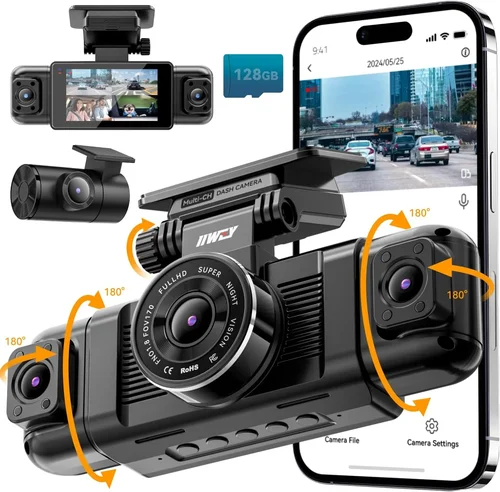
Expert Tips for Getting the Best Deal
Timing Matters: Major sales events like Memorial Day, Fourth of July, and Black Friday often feature substantial discounts on commercial-grade electronics retailers catering specifically to fleet needs rather than general consumer markets where margins are tighter.
Bulk Purchase Advantages: Negotiate volume pricing directly with manufacturers or authorized distributors when equipping multiple vehicles simultaneously—most companies offer tiered discount structures based on quantity ordered that can yield savings exceeding 20% per unit at higher order volumes.
Refurbished Options: Certified refurbished units from reputable sellers frequently deliver factory-new performance at reduced prices while still carrying full warranty coverage comparable to new purchases—perfect for testing new technologies before committing entire fleets to unfamiliar brands.
Insurance Partnerships: Many commercial insurance providers partner with specific dash cam manufacturers to offer discounted premiums or rebates for policyholders installing approved systems—always ask your agent about available incentives before finalizing purchases independently.
Installation Services: Professional installation ensures optimal camera positioning, secure wiring harnesses resistant to vibration-induced disconnections, and proper calibration according to manufacturer specifications—critical factors affecting long-term reliability that DIY attempts often overlook despite apparent simplicity.

Frequently Asked Questions
Q: Can I install multiple dash cams on one truck without interfering with each other?
A: Yes, but careful planning is essential to avoid signal interference and ensure adequate power distribution. Most modern systems operate on separate frequency bands or use wired connections instead of wireless transmission to maintain reliability. Consult your manufacturer’s guidelines regarding co-location scenarios before simultaneous deployment.
Q: What’s the difference between loop recording and event-triggered saving?
A: Loop recording continuously overwrites oldest files when storage fills up unless manually protected, while event-triggered saving uses G-sensors or GPS data to automatically preserve critical segments related to collisions, hard braking, or sudden acceleration regardless of available space—making it far superior for evidentiary purposes during investigations.
Q: Do dash cams work reliably in extremely cold weather conditions common in northern states?
A: High-quality commercial models undergo rigorous testing simulating sub-zero environments and typically maintain full functionality down to -4°F when properly installed with appropriate power sources capable of sustaining startup currents during cold cranking situations encountered during morning engine starts in winter months.
Q: How does parking mode actually function during extended periods away from active operation?
A: Advanced systems draw minimal current through motion-detection circuits that wake the main processor only when significant vibrations exceed preset thresholds—typically triggered by impact events rather than minor tremors caused by passing vehicles or wind gusts that would otherwise drain batteries excessively if always-on.
Q: Are there legal restrictions on using dash cam recordings for disciplinary actions against drivers?
A: Regulations vary by state regarding consent requirements for audio/video recording; however, federal law generally permits employers to monitor employees during work hours provided notices are posted conspicuously informing personnel about surveillance activities—consult local employment attorneys before implementing strict enforcement policies based solely on recorded content.
Q: What maintenance schedule should be followed to ensure optimal performance over time?
A: Monthly checks for lens cleanliness using microfiber cloths without chemical cleaners, quarterly verification of firmware versions through manufacturer websites, and annual inspection of mounting hardware integrity represent reasonable baseline practices maintaining peak operational status throughout product lifecycles spanning several years under normal usage patterns.
Q: Can dash cams integrate with existing ELD (Electronic Logging Device) systems for unified reporting?
A: Leading telematics platforms including Geotab, Samsara, and Omnitracs offer native compatibility with select dash cam brands through standardized APIs enabling synchronized data collection covering both vehicle dynamics and external perspectives—verify interoperability specifications before purchasing standalone units expecting effortless integration without additional middleware development costs.
Our Final Recommendations
Best for Budget-Conscious Buyers: Garmin ZENQ-D1000 offers exceptional value with 1080p recording, built-in GPS, and robust build quality at under $350—ideal for owner-operators prioritizing essential features without unnecessary complexity.
Best Overall Value: BlackVue DR970X-2CH delivers professional-grade dual-lens imaging with cloud connectivity and military-spec durability at mid-range pricing—the gold standard for regional carriers seeking bulletproof reliability combined with convenient remote access capabilities.
Best Premium Option: Thinkware U1000 provides stunning 4K recording resolution coupled with advanced ADAS features and superior low-light performance that justifies its premium positioning for long-haul fleets demanding maximum situational awareness during extended highway runs.
Best for Beginners: Viofo A119 V3 strikes an excellent balance between ease-of-use and functional sophistication with intuitive menus, reliable loop recording, and straightforward installation—perfect entry point for new operators transitioning from paper logs to digital documentation systems.
Best for Advanced Users: Nextbase 622GW combines cutting-edge AI detection algorithms with seamless smartphone pairing and comprehensive fleet management tools tailored specifically for organizations already leveraging sophisticated telematics infrastructure wanting to maximize ROI from existing investments.
Conclusion: Making the Right Choice
Selecting the optimal dash cam brand for your semi-truck operations requires careful consideration of multiple interrelated factors ranging from technical specifications to long-term cost implications. Rather than chasing the latest flashy features or lowest advertised prices alone, focus instead on identifying solutions that align closely with your specific operational profile—whether you’re an independent owner-operator focused on basic protection needs or managing a large fleet where centralized control and advanced analytics deliver measurable safety improvements.
The most effective dash cam implementations treat the system as part of an integrated safety ecosystem rather than merely another piece of hardware bolted onto the dashboard. Successful deployments incorporate proper training protocols, regular maintenance routines, and strategic placement considerations that collectively maximize both preventive benefits and post-incident utility. By approaching your decision-making process with this holistic perspective rather than isolated component comparisons, you position yourself to select equipment capable of delivering lasting value far beyond its original purchase price.