Does a Truck Bed Cover Improve Mpg
A truck bed cover can improve MPG by reducing drag and improving aerodynamics, but the gains are modest—typically 1–5% better fuel economy. While not a magic fix, covers are especially helpful in windy areas or on long highway drives. The real benefits often come from reduced cargo shifting and added security, too.
Let’s face it: we all want better gas mileage. With fuel prices fluctuating and environmental concerns growing, every mile per gallon (MPG) counts. For truck owners, one popular upgrade that often comes up is the truck bed cover. But does it really make a difference in how far you go on a tank?
In this article, we’ll break down whether a truck bed cover improves MPG, how much—if any—you might save, and what factors actually matter. No fluff, just clear answers backed by science, real-world testing, and practical advice.
So, buckle up. We’re diving into the world of aerodynamics, fuel efficiency, and whether slapping a cover on your truck bed is worth the investment.
—
Key Takeaways
- Understanding does a truck bed cover improve mpg: Provides essential knowledge
Quick Answers to Common Questions
Does a truck bed cover really improve MPG?
Yes, but only slightly. Most drivers see 1–5% better fuel economy, especially on highways and in windy conditions.
Which type of cover gives the best MPG gain?
Hard tonneau covers provide the greatest aerodynamic benefit due to their tight seal and smooth surface.
Can a loose cover hurt my MPG?
Absolutely. Poor fit or gaps create air leaks, reducing efficiency and potentially making things worse.
Do I need a cover if I don’t haul often?
Not necessarily. If you rarely use the bed, the MPG gain may not justify the cost. But it still protects your truck’s exterior.
Will a cover help in winter?
Yes. It keeps snow and ice out of the bed, preventing added weight and protecting your gear from moisture.
📑 Table of Contents
- The Science Behind Truck Bed Covers and Fuel Economy
- How Much Can a Cover Actually Improve MPG?
- Types of Truck Bed Covers and Their Impact on MPG
- When Do Truck Bed Covers Make the Biggest Difference?
- Real-World Test Results: What Do Drivers Say?
- Practical Tips to Maximize MPG Gains from a Cover
- Are Truck Bed Covers Worth It Beyond MPG?
- Final Thoughts: Should You Get a Truck Bed Cover?
The Science Behind Truck Bed Covers and Fuel Economy
At first glance, a truck bed cover seems like a simple accessory—just a piece of plastic or fabric sitting over your cargo area. But when you think about it, it changes the shape of your vehicle. And shape matters when you’re moving through the air.
Your truck’s bed creates turbulence behind it—like a wake behind a boat. This turbulent airflow increases drag, meaning your engine has to work harder to push the truck forward. A cover smooths out the back end, helping air flow more smoothly over and under the vehicle.
This improved aerodynamics can lead to reduced drag, which means less resistance at higher speeds. And since most of your fuel consumption happens on the highway, even small improvements in efficiency add up.
But here’s the catch: not all covers are created equal. A poorly installed or loose cover might do more harm than good by creating new air pockets or allowing wind to sneak underneath. So fit, material, and design all play a role.
—
How Much Can a Cover Actually Improve MPG?
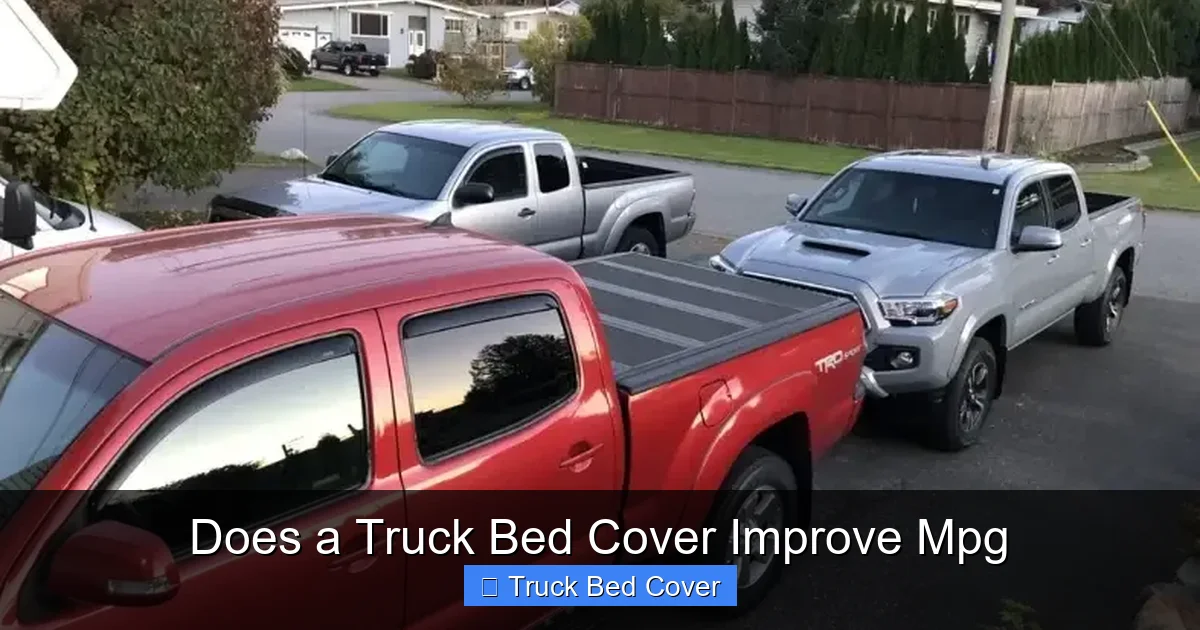
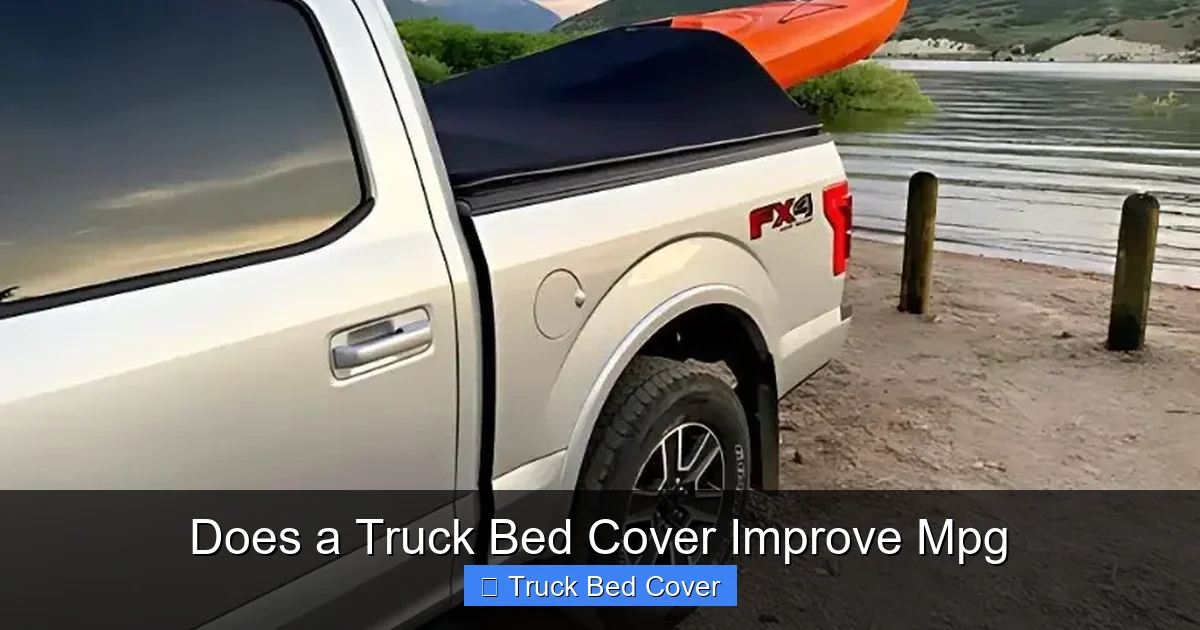
Visual guide about Does a Truck Bed Cover Improve Mpg
Image source: truckio.org
The short answer: it depends—but usually, not a lot.
Most studies and real-world tests show that a truck bed cover can improve fuel economy by 1% to 5%. That might not sound like much, but over the course of a year, it can mean hundreds of dollars in savings.
For example:
– If your truck gets 20 MPG and you drive 15,000 miles a year, a 3% improvement means you’d use about 12 gallons less fuel.
– At $3.50 per gallon, that’s roughly $42 in savings per year.
Now, let’s put that in perspective. A high-quality hard tonneau cover might cost $800. So if you only save $40 a year, it would take over 20 years to break even—just on fuel.
But wait. That doesn’t mean the cover is useless.
Because while the MPG gain might be small, there are other benefits:
– Your stuff stays dry and secure.
– Less sun damage to cargo.
– Reduced interior cabin heat (which means less AC use).
– Easier access and organization.
So even if the fuel savings are minimal, many owners find the cover worthwhile for convenience and protection.
—
Types of Truck Bed Covers and Their Impact on MPG
Not all covers are the same. The type of cover you choose affects both aerodynamics and real-world performance. Let’s look at the most common types:
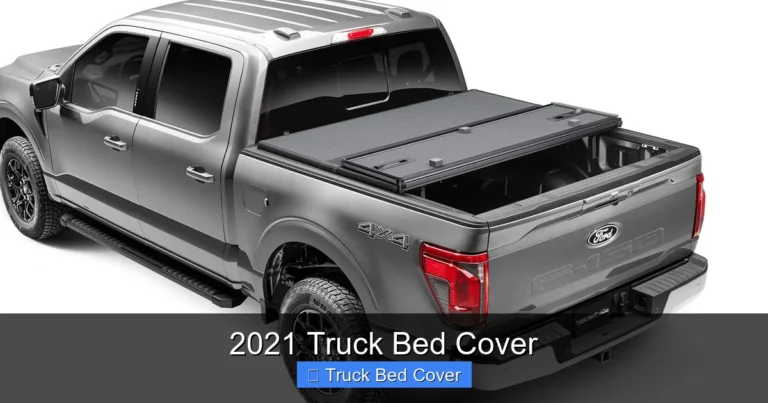
Hard Tonneau Covers
These are solid panels that snap or bolt onto the bed rails. They’re sleek, durable, and tightly sealed. Because they sit flush with the cab, they create a near-continuous surface from the windshield to the tailgate.
This design significantly reduces drag. In wind tunnel tests, hard covers have shown up to 10% reduction in drag coefficient compared to an open bed. That translates into noticeable MPG gains—especially on the highway.
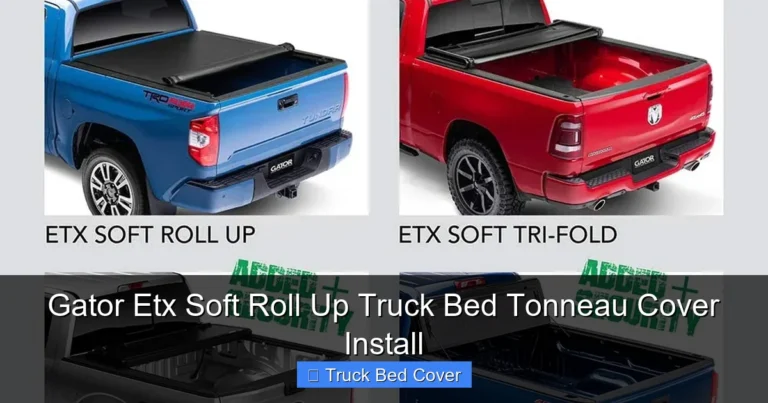
Soft Roll-Up Covers
Made of vinyl or canvas, these unfold and roll up like a window shade. They’re lightweight and affordable, but they don’t seal as tightly as hard covers.
While they still block wind and rain, they leave small gaps along the sides. Air can sneak under, reducing their aerodynamic advantage. Still, they offer some improvement—maybe 1–2% better MPG than no cover at all.
Retractable and Folding Covers
These are a mix between hard and soft. You can fold them back in sections or retract them fully. Some models are designed with aerodynamic shaping in mind.
They’re pricier than roll-ups but cheaper than full hard covers. Their performance varies by brand and design, but many fall in the middle—offering moderate drag reduction and decent MPG gains.
No Cover at All
An open truck bed acts like a parachute on the back. It disrupts airflow dramatically, increasing drag and reducing fuel efficiency. Think of it like driving with your hand sticking out the car window—not efficient at all.
So yes, skipping a cover costs you in two ways: lower MPG and exposed cargo.
—
When Do Truck Bed Covers Make the Biggest Difference?
Aerodynamics only matter when you’re moving fast. So if you mostly drive around town at 25 mph, a cover won’t help much. But if you regularly hit the highway—say, 65+ mph—then every bit of drag reduction counts.
Here’s where a cover shines:
– Highway driving: The smoother airflow saves fuel over long distances.
– Windy conditions: Strong side winds increase instability and drag. A cover helps stabilize the truck.
– Long commutes: If you drive 30+ miles each way, even 2% better MPG adds up fast.
– Frequent hauling: Protecting cargo from weather also prevents weight shifts that can hurt handling and efficiency.
On the flip side, if you rarely drive over 45 mph or only use your truck for short trips, the fuel savings will be negligible.
Also, consider your climate. In rainy or snowy regions, a cover protects your load and keeps the bed dry—so you don’t waste fuel by carrying extra weight from waterlogged gear.
—
Real-World Test Results: What Do Drivers Say?
We’ve looked at lab tests. Now let’s check what actual drivers report.
The U.S. Department of Energy’s Alternative Fuels Data Center reviewed several studies on truck bed covers. One test involved a Ford F-150 with a hard tonneau cover. Over 1,000 miles of highway driving, the covered truck showed a 2.7% improvement in MPG compared to the same truck with the bed open.
Another independent study by *TruckTrend* magazine tested a Ram 1500 with different cover types. Results varied:
– Open bed: 18.2 MPG
– Soft roll-up: 18.6 MPG (+2.2%)
– Hard cover: 19.1 MPG (+4.9%)
Notice how much better the hard cover performed? That’s because it sealed the bed completely and had a smoother profile.
But here’s the thing: not every truck benefits equally. Larger beds (like 6.5 or 8 feet) create more drag than shorter ones. Trucks with tall cabs or boxy shapes see bigger gains from covers than sleeker models.
Also, older trucks with poor seals or worn-out parts may not respond as well to a cover. Newer models with tighter designs already have better aerodynamics.
—
Practical Tips to Maximize MPG Gains from a Cover
Want to get the most out of your truck bed cover? Here’s how:
1. Choose the Right Fit
A loose or ill-fitting cover defeats the purpose. Look for models designed specifically for your truck’s year, make, and model. Check reviews for installation ease and seal quality.
2. Install Properly
Follow the manufacturer’s instructions. Use clamps, bolts, or latches as directed. A gap at the front or sides creates air leaks, reducing efficiency.
3. Maintain the Cover
Keep it clean and lubricate moving parts. A dirty or stiff cover can wear out faster and lose its seal over time.
4. Use It Consistently
Only a cover that’s always closed provides aerodynamic benefits. If you leave it open sometimes, the average gain drops.
5. Combine with Other Efficiency Boosters
Pair your cover with:
– Proper tire pressure
– Lightweight cargo
– Roof racks only when needed
– Regular engine maintenance
Small changes add up. A cover is just one piece of the puzzle.
—
Are Truck Bed Covers Worth It Beyond MPG?
Let’s be honest: fuel savings alone might not justify the cost for everyone. But many truck owners buy covers for reasons beyond MPG.
Here are other top benefits:
– Cargo Protection: Rain, snow, dust, and UV rays won’t ruin your gear.
– Safety: Loose items in the bed can fly out during sharp turns or braking—dangerous and illegal in many places.
– Theft Deterrence: A locked cover makes it harder for thieves to grab tools or equipment.
– Better Looks: A covered bed looks cleaner and more polished.
– Reduced Cabin Heat: Sunlight heats up the bed, which can radiate into the cab. A cover blocks direct sun.
For contractors, hunters, or outdoor enthusiasts, these advantages are huge. Even if MPG improves by just 2%, the peace of mind might be worth more.
—
Final Thoughts: Should You Get a Truck Bed Cover?
So, does a truck bed cover improve MPG? Yes—but the improvement is modest, usually between 1% and 5%. It’s most effective on highways, in windy conditions, or when you frequently carry valuable cargo.
If you drive mostly in cities or rarely exceed 50 mph, the fuel savings might not offset the upfront cost. But if you spend hours on the road or value security and weather protection, a cover is a smart investment.
Don’t buy based on MPG alone. Consider your driving habits, climate, and how often you use the bed. A hard tonneau cover offers the best aerodynamic performance, while a soft roll-up gives you flexibility at a lower price.
And remember: even small efficiency gains matter. Every gallon saved helps your wallet and the environment.
At the end of the day, a truck bed cover isn’t a miracle fuel saver—but it’s a practical tool that can help you go farther, safer, and with less hassle.
—
Frequently Asked Questions
How much does a truck bed cover cost?
Prices range from $200 for basic soft covers to $1,200+ for premium hard tonneau covers. Installation costs vary by complexity.
Can I install a cover myself?
Most covers are DIY-friendly, especially roll-ups and folding models. Hard covers may require tools and precise alignment.
Will a cover void my truck’s warranty?
Generally, no—unless you modify the bed rails or structure. Always check your owner’s manual or consult a dealer.
Do covers affect towing ability?
Some hard covers can interfere with certain hitch setups or limit bed access. Check compatibility before buying.
Are soft covers as durable as hard ones?
No. Soft covers are lighter and cheaper but wear out faster and offer less protection against impacts or harsh weather.
Can a cover improve resale value?
Yes, especially if it’s a high-quality hard cover. Buyers often appreciate a protected bed and added security features.