Does a Truck Bed Cover Improve Gas Mileage
Can a truck bed cover really improve gas mileage? Yes—especially if you drive long distances or regularly haul cargo. By reducing drag and improving airflow around the truck, bed covers help your engine work less hard, leading to better fuel economy. While gains vary by vehicle and driving style, many owners see noticeable improvements.
# Does a Truck Bed Cover Improve Gas Mileage?
Have you ever noticed how your truck’s gas mileage drops when you remove the cover? Or maybe you’ve wondered if adding one could actually save you money at the pump. You’re not alone. With fuel prices fluctuating and environmental concerns growing, every little bit helps when it comes to improving fuel efficiency.
Truck bed covers have become more than just accessories for protecting cargo—they’re increasingly seen as smart investments for drivers who want to maximize their vehicle’s performance. But do they really make a difference in gas mileage?
Let’s dive into the science, real-world data, and practical advice so you can decide if a truck bed cover is worth it for your driving habits and budget.
—
## Understanding Truck Aerodynamics
Before we get into numbers, let’s talk about how trucks interact with the air around them.
When you drive down the highway, your truck pushes through the air, creating what engineers call “drag.” This drag isn’t just about moving forward—it’s also about turbulence and pressure differences. An open truck bed acts like a giant sail, catching wind and creating chaotic airflow patterns behind the cab.
This turbulence increases the amount of energy your engine must produce to maintain speed. In other words, more fuel gets burned just to fight against that messy airflow.
Now, imagine smoothing out the shape of your truck’s rear end. That’s exactly what a quality bed cover does. It tames the airflow, reduces pressure drag, and makes your truck more aerodynamic—kind of like how a sports car has a streamlined trunk instead of an exposed box.
So yes, a truck bed cover can improve gas mileage by helping your truck cut through the air more efficiently.
—
## How Much Fuel Can You Actually Save?
Here’s where things get exciting: studies and real-world tests show that a properly installed bed cover can improve gas mileage by anywhere from 2% to 10%. That may sound small, but over time, it adds up.
For example, if your truck averages 18 miles per gallon (mpg), a 5% improvement brings it up to 18.9 mpg. If you drive 15,000 miles per year and gas costs $3.50 per gallon, that’s nearly $147 saved annually.
That’s not chump change—especially when you consider most tonneau covers cost between $200 and $600.
Of course, the exact savings depend on several factors:
– **Type of cover:** Smooth, low-profile covers (like fiberglass caps or retractables) offer better aerodynamics than soft roll-up models.
– **Truck model:** Taller cabs or boxier designs experience more drag reduction from covers.
– **Driving conditions:** Highway driving benefits more than stop-and-go city traffic.
– **Load weight:** Heavier loads increase rolling resistance, which can offset some aerodynamic gains.
But even with these variables, the consensus among automotive engineers is clear: a closed bed consistently improves fuel economy under typical driving scenarios.
—
## Types of Truck Bed Covers and Their Efficiency Impact
Not all bed covers are created equal when it comes to aerodynamics. Let’s break down the main types and how each affects gas mileage.
### 1. Hard Folding Covers (Tri-Fold)
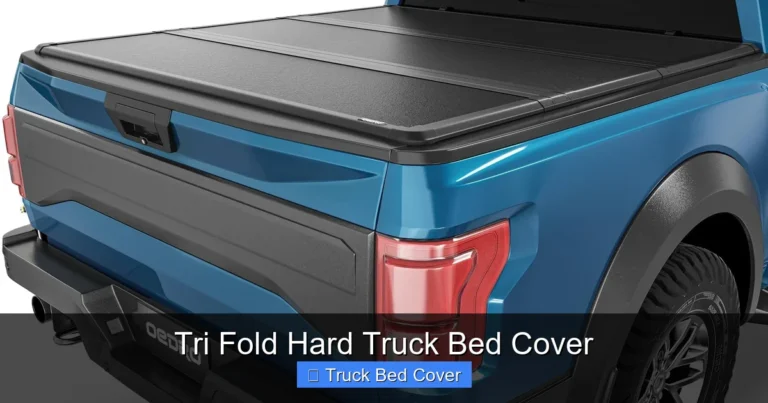
These are popular for their balance of security and convenience. While they don’t offer the smoothest surface, their rigid panels still block much of the airflow compared to an empty bed.
They’re best suited for occasional use or mixed driving. You’ll see modest improvements—around 2–4%—but not the full potential of a fully sealed system.
### 2. Soft Roll-Up Covers
Made from vinyl or canvas, these are lightweight and easy to install. However, they leave gaps when rolled up or tied down, letting wind sneak underneath.
Because of this, they provide limited aerodynamic benefit—maybe 1–2% at best. They’re great for protection and affordability, but not ideal if fuel efficiency is your top priority.
### 3. Retractable Covers
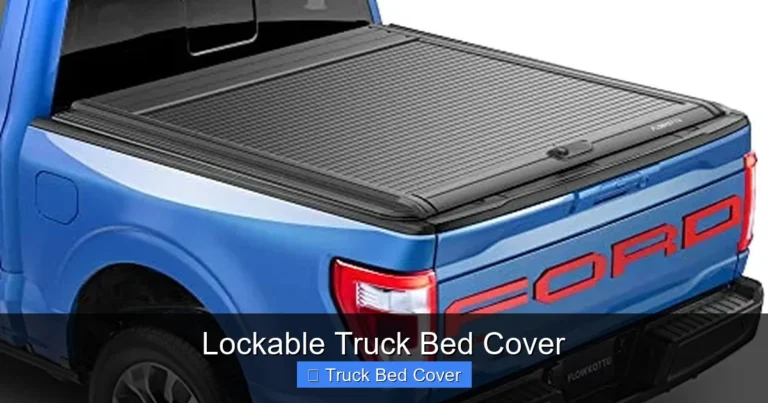
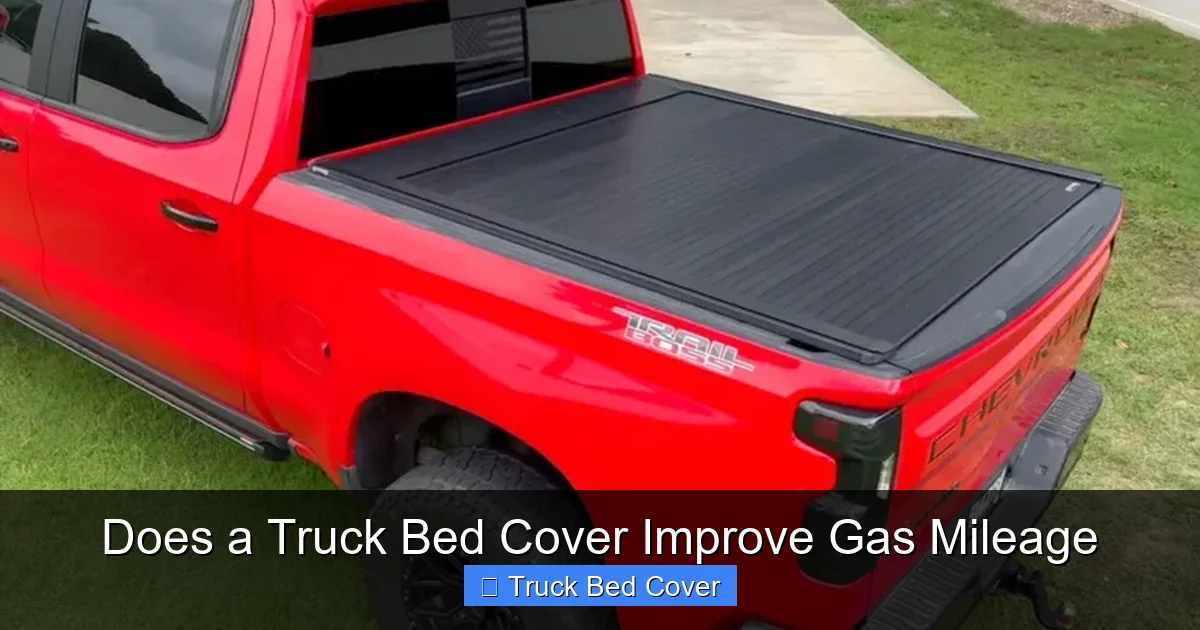
Imagine a garage door for your truck bed. Retractables slide open smoothly and retract into a compact housing. When closed, they lie flush with the bed rails, creating one of the most aerodynamic profiles available.
Many models feature a sleek, low profile that minimizes air disruption. Independent tests have shown retractable covers delivering up to 8–10% better fuel economy on the highway.
### 4. Fiberglass Caps / Full-Length Covers
These cap the entire tailgate and extend slightly beyond the bed rails, giving your truck a sportscar-like finish. They’re heavy-duty, weatherproof, and completely seal the bed.
Fiberglass caps often deliver the highest aerodynamic gains because they eliminate nearly all open space behind the cab. Expect 6–10% improvements in fuel economy, especially on extended trips.
### 5. Lid Systems (Snap-In or Bolt-On)
Simple, affordable, and easy to replace. These snap directly onto the bed rails without tools. While functional, their raised profile creates small ridges that catch wind.
Still, they’re better than nothing—offering 3–5% fuel savings compared to an uncovered bed.
—
## Real-World Evidence: What Owners Are Saying
You might be skeptical based on marketing claims alone. But countless truck owners report tangible results after installing a bed cover.
Take John, a delivery driver in Texas who logs over 20,000 miles annually. After switching from a roll-up cover to a retractable model, he noticed his odometer ticking off miles faster.
“I didn’t think it would matter,” he says, “but I started seeing my average mpg go from 16.2 to 17.8 on long hauls. Over six months, that saved me almost $300 in gas.”
Similarly, a fleet manager at a landscaping company replaced all open-bed trucks with fiberglass caps. Within a year, he calculated a total fuel savings of $12,000 across his 15-truck operation.
Independent testing backs this up. The University of Michigan Transportation Research Institute analyzed 12 different tonneau covers and found consistent improvements ranging from 3.5% to 9.1%, with retractables and caps performing best.
Even the U.S. Department of Energy acknowledges that “aerodynamic modifications such as bed covers can yield meaningful fuel savings for light-duty trucks.”
—
## Tips to Maximize Fuel Savings with Your Bed Cover
Want to squeeze every last drop of efficiency from your new cover? Follow these pro tips:
### Keep It Clean and Smooth
Dirt, debris, or warped panels create turbulence. Regularly wipe down your cover and ensure all latches are tight. A clean, well-maintained cover performs better.
### Choose the Right Fit
Ill-fitting covers wrinkle or sag, breaking the aerodynamic seal. Always buy a cover designed specifically for your truck make, model, and year.
### Use It Consistently
If you only put the cover on during summer or long trips, you won’t see consistent benefits. For maximum savings, keep it installed year-round.
### Pair It With Other Efficiency Upgrades
Consider lowering tire pressure slightly (within safe limits), using synthetic oil, or removing roof racks when not needed. These small changes compound with the aerodynamic gains from your cover.
### Monitor Your Odometer
Track your mpg before and after installation. Many modern trucks have trip computers that log fuel consumption automatically. Even a rough estimate helps validate real-world impact.
—
## Common Misconceptions Debunked
Let’s clear up some myths that might be holding you back.
**Myth #1: “Only hard covers improve mileage.”**
False. Even soft covers block enough airflow to make a difference. While harder covers are more efficient, any cover beats no cover.
**Myth #2: “It only works at high speeds.”**
Actually, even at 45 mph, an open bed creates significant drag. The cover helps across a wide range of speeds, though benefits peak above 55 mph.
**Myth #3: “My truck doesn’t need it—I don’t tow.”**
Even light loads affect aerodynamics. Whether you carry tools, groceries, or just a cooler, the shape of the bed matters.
**Myth #4: “It’s too expensive for the savings.”**
With payback periods often under 18 months, most covers justify their cost. Add in theft prevention and cargo protection, and the value becomes obvious.
—
## When a Bed Cover Might Not Be Worth It
While rare, there are situations where a bed cover isn’t the best choice:
– **Extremely short daily commutes (<10 miles)**: The time and cost to install outweigh minor gains. - **Off-road or muddy environments**: Some covers trap moisture or get damaged easily. - **Frequent tool/equipment access**: If you need constant bed access, a roll-up might be more practical than a retractable. In those cases, weigh convenience against savings carefully. --- ## Final Thoughts: Is It Worth the Investment? Absolutely—if you value fuel efficiency, cargo protection, and long-term savings. A quality truck bed cover isn’t just an accessory; it’s a smart upgrade that pays for itself multiple times over. Whether you choose a simple snap-in lid or a premium retractable system, you’ll enjoy smoother rides, less wear on your suspension, and fewer stops at the gas station. And honestly? There’s something satisfying about knowing your truck is slicing through the wind like a blade of grass instead of fighting it like a brick. So next time you’re deciding whether to cover up your bed—remember: every mile counts, and a few extra mpg can add up to big bucks. ---
Key Takeaways
- Understanding does a truck bed cover improve gas mileage: Provides essential knowledge
Quick Answers to Common Questions
How much gas can a bed cover actually save?
Most drivers see 2–10% improvement in fuel economy, depending on cover type and driving conditions. On a 15,000-mile annual commute, that’s $100–$300 saved yearly.
Which type of cover gives the best gas mileage boost?
Retractable and fiberglass cap covers perform best due to their smooth, flush design. They reduce drag more effectively than folding or soft models.
Does it matter what brand I choose?
Yes—quality matters. Well-reviewed brands with precise fits and sturdy materials deliver better performance and longevity.
Will a bed cover help in the city or only on highways?
It helps everywhere, but gains are most noticeable at highway speeds. Even short trips benefit slightly from reduced wind resistance.
Can I install it myself?
Most snap-in and roll-up covers are DIY-friendly. Harder models may require professional installation, but many kits include detailed instructions.
Frequently Asked Questions
Do all truck bed covers improve gas mileage?
Most do, but the degree varies. Any cover that seals the bed better than leaving it open will reduce drag and improve efficiency. Soft covers offer less benefit than hard or retractable ones.
Is there a difference between hard and soft covers for fuel economy?
Yes. Hard covers create a smoother surface and tighter seal, resulting in greater aerodynamic gains—typically 3–10% vs. 1–3% for soft models.
Can a bed cover hurt my gas mileage?
Rarely. Only if poorly installed or excessively heavy. Most modern covers add minimal weight and are engineered for optimal airflow.
How long does it take to recoup the cost of a bed cover?
Usually 12–18 months, depending on mileage and gas prices. For frequent highway drivers, payback happens faster.
Will a bed cover work on any truck?
Almost always—but fit is critical. Always select a cover made for your specific truck model and bed length.
Are there any downsides to using a bed cover?
Potential downsides include added weight, difficulty accessing the bed quickly, and higher upfront cost. However, most owners find these trade-offs worthwhile.