
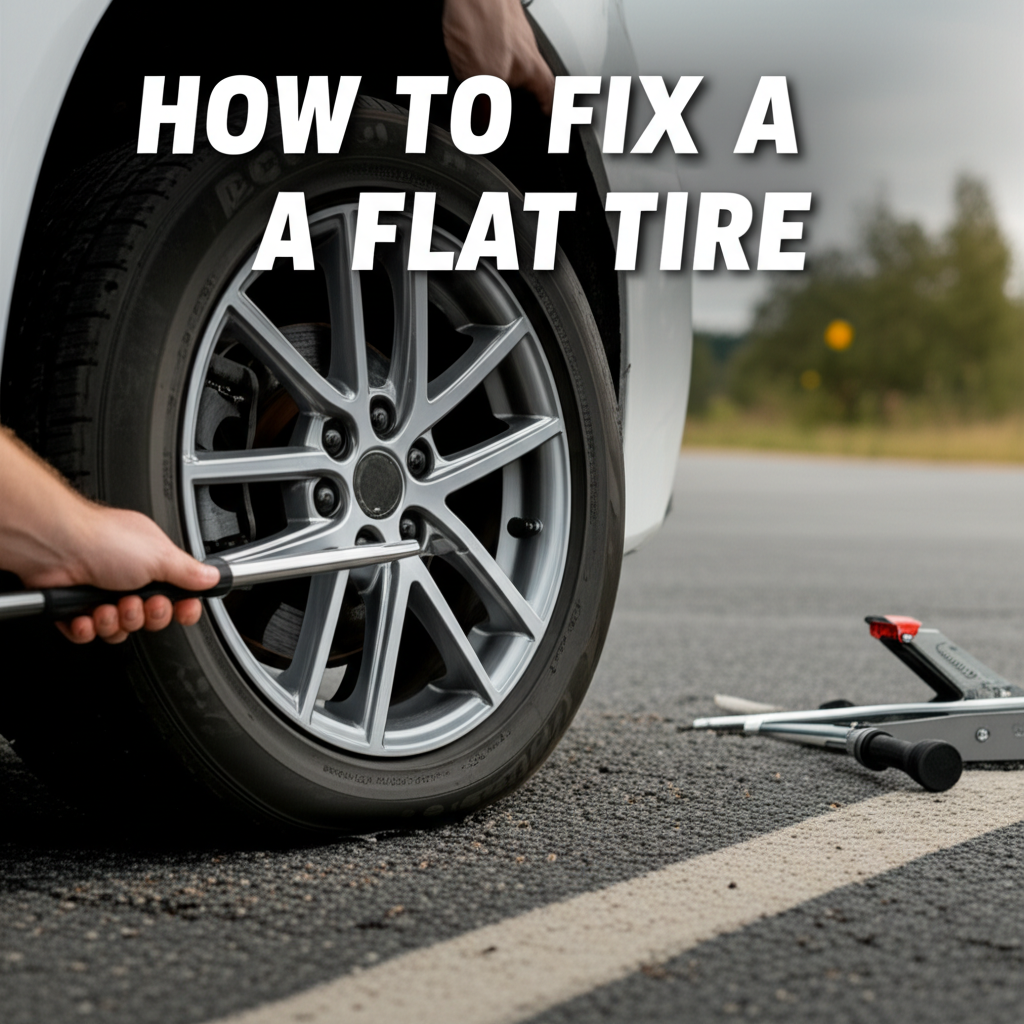
Don’t let a flat tire sideline your day! Learn how to safely and quickly fix a flat tire yourself with our easy-to-follow, step-by-step guide. We’ll show you how to change your tire using a spare, ensuring you’re back on the road with confidence.
Getting a flat tire can feel like a major setback, especially if you’re new to driving or not very handy with car stuff. It’s a common problem, and frankly, it can be a bit stressful when it happens unexpectedly. But guess what? You don’t need to be a master mechanic to handle it. We’re here to walk you through exactly what to do, step-by-step, making the process clear, safe, and totally manageable. Get ready to conquer that flat tire!
What You’ll Need: Your Flat Tire Changing Toolkit
Before we dive into the steps, let’s make sure you have everything you need. Having the right tools handy will make the process much smoother and safer. Think of this as your essential flat tire survival kit!
- Spare Tire: This is your temporary replacement. Make sure it’s properly inflated! A quick check before you have a flat is always a good idea.
- Jack: This is the magical tool that lifts your car. Your car likely came with one, often stored in the trunk.
- Lug Wrench: This is used to loosen and tighten the lug nuts that hold your wheel in place. It usually looks like an ‘X’ or has a long handle.
- Owner’s Manual: Your car’s best friend! It has specific instructions for your vehicle, including where to find the jack points.
- Wheel Chocks or Bricks: These are crucial for safety. They prevent your car from rolling while it’s lifted.
- Gloves: Optional, but highly recommended to keep your hands clean.
- Flashlight: Essential if you’re changing a tire at night or in a dimly lit area.
- Tire Pressure Gauge: To ensure your spare tire is properly inflated.
- Reflective Triangles or Flares: For increased visibility and safety if you’re on the side of a busy road.
Step-by-Step: How to Fix a Flat Tire Safely
Changing a flat tire might seem daunting, but by following these steps carefully, you can do it safely and efficiently. Remember, safety first! If you’re ever unsure or in a dangerous situation, don’t hesitate to call for roadside assistance.
Step 1: Find a Safe Location

As soon as you realize you have a flat tire, the very first thing you need to do is find a safe place to pull over. Look for a level, stable surface, well away from traffic. A parking lot or a wide, clear shoulder is ideal. Avoid soft ground or inclines, as these can make the jacking process unstable and dangerous.
Why this is important: Driving on a flat tire can damage your rim and the tire itself, making the problem worse. A stable, level surface is critical for the safety of the jacking process. If your car isn’t stable, it could fall off the jack.
Step 2: Turn on Hazard Lights and Engage Parking Brake
Once you’ve found a safe spot, turn on your hazard lights immediately. This warns other drivers that your vehicle is stopped. Then, engage your parking brake firmly. If your car has a manual transmission, put it in first gear or reverse. For automatic transmissions, put it in “Park.”
Why this is important: Hazard lights make your vehicle visible to other drivers, reducing the risk of an accident. The parking brake and gear selection prevent your car from rolling while you work on it, which is a crucial safety measure.
Step 3: Place Wheel Chocks
For an extra layer of safety, place wheel chocks (or sturdy rocks/bricks if you don’t have chocks) behind the wheel diagonally opposite to the flat tire. For example, if your front passenger tire is flat, place chocks behind the rear driver’s side tire.
Why this is important: This provides an additional barrier against the car rolling, especially if the parking brake isn’t fully effective or if you’re on a slight incline. It’s a simple step that significantly enhances your safety.
Step 4: Loosen the Lug Nuts
Now, it’s time to tackle the lug nuts that hold the wheel on. Use your lug wrench and turn the lug nuts counter-clockwise. You might need to use some force, and sometimes standing on the wrench can help. However, only loosen them about half to a full turn. Do not remove them completely yet.
Why this is important: Loosening the lug nuts before lifting the car is essential. If you try to loosen them while the wheel is in the air, the wheel will just spin, making it impossible to get them off. They need to be snug enough to hold the wheel but loose enough to remove by hand once the wheel is off the ground.
Step 5: Position the Jack and Lift the Vehicle
Consult your owner’s manual to find the correct jacking point for your vehicle. These are reinforced areas on the car’s frame designed to safely support the weight of the car. Place the jack securely under the designated jacking point closest to the flat tire.
Once the jack is in place, begin to raise the vehicle. Slowly and steadily pump or crank the jack until the flat tire is completely off the ground, with enough clearance to remove it and install the spare.
Why this is important: Using the correct jacking point ensures that the weight of the car is distributed properly, preventing damage to your vehicle. Lifting the tire high enough provides the necessary space to remove the deflated tire and put on the inflated spare.
Step 6: Remove the Lug Nuts and Flat Tire
With the tire now off the ground, you can finish unscrewing the lug nuts by hand. Keep them together in a safe place, like a hubcap or a pocket, so you don’t lose them. Once all the lug nuts are removed, grip the flat tire firmly with both hands and pull it straight towards you to remove it from the wheel studs.
Why this is important: Removing the lug nuts completely allows the wheel to be detached. Keeping them together prevents them from rolling away and getting lost. Pulling the tire straight off ensures it detaches cleanly from the studs.
Step 7: Mount the Spare Tire
Align the spare tire with the wheel studs and carefully push it onto the hub until it sits flush against it. This can sometimes be a bit tricky, so take your time to ensure it’s seated correctly.
Why this is important: Proper alignment of the spare tire with the studs is crucial for the wheel to be mounted correctly and safely. A misaligned tire can lead to vibrations or an unstable ride.
Step 8: Reinstall the Lug Nuts
Put the lug nuts back on the studs and tighten them by hand as much as you can. Once they are all snug, use the lug wrench to tighten them further. Tighten them in a star pattern (or criss-cross pattern) to ensure the wheel is seated evenly.
Why this is important: Tightening the lug nuts in a star pattern ensures that the wheel is evenly secured against the hub. This prevents the wheel from wobbling or becoming loose later on. Hand-tightening first helps to avoid cross-threading the nuts.
Step 9: Lower the Vehicle
Slowly lower the vehicle by reversing the jacking process. Once the tire is touching the ground but before the full weight of the car is on it, give the lug nuts one final tightening with the lug wrench, again using the star pattern. Then, lower the car completely to the ground.
Why this is important: Lowering the car slightly before the final tightening allows you to apply more torque to the lug nuts without the wheel spinning. Once the car is fully on the ground, you can apply the maximum safe torque to ensure the wheel is securely attached.
Step 10: Final Tightening and Cleanup
With the car fully on the ground, use the lug wrench to give the lug nuts one last, firm tightening in the star pattern. Ensure they are snug and secure. Stow the flat tire, jack, and lug wrench back in their designated spots in your vehicle. Don’t forget to remove the wheel chocks!
Why this is important: A final tightening ensures all lug nuts are secure under the full weight of the car. Properly stowing your equipment keeps your vehicle organized and ensures you have everything for your next tire change. Removing chocks is vital to prevent them from becoming a road hazard.
Important Considerations for Your Spare Tire
Spare tires, especially temporary “donut” spares, are not designed for long-term use or high speeds. They have limitations you need to be aware of.
Temporary Spare Tires (Donuts)
These are smaller and lighter than your regular tires. They are meant only to get you to a repair shop. Always adhere to the speed and distance limitations printed on the spare tire itself or in your owner’s manual. Typically, this means driving no faster than 50 mph (80 km/h) and not for more than 50-70 miles (80-110 km).
Full-Size Spares
If you have a full-size spare, it can be used like a regular tire, but it’s still a good idea to get your flat tire repaired or replaced as soon as possible. Ensure your full-size spare is also properly inflated and checked regularly.
Tire Pressure
Check the tire pressure of your spare tire regularly. A flat spare is no help at all! Most spare tires require a higher pressure than regular tires; check your owner’s manual or the tire’s sidewall for the correct PSI.
For more information on tire care and safety, the National Highway Traffic Safety Administration (NHTSA) offers valuable resources: NHTSA Tire Safety.
When to Seek Professional Help
While knowing how to change a flat tire is a great skill, there are times when it’s best to call for professional assistance:
- You’re in an unsafe location: If you can’t find a safe place to pull over, or if you’re on a busy highway with no shoulder, it’s better to call for roadside assistance.
- You’re uncomfortable or unsure: If at any point you feel unsafe or unsure about what you’re doing, don’t risk it.
- The lug nuts are too tight or stuck: If you can’t loosen the lug nuts with a standard lug wrench, you might need a breaker bar or professional help.
- The jack points are damaged or inaccessible: If you can’t find or use the jack points, don’t try to force it.
- You don’t have the necessary tools: If you’re missing any of the essential tools, you’ll need to call for help.
- The spare tire is also flat or damaged: If your spare tire isn’t in usable condition, you’ll need assistance.
Roadside assistance services like AAA or those provided by your insurance company can be incredibly helpful in these situations.
Frequently Asked Questions (FAQ)
- Q1: How long can I drive on a spare tire?
- This depends on the type of spare you have. If it’s a temporary “donut” spare, you should generally not exceed 50 mph (80 km/h) and drive no more than 50-70 miles (80-110 km). Always check the tire’s sidewall or your owner’s manual for specific limitations. A full-size spare can be driven like a regular tire, but it’s still best to get your primary tire fixed or replaced promptly.
- Q2: Can I use my car jack on uneven ground?
- No, absolutely not. It is critical to use your car jack only on a firm, level surface. Uneven or soft ground can cause the jack to slip or sink, leading to the car falling, which is extremely dangerous. Always find a stable, flat spot before lifting your vehicle.
- Q3: What if the lug nuts are too tight to loosen?
- If you’re struggling to loosen the lug nuts, try using your body weight by stepping on the lug wrench handle (ensuring you’re on a stable surface and the car is properly chocked). If they still won’t budge, you might need a breaker bar for more leverage. If you’re still unable to loosen them, it’s best to call for roadside assistance to avoid damaging the studs or the wrench.
- Q4: How do I know where to place the jack?
- Your car’s owner’s manual is the best resource for this. It will clearly indicate the designated jacking points on the frame of your vehicle. These are reinforced areas designed to safely support the car’s weight. Typically, they are located on the pinch weld just behind the front wheels or in front of the rear wheels.
- Q5: What is the star pattern for tightening lug nuts?
- The star pattern, also known as a criss-cross pattern, is a method of tightening lug nuts to ensure the wheel is seated evenly against the hub. After hand-tightening all nuts, you tighten them in a sequence where you tighten one nut, then the one directly opposite it, then the next adjacent one, and so on. This prevents the wheel from being pulled unevenly onto the studs.
- Q6: Should I check the spare tire’s pressure before I need it?
- Yes, absolutely! It’s a smart preventative measure to check your spare tire’s pressure periodically, perhaps every few months. Most spare tires, especially temporary ones, require a higher inflation pressure than regular tires. The correct pressure is usually found on the tire’s sidewall or in your owner’s manual. A properly inflated spare is ready when you need it most.
- Q7: How do I dispose of a flat tire?
- You can’t just throw a flat tire in your regular trash. Most tire shops and auto repair facilities will accept old tires for recycling or proper disposal, often for a small fee. Many local recycling centers also have specific programs for tires. Check with your local waste management authority for the best options in your area.
Maintaining Your Tires for the Future
Preventing flat tires is just as important as knowing how to fix them. Regular tire maintenance can save you time, money, and a lot of hassle.
Tire Pressure Checks
Keep your tires properly inflated. Underinflated tires wear unevenly, reduce fuel efficiency, and are more prone to damage. Check your tire pressure at least once a month and before long trips. The recommended pressure is usually found on a sticker inside the driver’s side doorjamb or in your owner’s manual.
Tire Rotation
Rotating your tires regularly (typically every 5,000 to 7,500 miles) helps them wear evenly. This extends their lifespan and ensures consistent performance. Your owner’s manual will have a recommended rotation schedule and pattern.
Wheel Alignment
Proper wheel alignment is crucial. Misaligned wheels can cause uneven tire wear, pulling to one side, and decreased fuel economy. If you notice any of these issues, or after changing a tire, it’s a good idea to have your alignment checked.
Visual Inspections
Take a moment to visually inspect your tires regularly. Look for any cuts, bulges, cracks, or embedded objects like nails or screws. Addressing small issues early can prevent them from becoming major problems like a flat tire.
For comprehensive tire care guidelines, check out resources from organizations like Tire Rack’s Tire Maintenance Guide.
Knowing how to fix a flat tire is a valuable skill that can boost your confidence and self-reliance on the road. With the right tools and these clear, step-by-step instructions, you’re well-equipped to handle this common automotive issue. Stay safe, and drive on!
- Are Car Paint Jobs Expensive? Proven Cost Factors - September 1, 2025
- Are Car Paint Pens Any Good? Proven Results! - September 1, 2025
- Are Car Paint Jobs Expensive? Essential Costs - September 1, 2025