
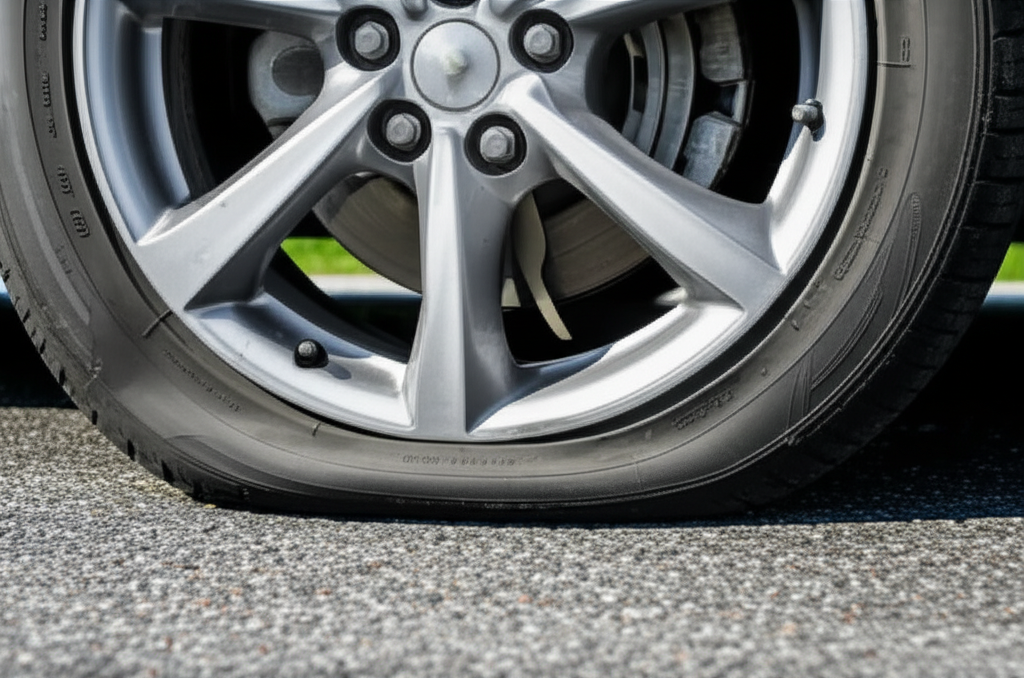
Don’t panic! A flat tire won’t last long, and you can safely get to a repair shop. Learn the simple steps to temporarily manage a flat tire and get back on the road quickly and safely.
Getting a flat tire can feel like a big problem, especially if you’ve never dealt with one before. It’s a common issue that can happen to anyone, anywhere. The good news is that it’s not as scary as it seems! With a little knowledge and the right steps, you can handle this situation like a pro. We’re here to guide you through it, making sure you feel confident and prepared. Let’s get you back on your way safely and smoothly.
Understanding Your Flat Tire: What You Need to Know
A flat tire happens when your tire loses air pressure, often due to a puncture from a sharp object like a nail or glass, or sometimes a valve stem issue. When this occurs, your car’s ability to drive safely is compromised. The tire can no longer support the weight of your vehicle properly, leading to:
- Reduced Control: Your steering and braking will be significantly affected.
- Damage to Your Wheel: Driving on a flat tire can damage the rim, which is a much more expensive repair than fixing the tire itself.
- Damage to the Tire Itself: The sidewall of the tire can be destroyed, making it unrepairable.
So, to answer the main question: how long can a flat tire last? Honestly, not long at all if you continue to drive on it. It’s best to stop as soon as it’s safe to do so. The goal is to get your car to a place where the tire can be repaired or replaced without causing further damage or risking your safety.
When You Discover a Flat Tire: Immediate Steps
The moment you realize you have a flat tire, your priority is safety. Don’t slam on the brakes or swerve suddenly. Instead, follow these immediate steps:
- Find a Safe Place to Pull Over: As soon as you notice the flat, look for a safe spot away from traffic. This could be a shoulder of the road, a parking lot, or a quiet side street. Aim for a level surface if possible.
- Activate Hazard Lights: Turn on your hazard lights immediately. This alerts other drivers to your situation and makes your car more visible, especially if it’s dark or visibility is poor.
- Gently Brake and Steer: Slowly ease off the accelerator and gently apply the brakes. Steer your vehicle towards your chosen safe location. Avoid any sudden movements.
- Engage the Parking Brake: Once you’ve stopped, firmly engage your parking brake. This is crucial to prevent your car from rolling, especially if you’re on a slight incline.
Your Options: What to Do with a Flat Tire
Once you’re safely stopped, you have a few options:
Option 1: Changing to Your Spare Tire (The DIY Approach)

This is often the most common and immediate solution. Most cars come equipped with a spare tire and the necessary tools. It’s a skill worth learning, and with the right preparation, it’s quite manageable.
Tools You’ll Need:
- Spare Tire: Usually found in the trunk or under the vehicle.
- Jack: Used to lift your car.
- Lug Wrench: Used to loosen and tighten the lug nuts.
- Owner’s Manual: Crucial for finding jacking points and specific instructions for your car.
- Wheel Chocks (Optional but Recommended): To further secure the vehicle.
- Gloves (Optional): To keep your hands clean.
- Flashlight (If it’s dark): For visibility.
Step-by-Step Guide to Changing a Tire:
Before you start, take a deep breath. You’ve got this! Read through all the steps first, then gather your tools.
- Ensure the Car is Secure: Make sure the parking brake is firmly engaged. If you have wheel chocks, place them against the wheel diagonally opposite the flat tire. For example, if the front right tire is flat, place chocks behind the rear left tire. This adds an extra layer of safety.
- Loosen the Lug Nuts:
Why? Loosening the lug nuts before lifting the car prevents the wheel from spinning in mid-air, making it much easier to break them free.
Use the lug wrench to loosen the lug nuts on the flat tire. Turn them counter-clockwise. You might need to use your foot to get enough leverage. Loosen them about a half-turn to a full turn each – just enough to break them free, but not enough to remove them entirely. Work in a star pattern to ensure even pressure.
- Position the Jack:
Why? Using the correct jacking point is essential to safely lift the car without damaging the body or frame.
Consult your owner’s manual to find the designated jacking point nearest to the flat tire. It’s usually a reinforced part of the car’s frame. Position the jack securely under this point.
- Lift the Vehicle:
Why? You need enough clearance to remove the flat tire and install the inflated spare.
Slowly and steadily operate the jack to raise the vehicle. Lift it until the flat tire is completely off the ground, with enough space to remove it. Keep all parts of your body away from under the car while it’s being lifted.
- Remove the Lug Nuts and Flat Tire:
Why? With the wheel off the ground, the lug nuts can now be fully removed, and the tire taken off.
Finish unscrewing the lug nuts by hand. Keep them together in a safe place (like your pocket or hubcap) so you don’t lose them. Grip the flat tire firmly with both hands and pull it straight toward you to remove it from the wheel studs. Lay the flat tire on its side under the car’s frame, near the jack, as an extra safety precaution in case the jack fails.
- Mount the Spare Tire:
Why? The spare tire needs to be correctly aligned and secured onto the wheel studs.
Line up the holes in the spare tire with the wheel studs. Push the spare tire onto the studs as far as it will go. It might take a bit of wiggling.
- Replace the Lug Nuts:
Why? Snugging the lug nuts by hand ensures they are properly seated before tightening with the wrench.
Put the lug nuts back on the studs and tighten them by hand as much as you can. Again, work in a star pattern.
- Lower the Vehicle:
Why? Lowering the car allows the tire to make contact with the ground, providing the necessary resistance to properly tighten the lug nuts.
Slowly lower the vehicle using the jack until the spare tire is touching the ground but the car’s full weight isn’t on it yet. Remove the flat tire from under the car.
- Tighten the Lug Nuts:
Why? Tightening the lug nuts with the car’s weight on the tire ensures they are secure and won’t loosen as you drive.
Now, use the lug wrench to tighten the lug nuts firmly. Continue to use the star pattern. Apply as much force as you can. Once all are tight, lower the car completely to the ground and remove the jack.
- Final Tightening:
Why? A final tightening ensures maximum security after the car’s full weight is on the tire.
With the car fully on the ground, give the lug nuts one last, firm tightening with the lug wrench, again using the star pattern. Make sure they are as tight as you can get them.
- Store the Flat Tire and Tools:
Why? Keeping your tools organized and the flat tire secured is important for your next drive and future use.
Put the flat tire, jack, and lug wrench back into your trunk. Don’t forget to retrieve any wheel chocks you used.
Option 2: Using a Tire Sealant or Inflator Kit
Many modern cars, especially those aiming for fuel efficiency, come with a tire sealant and inflator kit instead of a spare tire. These kits are designed for temporary fixes.
How Tire Sealant Kits Work:
These kits typically consist of a canister of sealant and a small air compressor. You connect the compressor to your car’s power outlet (like a cigarette lighter) and inject the sealant into the tire through the valve stem. The sealant coats the inside of the tire and seals small punctures. The compressor then inflates the tire.
Important Considerations for Sealant Kits:
- Temporary Fix: Sealant is designed for small punctures only and is a temporary solution. It should not be considered a permanent repair.
- Speed Limits: After using a sealant kit, you’ll usually have a speed and mileage restriction. Always check the product instructions. Typically, it’s around 50 mph for no more than 50 miles.
- Tire Shop Notification: You must inform the tire shop that you have used a sealant kit. The sealant can make tire repair more difficult and messy. Some tires may be irreparable after using a sealant.
- TPMS Sensor: Some sealants can damage your Tire Pressure Monitoring System (TPMS) sensors.
Option 3: Calling for Roadside Assistance
If you’re not comfortable changing the tire yourself, don’t have a spare, or the damage is severe, calling for help is your best bet.
Who to Call:
- Your Auto Insurance Provider: Many insurance policies include roadside assistance.
- Automotive Clubs: Organizations like AAA offer roadside assistance membership plans.
- Your Car Manufacturer: Some new cars come with complimentary roadside assistance.
- Local Towing Services: A quick search on your phone can find local companies.
When you call, be ready to provide your location, the make and model of your car, and a description of the problem. They will typically dispatch a service to change your tire or tow your vehicle to a repair shop.
What to Do After the Temporary Fix
Whether you used a spare tire or a sealant kit, your journey isn’t quite over. There are crucial steps to ensure your safety and the longevity of your vehicle.
If You Used a Spare Tire:
- Check Tire Pressure: Spare tires, especially compact “donut” spares, often require a higher air pressure than regular tires. Check the sidewall of the spare for the correct PSI and inflate it accordingly at the nearest gas station.
- Drive Cautiously: Spare tires are usually not designed for long-term use or high speeds. They have limitations on speed and distance. Your owner’s manual will specify these limits.
- Get Your Flat Tire Repaired or Replaced ASAP: Take your flat tire to a tire shop as soon as possible. They can assess if it’s repairable or if you need a new tire.
- Reinstall the Full-Size Tire: Once your original tire is fixed or replaced, have it put back on your car and the spare returned to its storage location.
- Re-tighten Lug Nuts: After driving a short distance (around 50-100 miles) on the full-size tire, it’s a good idea to have the lug nuts checked and re-tightened by a professional.
If You Used a Tire Sealant Kit:
- Drive to a Tire Shop Immediately: Adhere strictly to the speed and mileage limitations provided with the kit. The goal is to get to a tire professional without further damaging the tire or your car.
- Inform the Tire Technician: As mentioned before, tell the technician you used a sealant. This is critical for them to handle the tire properly.
- Repair or Replacement: The tire shop will determine if the tire can be repaired. If the puncture is too large or in a critical area, you will need a new tire. Sealant can sometimes make repairs impossible or unsafe.
Common Pitfalls to Avoid
Even with the best intentions, some mistakes can happen when dealing with a flat tire. Being aware of these can save you trouble:
- Driving on a Completely Flat Tire for Too Long: This is the biggest mistake. It ruins the tire and can damage your wheel, suspension, and brakes.
- Not Loosening Lug Nuts Before Lifting: This makes it incredibly difficult, if not impossible, to get them off once the wheel is in the air.
- Using the Wrong Jacking Point: This can cause damage to your car’s body or frame and is a safety hazard. Always consult your owner’s manual.
- Not Tightening Lug Nuts Properly: Loose lug nuts can cause the wheel to wobble and eventually come off while driving – a very dangerous situation.
- Forgetting to Put the Spare Tire Back and Get the Flat Repaired: Spare tires are not a permanent solution.
- Not Checking Spare Tire Pressure: Many spares are underinflated when stored, and their recommended pressure is often higher than standard tires.
Maintaining Your Tires for Fewer Flat Tire Incidents
Preventing flat tires is always better than dealing with them. Here are some tire maintenance tips:
- Regularly Check Tire Pressure: Properly inflated tires wear more evenly and are less susceptible to damage from road hazards. Check your tire pressure at least once a month and before long trips. You can find the recommended PSI on a sticker inside your driver’s side doorjamb or in your owner’s manual.
- Inspect Tires for Wear and Damage: Look for cuts, bulges, cracks, or embedded objects in your tires. Also, check the tread depth. The U.S. Department of Transportation recommends replacing tires when they reach 2/32 of an inch of tread depth. You can use the “penny test” for this: place a penny into the tread groove with Lincoln’s head upside down. If you can see the top of Lincoln’s head, your tread is too low.
- Rotate Your Tires: Rotating your tires every 5,000 to 7,500 miles helps ensure they wear evenly, extending their lifespan and improving performance.
- Balance Your Tires: Proper wheel balancing prevents vibrations and uneven tire wear.
- Avoid Overloading Your Vehicle: Exceeding your car’s weight capacity puts undue stress on your tires.
Here’s a quick comparison of tire types you might encounter:
| Tire Type | Description | Pros | Cons | Best For |
|---|---|---|---|---|
| Full-Size Spare | A regular tire, same size as your other tires. | Can be driven at normal speeds and for longer distances. | Takes up more trunk space. | Everyday driving, longer trips. |
| Temporary Spare (“Donut”) | Smaller and lighter than a standard tire. | Saves space and weight. | Limited speed and mileage, affects car’s handling. | Short-term emergency use to get to a repair shop. |
| Tire Sealant & Inflator Kit | A canister of sealant and a small compressor. | No need to change the tire roadside, compact. | Temporary fix only, can damage TPMS, can make tire irreparable. | Minor punctures, for drivers who don’t want to change a tire. |
Frequently Asked Questions (FAQ)
Q1: How long can I drive on a flat tire?
You should avoid driving on a flat tire for more than a very short distance, ideally only a few feet to get to a safe stopping location. Driving on a flat tire can cause irreversible damage to the tire itself, the wheel rim, and your car’s suspension and braking systems. It’s also extremely dangerous as it severely impacts your car’s control.
Q2: Can a flat tire be repaired?
Often, yes. Small punctures in the tread area of a tire can usually be repaired by plugging them. However, if the puncture is in the sidewall, or if the tire has been driven on while flat for an extended period, it is generally considered irreparable and will need to be replaced. Always have a professional tire technician inspect the damage.
Q3: What is the difference between a spare tire and a tire sealant kit
Latest posts by mahmudul kabir (see all) - Are Car Paint Jobs Expensive? Proven Cost Factors - September 1, 2025
- Are Car Paint Pens Any Good? Proven Results! - September 1, 2025
- Are Car Paint Jobs Expensive? Essential Costs - September 1, 2025
- Are Car Paint Jobs Expensive? Proven Cost Factors - September 1, 2025
- Are Car Paint Pens Any Good? Proven Results! - September 1, 2025
- Are Car Paint Jobs Expensive? Essential Costs - September 1, 2025