
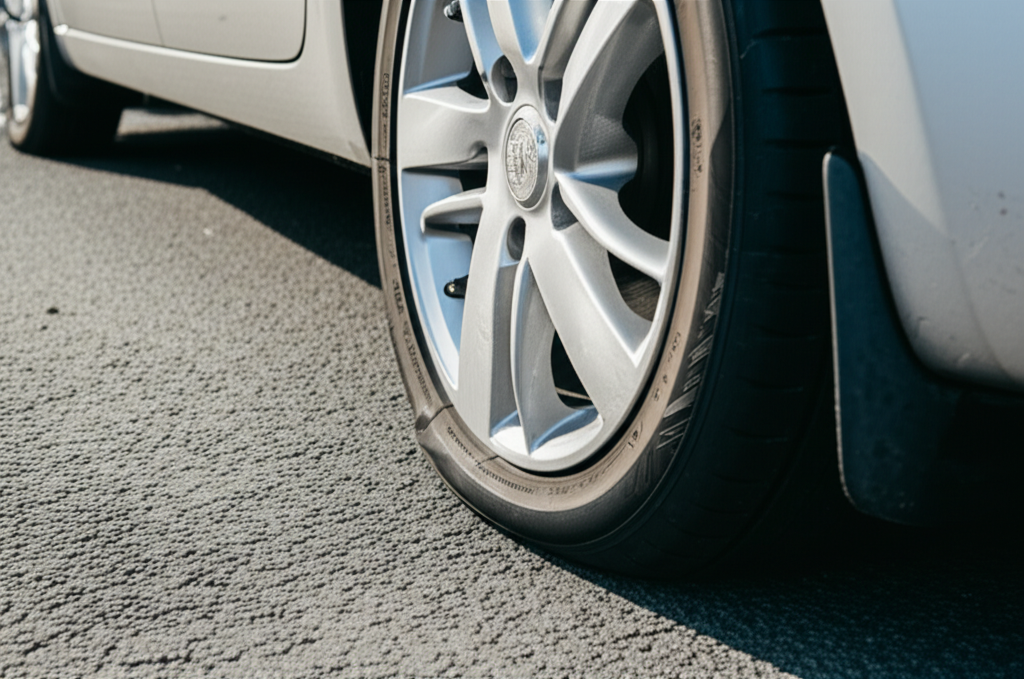
Yes, flat tires can be covered by your car insurance, but it depends on the type of coverage you have. Comprehensive coverage often includes damage from road hazards like potholes, which can cause flats, while roadside assistance can help with towing or tire changes.
Don’t Let a Flat Tire Derail Your Day: Your Simple Guide to Getting Back on the Road
Getting a flat tire can feel like a scene straight out of a stressful movie. Suddenly, your car pulls to one side, and a dreaded thumping sound starts. It’s a common problem that can happen to anyone, anywhere, at any time. But here’s the good news: you don’t need to be a master mechanic to handle it. This guide is designed to make the process clear, calm, and manageable for you. We’ll walk through exactly what to do, from understanding your insurance options to safely changing your tire. Let’s turn this potential roadside disaster into a manageable task!
Understanding Your Flat Tire: Is It Covered by Insurance?

It’s a question many drivers ask when faced with a suddenly deflated tire: “Will my insurance help me with this?” The answer, as with many things in the world of auto insurance, is: it depends. Not all insurance policies are created equal when it comes to flat tires, and understanding what you have can save you a lot of money and hassle.
Generally, a standard auto insurance policy covers damage that results from a collision or other specific events. A simple, slow leak from an old valve stem or a nail you drove over might not be covered by your collision or comprehensive insurance. However, if the flat tire is a result of a covered peril, like hitting a large pothole that damages your rim and causes the tire to blow out, then your comprehensive coverage might kick in.
Think of it this way: your insurance is there for unexpected, often unavoidable events. A tire that has simply worn out over time usually isn’t considered an “accident” or “peril” in the insurance sense. But damage caused by external forces, like debris on the road or severe road conditions, often falls under comprehensive coverage.
To truly know what your policy covers, the best approach is always to check your specific insurance documents or call your provider. They can clarify exactly what events lead to tire damage that your policy will cover.
What Type of Insurance Coverage Matters for Flat Tires?
When it comes to flat tires, two main types of coverage on your auto insurance policy are most relevant:
Comprehensive Coverage: This part of your policy typically covers damage to your vehicle that isn’t caused by a collision. This can include things like theft, vandalism, fire, falling objects, and, importantly for flat tires, damage caused by road hazards. If you hit a large pothole, a piece of debris, or a curb with enough force to cause a tire to blow out or become damaged, comprehensive coverage may help pay for the repair or replacement of the tire, and potentially other parts of your car that were damaged in the incident.
Roadside Assistance: This is often an add-on to your policy, or sometimes offered by auto clubs or even your car manufacturer. Roadside assistance is designed to help you when you’re stranded. If you have a flat tire, this coverage can be incredibly useful. It typically covers the cost of a mobile mechanic to come to your location, change your flat tire with your spare tire, or tow your vehicle to a repair shop. It’s important to note that roadside assistance usually covers the service of changing the tire, not the cost of a new tire if your current one is beyond repair.
Here’s a quick look at what each typically covers and doesn’t cover regarding flat tires:
| Coverage Type | What it Might Cover for Flat Tires | What it Typically Does NOT Cover for Flat Tires |
|---|---|---|
| Comprehensive | Damage to the tire and rim caused by hitting a road hazard (e.g., large pothole, debris) | Tires worn out from normal use, slow leaks from old valve stems, damage from everyday driving without a specific road hazard incident. |
| Roadside Assistance | Cost of a tow to a repair shop, cost of changing your flat tire with your spare | The cost of a new tire itself, repair of the damaged tire, damage to the spare tire. |
Always review your policy details or speak with your insurance agent to understand the specifics of your coverage.
When Your Flat Tire Might Be Covered by Insurance
A flat tire isn’t always just a flat tire. The circumstances surrounding how it happened are key to determining insurance coverage. Here are common scenarios where your insurance might apply:
Hitting a Pothole or Debris: If you encounter a large, unavoidable pothole or a significant piece of debris on the road (like metal fragments or sharp objects) and it causes your tire to blow out or your rim to bend, leading to a flat, this is often considered damage from a road hazard. Comprehensive coverage is your best bet here.
Vandalism: If someone intentionally damages your tire (e.g., slashing it), this would fall under comprehensive coverage as an act of vandalism.
Accident with Another Vehicle: If a collision with another car causes your tire to become flat, the at-fault driver’s liability insurance would typically cover the damage, or your own collision coverage if you are at fault or the other driver is uninsured.
Defective Tire (Rare): In very rare cases, a manufacturing defect could lead to a tire failure. If this can be proven, you might have recourse through the tire manufacturer or the dealership, though insurance is unlikely to be involved.
Remember, wear and tear from normal driving is generally not covered. If your tires are old and bald, and one finally gives out, that’s typically on you.
When Your Flat Tire Is Likely NOT Covered by Insurance
It’s equally important to know when your insurance likely won’t cover a flat tire. This helps manage expectations and understand where you’ll need to handle the costs yourself.
Tire Wear and Tear: Tires have a lifespan. As they age and accumulate mileage, their tread wears down, and the rubber can degrade. If a tire fails simply because it’s old, worn out, or has lost its structural integrity over time, this is considered normal wear and tear. Insurance policies are designed for sudden, unexpected events, not the gradual deterioration of parts.
Improper Inflation or Maintenance: Driving with underinflated or overinflated tires can lead to uneven wear and increased stress on the tire, making it more susceptible to failure. If a flat occurs due to poor maintenance or neglecting to check tire pressure, it’s generally not covered.
Minor Punctures from Everyday Driving: While a severe road hazard causing a blowout might be covered by comprehensive, a small nail or screw you pick up during normal driving that causes a slow leak is usually not. Most policies consider this a minor repairable issue that falls outside the scope of comprehensive or collision coverage.
Damage from Off-Roading or Reckless Driving: If you’re off-roading and hit a sharp rock, or engage in activities like “drifting” or aggressive driving that leads to a tire blowout, these situations are typically excluded from coverage.
It’s always a good idea to maintain your tires properly. Regular checks of tire pressure and tread depth can prevent many common flat tire issues. For more information on tire maintenance, check out resources from the National Highway Traffic Safety Administration (NHTSA): NHTSA Tire Safety.
How to Get Help for a Flat Tire: A Step-by-Step Guide
So, you’ve got a flat. Don’t panic! Follow these steps to get yourself safe and your car back on the road.
Step 1: Find a Safe Place to Pull Over
Why it’s important: Your immediate priority is safety. Driving on a flat tire can damage your wheel rim and make the car difficult to control. You need to get off the main road as quickly and safely as possible.
- As soon as you notice a flat tire (your car might pull to one side, you’ll hear a flapping sound, or see a tire pressure warning light), slow down gradually.
- Look for a level, stable surface away from traffic. A parking lot, a wide shoulder, or a quiet side street is ideal.
- Avoid stopping on a curve, hill, or soft ground if possible.
- Once you’ve pulled over, turn on your hazard lights to alert other drivers.
Step 2: Gather Your Tools and Spare Tire
Why it’s important: Having everything ready before you start makes the process smoother and safer. Your spare tire and tools are usually located in your trunk or under your vehicle.
- Locate your spare tire. It might be a full-size spare, a compact “donut” spare, or a tire repair kit with an inflator.
- Find your jack and lug wrench. These are usually stored with the spare tire.
- You’ll also need your vehicle’s owner’s manual. It has specific instructions for your car, including the correct jack points.
- Consider wearing gloves to keep your hands clean and a reflective vest if you have one, especially if you’re on a busy road.
Step 3: Loosen the Lug Nuts
Why it’s important: Lug nuts are very tight. If you try to loosen them after the car is jacked up, the wheel will just spin, making it impossible to remove the nuts. Loosening them while the tire is still on the ground provides the necessary resistance.
- If your car has wheel covers or hubcaps, remove them first. Some pop off, while others might be held on by the lug nuts themselves or small clips. Your owner’s manual will show you how.
- Place the lug wrench onto one of the lug nuts.
- Turn the lug wrench counter-clockwise (lefty-loosey).
- You’ll likely need to use a good amount of force. You can even use your foot on the wrench handle, but be careful not to slip.
- Loosen each lug nut about half a turn to one full turn. Do not remove them completely yet.
- Loosen them in a star or criss-cross pattern to ensure even pressure.
Step 4: Position the Jack and Lift the Vehicle
Why it’s important: The jack needs to be placed at a specific, reinforced point on your car’s frame to safely lift the weight of the vehicle without causing damage. Lifting from the wrong spot can be dangerous and damage your car.
- Consult your owner’s manual to find the correct jack point for the flat tire. It’s usually a reinforced metal ridge on the car’s frame near the wheel.
- Place the jack securely under the designated jack point.
- Slowly and steadily operate the jack to raise the vehicle.
- Lift the car until the flat tire is completely off the ground, with enough clearance to remove it and put the spare on. Make sure the car feels stable on the jack.
- Never put any part of your body under the car while it is supported only by a jack.
Step 5: Remove the Flat Tire
Why it’s important: Now that the tire is off the ground, you can fully remove the lug nuts and pull the tire free.
- With the car safely lifted, unscrew the lug nuts the rest of the way by hand. Keep them together in a safe place (like a pocket or the removed hubcap) so you don’t lose them.
- Grip the flat tire firmly with both hands and pull it straight towards you. It might be heavy.
- If the tire is stuck, you can try gently kicking the side of the tire (not the rim) to dislodge it.
- Lay the flat tire on its side under the vehicle, near the jack, as an extra safety precaution in case the jack fails.
Step 6: Mount the Spare Tire
Why it’s important: Installing the spare correctly ensures it will hold firm and allow you to drive safely.
- Take your spare tire and align the holes in the spare with the wheel studs on the car.
- Push the spare tire onto the studs as far as it will go.
- Screw the lug nuts back on by hand as tightly as you can. Again, use a star pattern.
- Once the lug nuts are snug, lower the car slowly until the spare tire is resting firmly on the ground, but not yet bearing the full weight of the car.
Step 7: Tighten the Lug Nuts
Why it’s important: This is a crucial step for ensuring the wheel is securely attached. Lowering the car slightly before the final tightening provides enough resistance to properly seat the lug nuts without the wheel spinning.
- Using the lug wrench, tighten the lug nuts firmly in the star pattern.
- Apply as much force as you can to make them secure.
- Once you’ve tightened them as much as possible, lower the car completely to the ground.
- With the full weight of the car on the tire, give the lug nuts one final, firm tightening with the lug wrench.
Step 8: Final Checks and Next Steps
Why it’s important: A spare tire, especially a compact one, is temporary. You need to get your original tire repaired or replaced promptly.
- Put away your flat tire, jack, and lug wrench.
- Check the tire pressure in your spare tire if you have a gauge. Compact spares often require higher inflation pressures than regular tires, typically around 60 psi. The correct pressure will be listed on the spare tire itself or in your owner’s manual.
- Drive cautiously. Compact spares are not designed for high speeds or long distances. They typically have speed and distance limitations (often 50 mph and 50 miles).
- Get your flat tire repaired or replaced as soon as possible. Take it to a reputable tire shop. They can tell you if the tire is repairable or if you need a new one.
- If your original tire was damaged due to a road hazard covered by your insurance, contact your insurance provider to see if they will cover the repair or replacement costs.
Using Roadside Assistance for a Flat Tire
If changing a tire yourself feels too daunting, or if you don’t have a spare tire, roadside assistance is your best friend.
1. Call Your Provider: Find the phone number for your roadside assistance provider (your insurance company, auto club like AAA, or car manufacturer).
2. Provide Your Location and Vehicle Details: Be ready to give your exact location, the make and model of your car, and a description of the problem (flat tire).
3. Wait Safely: The service will dispatch a tow truck or a mobile mechanic. Stay in a safe place, away from traffic, and keep your hazard lights on.
4. Tire Change or Tow: The technician will either change your tire with your spare or tow your vehicle to a nearby repair shop.
Remember, roadside assistance typically covers the labor for the tire change or the tow, not the cost of a new tire.
When to Call a Professional vs. DIY
Deciding whether to tackle a flat tire yourself or call for help is a personal choice based on your comfort level, the situation, and the tools you have.
Consider DIY If:
You have a spare tire and the necessary tools (jack, lug wrench).
You are in a safe, well-lit location away from traffic.
You feel comfortable following instructions and have a basic understanding of how cars work.
You have the time and patience.
Consider Calling a Professional If:
You don’t have a spare tire or the right tools.
You are in an unsafe location (e.g., busy highway shoulder, bad weather, darkness).
You are physically unable to perform the task.
The lug nuts are too tight to loosen, or the jack is malfunctioning.
* You are unsure or uncomfortable with any part of the process.
There’s no shame in calling for help! Your safety is paramount. For more safety tips from the NHTSA, visit: NHTSA Safe Stop Brochure.
What to Expect When Filing an Insurance Claim for a Flat Tire
If you believe your flat tire damage is covered by your insurance, here’s what the claims process might look like:
1. Contact Your Insurer: Report the incident to your insurance company as soon as possible.
2. Provide Details: Explain what happened, when it happened, and how you believe it was caused (e.g., “I hit a large pothole on I-95, and my tire blew out”).
3. Documentation: You may need to provide photos of the damage, a police report if one was filed, or repair estimates from a mechanic.
4. Adjuster Review: An
- Are Car Paint Jobs Expensive? Proven Cost Factors - September 1, 2025
- Are Car Paint Pens Any Good? Proven Results! - September 1, 2025
- Are Car Paint Jobs Expensive? Essential Costs - September 1, 2025